
Lieferung heute & morgen

Qualitätsgarantie

Willkommens-Angebote freischalten: KOSTENLOSE Lieferung | Bis zu 80 % RABATT | Kostenlose 30-Tage-JoyPlus-Testphase
App herunterladen
A 200W folding solar panel can be used when camping, in a motorhome, in the garden or as a portable addition to a power station. A rated output of 200 watts may sound straightforward, but the amount of energy you can actually use depends on sunlight, panel orientation, temperature, shading and compatibility with the device it’s connected to.
If you focus only on the wattage or a high efficiency rating, it’s easy to overlook important details. Here are three common buying pitfalls:
A 200W solar panel delivers its rated output under what are known as Standard Test Conditions. These conditions can’t be maintained consistently in everyday use. So when choosing a panel, don’t just look at the wattage: also consider the combination of open-circuit voltage, operating voltage, current and the power station’s input limits.
Only connect a solar panel to a power station if the panel’s technical specifications fall within the permitted input range. If you’re unsure, check the instruction manuals for both devices. Voltage that exceeds the permitted limit could damage the power station.
Many folding solar panels use monocrystalline solar cells. The stated efficiency indicates how much of the sunlight falling on the panel can be converted into electricity. A higher percentage can be useful when space is limited, but it doesn’t guarantee a particular daily energy yield.
When comparing panels, check whether the efficiency figure applies to the whole solar panel or just the individual cells. Figures described as ‘up to’ are manufacturer values based on specific conditions, so bear that in mind.
For a solar charger for camping, or a solar panel for a motorhome or caravan, durable materials and a suitable protection rating are important. IP65, IP67 and IP68 indicate the level of protection against dust and water under defined test conditions. They don’t mean the panel can be used in all weather indefinitely or submerged in water.
An ETFE coating can protect the surface against certain external factors. Even so, folding panels shouldn’t be bent, stood on or weighed down with heavy objects. Take down a portable panel and store it somewhere dry in strong winds, hail or thunderstorms.
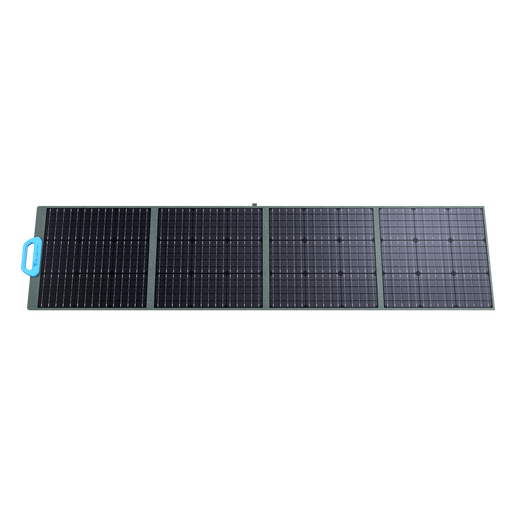
Why this product suits this profile: This folding 200W panel is designed for anyone looking for a straightforward, portable option for camping, the garden or use with a compatible power station.
Its compatibility with solar generators via MC4 connectors makes it easier to check the connection than with proprietary plug systems. The stated cell technology is also clearly specified.
Monocrystalline solar cells, a folding design, ETFE coating and MC4 compatibility, according to the manufacturer.
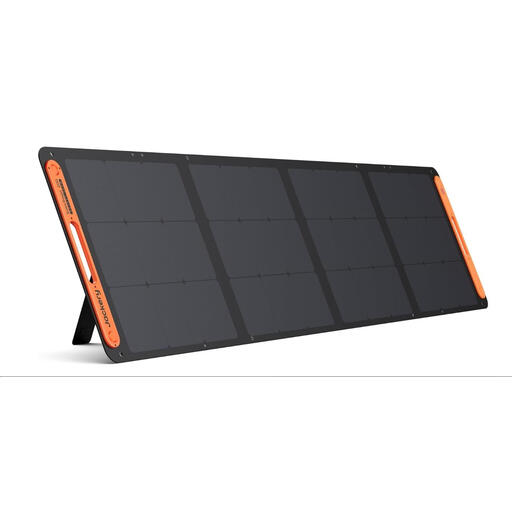
Why this product suits this profile: If you use a Jackery power station, this panel offers a matching brand solution with built-in support legs and a carry handle. It’s a practical choice for van life or longer outdoor stays.
The technical specifications list the dimensions, weight, operating voltage and protection rating. This lets you check before buying whether the panel’s footprint and input values suit your equipment.
Up to 24.3% cell efficiency, 6.2 kg weight, IP68 rating and USB-A and USB-C outputs, according to the manufacturer.
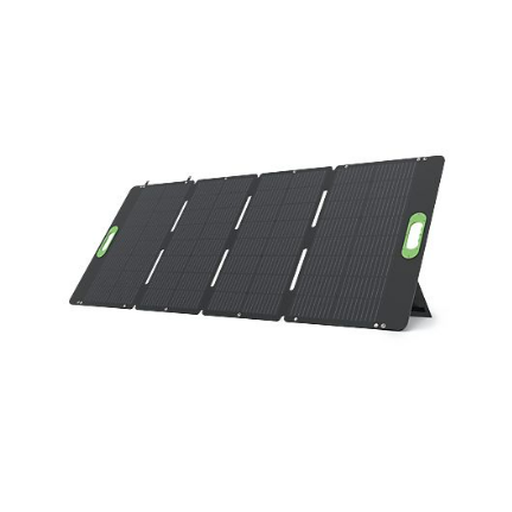
Why this product suits this profile: This panel is suited to frequent mobile use in a caravan, while camping, in the garden or as part of an off-grid or backup power setup with a compatible power station.
MC4 connectors, stated voltage values and a specified protection rating make it easier to check the technical details. The integrated support system also reduces the need for separate accessories.
200 watts rated output, monocrystalline 10BB cells, 23% cell efficiency according to the manufacturer, IP67 rating and a weight of 8.5 kg.
We’ve put together a complete, regularly updated list of products that meet these strict selection criteria and fully comply with the safety regulations in force in the EU.
The actual energy yield depends on the weather, the position of the sun, panel orientation, temperature, shading and charging losses. The 200-watt rating describes the output under test conditions; it doesn’t mean that level of charging power is always available.
No. Before buying, compare the power station’s solar input with the panel’s technical specifications. The key factors are open-circuit voltage, operating voltage, current and connector type. If the panel has MC4 connectors, you may need a suitable adapter cable.
There’s no single answer. Its lifespan depends on factors such as material quality, how it’s transported, UV exposure, moisture and proper storage. Store folding panels somewhere dry and clean, without putting pressure on the solar cells.