
Lieferung heute & morgen

Qualitätsgarantie

Willkommens-Angebote freischalten: KOSTENLOSE Lieferung | Bis zu 80 % RABATT | Kostenlose 30-Tage-JoyPlus-Testphase
App herunterladen
A foldable solar panel 200W can offer significantly more flexibility for camping, motorhomes or as a mobile emergency power solution than a fixed-installation panel. However, the rated output of 200 watts is only meaningful if the connections, input values and setup are compatible with the power station you are using.
When it comes to a mobile 200-watt solar panel, three common buying mistakes lead to unnecessary expenditure:
A foldable solar panel rated at 200 watts should not be chosen based on wattage alone. The technical input values of your power station are crucial:
For example, BLUETTI states for the PV200 a voltage at maximum power point of 20.5 V, a current of 9.7 A and an open-circuit voltage of 26.1 V. The power station must accept these values. If you are unsure, check the technical data of both devices as well as the instruction manual.
A solar panel for a power station can be used directly, via an adapter cable, or only with an additional charge controller, depending on the connection. The solar panel must not be connected to a standard household plug socket.
Monocrystalline solar cells are commonly used in portable panels because they enable a compact design. Manufacturer specifications for efficiency – for example 23 to 24.3 per cent – refer to the cells or the panel under defined conditions. They do not automatically guarantee the same charging performance in everyday UK conditions.
For a monocrystalline solar panel, the following are therefore also important:
Even a small shadow on part of the panel can affect the performance of the entire system. For solar power in motorhomes and RVs, we recommend positioning the panel outside the vehicle's shadow, provided the cable route and safety allow it.
A portable solar panel is regularly folded, carried and stored. That is why weight, folded dimensions and hinges are relevant for everyday usability. The product data differs significantly:
An ETFE-coated surface can be more resistant to certain mechanical influences. However, it does not replace careful handling. The panel should not be walked on, bent, damaged by sharp objects or stored under heavy luggage.
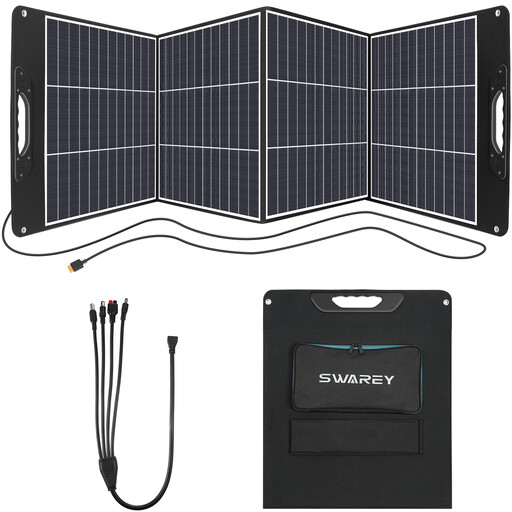
Why it suits the profile: The low stated weight of 5.5 kg and multiple adapters make it suitable for camping, day trips and getting started with mobile power.
According to the product description, the set includes a 4-in-1 XT60 cable with adapters for various power stations. However, you should still check specific compatibility before purchasing.
Monocrystalline cells, integrated stands, USB-A, USB-C with 18 W PD and XT60 output.
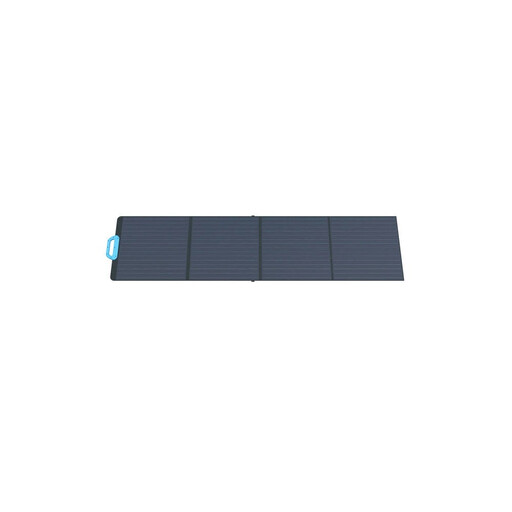
Why it suits the profile: If you are looking for a foldable solar panel with a standard connector and clear technical specifications, this model works with various mobile solar power systems.
The stated MC4 connectors make it easier to choose suitable cables. However, the stated IP54 protection of the panel does not mean it should be left outdoors permanently.
Up to 23.4 per cent efficiency according to the manufacturer, folds into four sections, integrated stand and 2-year warranty according to product data.
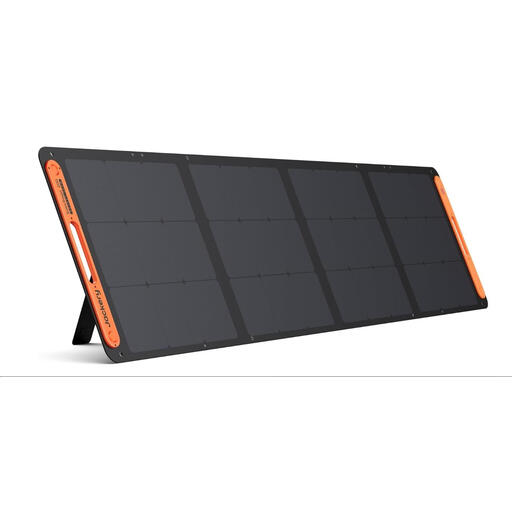
Why it suits the profile: The panel is designed for Jackery power stations and can be used for outdoor trips, motorhome holidays or as a mobile emergency power reserve.
Compatibility with several Jackery Explorer models is stated. Before connecting to other brands, you must check the connectors, voltage and current limits.
200 W rated power, three stands, USB-A and USB-C outputs, and IP68 according to the manufacturer.
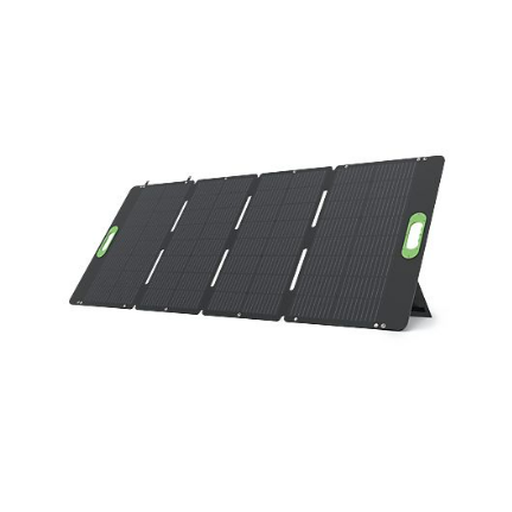
Why it suits the profile: The combination of MC4 connector, 200 W rated power and IP67 rating is interesting for users who want a robustly designed outdoor solar panel to use with multiple power stations.
The protection rating should not be confused with approval for storms or permanent wet conditions. Before each use, check the connectors and cables for dryness and damage.
Monocrystalline 10BB cells, 23 per cent cell efficiency according to the manufacturer, MC4 connectors and integrated stand.
We have put together a current selection of products that take these selection criteria for camping and mobile power into account.
For a solar charger when camping, the panel should be fully unfolded and positioned as directly towards the sun as possible. The angle may need to be adjusted as the day progresses. Where possible, connect the power station to the solar panel first before placing the panel in the sun. This helps avoid exposed, live plug contacts.
The surface should be cleaned with a soft, slightly damp cloth. Solvents, abrasive cleaners and hard brushes can damage coatings. In strong wind, hail, snow or thunderstorms, a foldable 200W solar panel should be taken down. For a mobile emergency power solution, we also recommend storing cables and adapters in a dry, organised manner.
The real-world output depends on sun angle, weather, temperature, shading, alignment and charging losses. 200 watts is a nominal value under standard test conditions and not a permanently guaranteed output.
No. The voltage, current, open-circuit voltage and connector must match the solar input of the power station. With MC4 models, a suitable adapter cable is often required. The manufacturer's specifications take precedence.
The lifespan depends on the folding mechanism, coating, transport and storage. If the panel is kept dry, protected from strong mechanical stress and not permanently exposed to extreme weather, it can remain usable for longer. Warranty periods vary depending on the supplier and model.