
Lieferung heute & morgen

Qualitätsgarantie

Willkommens-Angebote freischalten: KOSTENLOSE Lieferung | Bis zu 80 % RABATT | Kostenlose 30-Tage-JoyPlus-Testphase
App herunterladen
A new bamboo cutting board often looks promising at first. But it's not uncommon for the first problems to appear after just a few weeks: the board warps, develops cracks, or the surface quickly becomes unsightly. Such experiences are frustrating and ultimately lead to spending more money than planned.
As a Joybuy Product Recommendation Officer, I see every day what features distinguish a durable product from a short-lived one. Many buyers fall into the same traps, which are often disguised by clever marketing. Before you make a decision, you should know the three most common weaknesses that can render a bamboo cutting board useless:
A good bamboo kitchen board must withstand these problems. It's about paying attention to the right construction features and material properties, rather than being guided by superficial promises.
To avoid a poor purchase, you should focus on a few, but crucial, technical specifications. These features determine longevity, hygiene, and functionality.
One-Piece Cutting Board Makes All the DifferenceThe manufacturing method is the most important quality criterion. While many products consist of glued laminates, there are models that are crafted as a one-piece cutting board. This involves unfolding an entire bamboo culm through a special heat-treatment process and forming it into a continuous, seamless board.
The advantages are clear:
Such a board comes very close to the quality of a solid wood cutting board and is an excellent choice for quality-conscious users.
The stability of a cutting board is directly related to its thickness. A large cutting board, used for instance as a carving board for roasts, should have a material thickness of at least 20 mm. Thinner boards tend to bend under load or slide on the countertop. A solid thickness provides the necessary weight and a flat, stable surface, which significantly increases safety during cutting. When making your selection, pay attention to the exact dimensions and not just the visual appearance in product images.
Cutting Board with a Handle and Other DetailsA well-thought-out design makes daily kitchen tasks easier. A cutting board with a handle is more than just a visual detail. The handle allows for safe lifting and carrying of the board, even when it's fully loaded. It can also be easily hung up for space-saving storage. Boards with handles are often excellent as a bamboo serving board to present cheese, cold cuts, or antipasti attractively. Another useful feature is a surrounding juice groove, which catches liquids from meat, fruit, or vegetables and keeps the work surface clean.
Based on these objective criteria, we have identified several products that are particularly suitable for different user profiles.
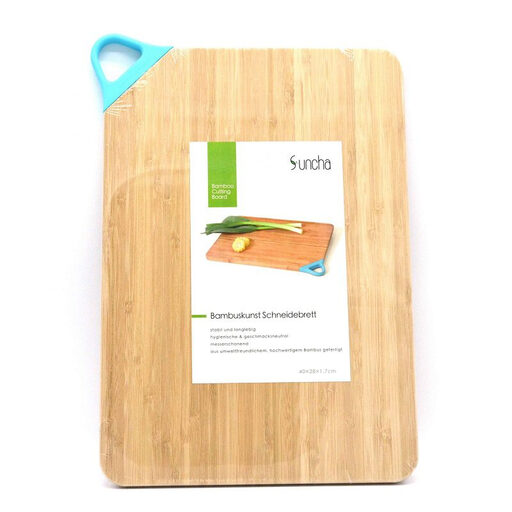
Why This Fits Their Persona: Ideal for the daily preparation of vegetables, fruits, and smaller cuts of meat. The size offers a good compromise between sufficient workspace and easy handling in a standard kitchen.
The material thickness of 17 mm provides good foundational stability and prevents the wobbling that often occurs with thinner boards. Its bamboo construction is more resilient than that of cheap, soft boards.
Integrated handle for easy carrying and hanging; versatile size for most everyday kitchen tasks.
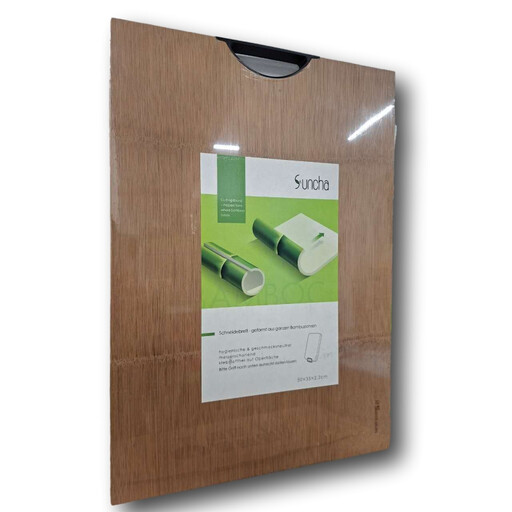
Why This Fits Their Persona: Perfect for preparing large meals, carving roasts, or as a generous surface for rolling out dough. A true workhorse for those who cook frequently and with passion.
This one-piece cutting board is made without glue seams, which prevents cracking and bacteria buildup. The massive thickness of 26 mm guarantees absolute stability.
Extremely robust and durable; the seamless surface is hygienic and knife-friendly. Ideal as a large cutting board or carving board.
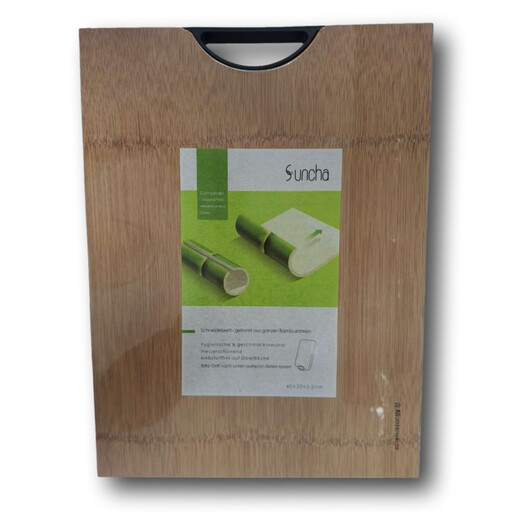
Why This Fits Their Persona: Its elegant appearance, derived from being crafted from a single bamboo culm, makes it the ideal bamboo serving board for cheese, cold cuts, or antipasti. Functionality and aesthetics are perfectly combined here.
The glue-free surface, as stated by the manufacturer, is a clear mark of quality and addresses concerns about chemicals and longevity. The thickness of 26 mm provides a premium feel.
Dual function as a high-quality bamboo kitchen board and a stylish serving platter. The seamless construction is a unique selling point.
We've compiled a complete, up-to-date list of products that fully meet these strict selection criteria and German safety regulations.
Proper care is crucial for longevity. Clean the board by hand after each use with warm water and a mild dish soap. Rinse it thoroughly and dry it immediately with a cloth. Store it upright so that air can circulate on all sides. Important: Never put a bamboo board in the dishwasher or let it soak in water. To keep the material supple and prevent it from drying out, you can occasionally rub it with a food-safe mineral oil.
Yes, bamboo offers a good balance. The material is hard enough to resist deep cuts, making it more hygienic than softer woods. At the same time, it has a certain give, so it is considered knife-friendly and does not excessively dull the blades of high-quality chef's knives. It's a good compromise between board durability and blade preservation.
A sustainable cutting board made from a single piece of bamboo offers three key advantages. First, it is more hygienic because there are no glue seams where bacteria can accumulate. Second, it is more durable because there are no glued weak points that could split due to moisture. Third, it is more aesthetically pleasing, as it features a smooth, uninterrupted surface.