
Lieferung heute & morgen

Qualitätsgarantie

Willkommens-Angebote freischalten: KOSTENLOSE Lieferung | Bis zu 80 % RABATT | Kostenlose 30-Tage-JoyPlus-Testphase
App herunterladen
A 100W USB-C cable sounds straightforward. In practice, though, the wattage alone doesn’t determine whether a cable is suitable for a laptop, tablet, smartphone or Nintendo Switch. Product descriptions often mix up maximum charging power, data transfer and connector type. As a result, you could buy a cable that charges your device but doesn’t deliver the power you expect, or isn’t suitable for the data transfer you need.
A 100W USB-C cable can deliver up to 100W if the charger and device support it too. The Baseus Cafule Series Metal Data Cable Type-C to Type-C 100W is rated at 20 V and 5 A. To use it at full power, you’ll need a compatible 100W USB-C PD charger.
If you use a lower-powered charger, the actual charging power will be lower too. The cable itself can’t increase the power output of a charger or device.
According to the product specifications, the Baseus cable supports data transfer speeds of up to 480 Mbps. That’s USB 2.0 speed, which is suitable for everyday file transfers, documents and photos. For particularly large video files or fast external SSDs, a higher USB standard is a better choice.
Terms such as ‘Data Cable’ or ‘fast-charging cable’ don’t tell you how quickly it transfers data. Look for a specification such as USB 2.0, 480 Mbps or a higher USB standard.
A Type-C to Type-C cable has a USB-C connector at each end. This makes it handy for modern USB-C PD chargers, many laptops, tablets and smartphones, as well as current games consoles. A USB-A to USB-C cable, on the other hand, needs an older USB-A port on the charger or computer.
Before you buy, check which ports you actually have. A USB-C charging cable for a laptop, tablet and smartphone is only versatile if both the charger and device support USB-C.
Check the combination of maximum power, voltage and current. The Baseus Cafule cable is rated at 100W, 20 V and 5 A. These specifications matter for devices that use USB Power Delivery at a correspondingly high power level.
Smartphones and many tablets often need less power. A laptop, however, may need considerably more, depending on the model. Always check the specifications provided by the charger and device manufacturers.
A 1 m USB-C cable is ideal for a desk, bedside table, power bank or short connection between a charger and device. It’s usually easier to store and less likely to trail across your workspace.
A 2 m cable can be useful if the charger is further away or you want to use your device while it’s charging. The trade-off is that a longer cable can be harder to keep tidy. According to the product details, the Baseus model is available in 1 m and 2 m lengths. Choose the length that suits where you’ll use it, rather than simply opting for the greatest freedom of movement.
A braided USB-C cable can be a practical alternative to a standard plastic cable for everyday use. The Baseus Cafule Series Metal Data Cable is made with braided nylon and a zinc alloy. The metal finish refers to the connectors or their casing.
Whatever the material, insert the connectors straight and pull them out by the plug, not the cable. Sharp bends, pulling, crushing and tightly wrapping the cable can damage the inner wires or insulation. Stop using the cable if you notice visible damage, unusual heat or exposed wires.
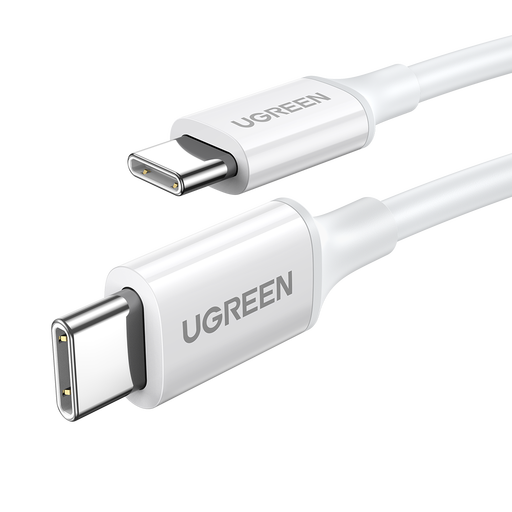
Why this product suits this profile: This 1 m Type-C to Type-C cable is designed for everyday charging and syncing of compatible smartphones, tablets and other USB-C devices.
The product details clearly specify USB-C to USB-C, USB 2.0 and speeds of up to 480 Mbps. This makes it easier to understand the connector type and data transfer limit.
1 m length, USB-C connectors at both ends, support for PD, QC and AFC, plus reinforced connectors.
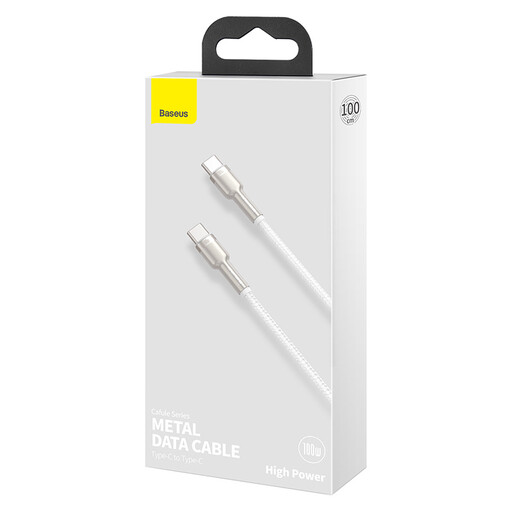
Why this product suits this profile: With a 100W rating, 20 V/5 A, braided nylon and a zinc alloy, this cable is aimed at anyone looking for USB-C PD fast charging for high-powered devices.
Charging power and data speed are listed separately: up to 100W for PD and up to 480 Mbps for data transfer.
100W at 20 V/5 A, USB-C connectors at both ends, braided nylon, and 1 m or 2 m length options.
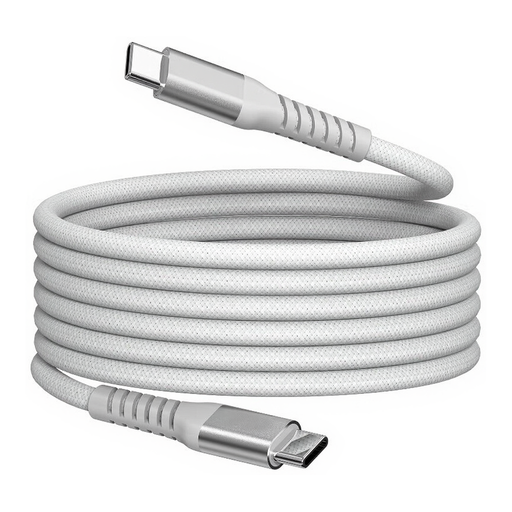
Why this product suits this profile: Its magnetic self-coiling design and 1.2 m length make it a handy option for travel, the office and use on the go, as long as 60W is enough for you.
The maximum power is clearly stated as 60W. You can check whether your smartphone, tablet or laptop is within this limit.
60W Power Delivery, 480 Mbps, 120 cm length and magnetic self-coiling for space-saving storage.
We’ve put together a complete, regularly updated list of products that meet these strict selection criteria and fully comply with the safety regulations in force in the EU.
According to the product specifications, the cable supports up to 100W at 20 V/5 A and is designed for USB-C devices such as laptops, tablets, smartphones and Nintendo Switch. Whether a laptop actually charges at 100W depends on the device, charger and PD profile used.
The stated speed is up to 480 Mbps. That’s USB 2.0, which is suitable for everyday syncing. For particularly fast data transfer, such as with external SSDs, choose a cable that supports a higher USB standard.
It isn’t possible to give a reliable estimate of a cable’s lifespan based on its material alone. How long it lasts depends on factors including bend radius, pulling, the number of times it’s plugged in and unplugged, storage and the environment. Braided nylon can help with everyday handling, but it doesn’t replace careful use.