
Lieferung heute & morgen

Qualitätsgarantie

Willkommens-Angebote freischalten: KOSTENLOSE Lieferung | Bis zu 80 % RABATT | Kostenlose 30-Tage-JoyPlus-Testphase
App herunterladen
By Joybuy's Product Recommendation Officer, August 29, 2026
Finding the right charging cable for high-performance devices like the MacBook Pro, Samsung S25, or iPhone 15 can quickly become confusing. The "240W" label, in particular, promises maximum performance, but in practice, hidden pitfalls can lead to slow charging speeds, damaged devices, or simply a waste of money. As your Product Recommendation Officer at Joybuy, I'll cut through the marketing noise and show you exactly what to look for.
Before you invest, you should be aware of the three most common problems that arise with seemingly high-performance cables:
To avoid these pitfalls, focus on three verifiable criteria. These define the true performance and longevity of a cable.
A 240W USB-C cable is specifically designed for the Power Delivery (PD) 3.1 standard with "Extended Power Range" (EPR). This standard makes it possible to power high-demand devices, such as gaming laptops or the latest charging cable for MacBook Pro, at full speed. Ensure that both your power adapter and your end device explicitly support this standard to access the full performance. While 100W is often sufficient for most modern smartphones like the Samsung S25 charging cable or the iPhone 15 charging cable, a 240W cable offers future-proofing and is fully backward compatible.
The E-Marker Chip (Electronic Marker) is the brain of a high-performance cable. It stores the cable's capabilities, such as its maximum current and voltage. When connected, the chip communicates with the charger and the device being charged to ensure safe and efficient power transfer. A USB-C to USB-C cable without this chip is unsuitable for power levels above 60 watts and poses a potential risk.
Physical robustness isn't a luxury; it's a necessity. A braided USB-C cable made of nylon or similar durable fibers offers significantly better protection against abrasion and fraying than a basic PVC jacket. The connector housings are just as important. Models made from an aluminum alloy are not only more stable but also dissipate heat more effectively than simple plastic connectors.
Instead of making a one-size-fits-all recommendation, we have identified products tailored to specific user profiles that meet the quality criteria mentioned above.
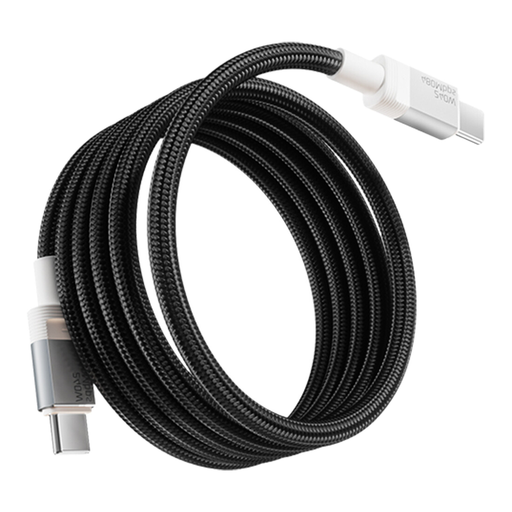
Why It's a Match: Ideal for power users who want to charge their high-end devices, like laptops and the latest smartphones, at the maximum possible speed and who value an extremely durable build for daily use.
According to the manufacturer, this cable features an E-Marker Pro chip for intelligent power negotiation and explicitly supports 240W. The 48-strand nylon braid and aluminum alloy housing directly address the weakness of poor durability.
Full 240W charging power combined with a high-quality material selection focused on longevity.
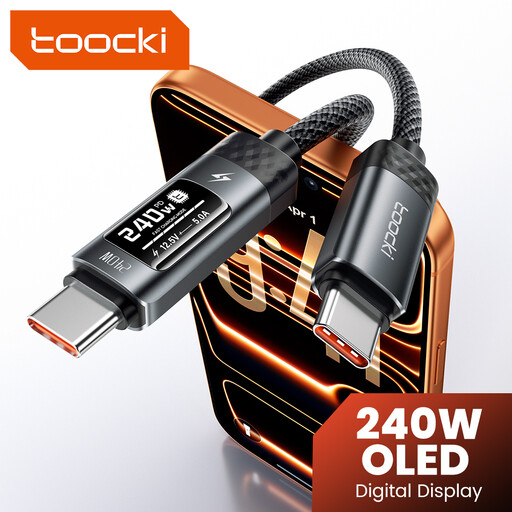
Why It's a Match: Perfect for users who want to know exactly what power their devices are drawing. The display offers transparent monitoring and confirms that fast charging is active.
The integrated wattage display makes the "empty promise" immediately visible. You can see directly whether the 240W (or another high charging power) is actually being achieved, which also indirectly confirms the function of the E-Marker chip.
Real-time power display for monitoring the charging process, combined with full 240W support.
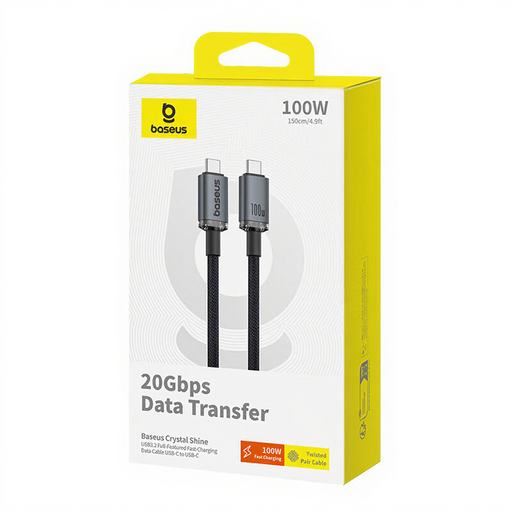
Why It's a Match: For users seeking a reliable and fast charging cable for smartphones, tablets, and most laptops. 100W is an excellent compromise between high performance and an attractive price point, sufficient for the majority of current devices.
This cable relies on a solid build with a nylon weave and an integrated smart chip for battery protection. It avoids the durability trap and ensures a safe charge via its chip, even if it doesn't aim for the full 240W peak.
Strong 100W charging power, which is more than sufficient for most use cases, combined with a very high data transfer rate of 20 Gbps.
We have compiled a complete, up-to-date list of products that fully meet these strict selection criteria and safety regulations.
No, you don't strictly need one, but it's a safe and future-proof choice. A 240W cable is fully backward compatible. Thanks to the E-Marker Chip, it will communicate with your 100W device and deliver exactly the power that is safely requested. You are investing in a cable that will be ready for future, more powerful devices.
Look for the external features: a dense, braided nylon jacket is a good sign. The connector housings should be made of metal (e.g., aluminum) and have a robust transition to the cable (strain relief). The product description should explicitly mention an E-Marker Chip and compliance with the PD 3.1 standard (for 240W).
Although both use the USB-C connector, they are optimized for different primary purposes. A 240W USB-C cable is primarily specialized for maximum power transfer (charging). Its data transfer rates are often limited to the USB 2.0 standard (480 Mbps). Thunderbolt cables (e.g., Thunderbolt 4) are designed for extremely high data transfer rates (up to 40 Gbps) and for transmitting video signals to external monitors. While they can also charge, they often don't reach the 240W peak of the PD 3.1 standard.