
Lieferung heute & morgen

Qualitätsgarantie

Willkommens-Angebote freischalten: KOSTENLOSE Lieferung | Bis zu 80 % RABATT | Kostenlose 30-Tage-JoyPlus-Testphase
App herunterladen
A glass kettle is more than just a kitchen appliance—it's often a design statement. But behind the elegant exterior, there are often hidden pitfalls that can make daily use a chore. Many models look great on the shelf but quickly prove to be impractical, difficult to clean, or less durable than expected. Before you make a decision, it's crucial to distinguish genuine features from mere marketing promises.
This guide will help you avoid the common purchasing traps and find a model that delivers on both aesthetics and performance.
Manufacturers often advertise features that sound impressive at first glance but offer little practical value or even conceal disadvantages.
To make an informed decision, you should focus on objective and measurable parameters. These three criteria are crucial for the longevity and functionality of your glass kettle.
The core component of any glass kettle is its water container. There are significant quality differences here:
The right size and power depend on your household and habits.
Modern kettles offer more than just boiling water.
Here are some recommendations tailored to different user profiles that meet the quality criteria mentioned.
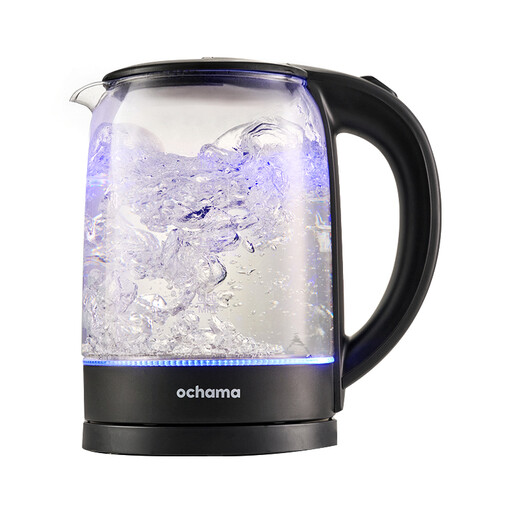
Why This Fits Their Persona: Ideal for families looking for a reliable and straightforward appliance for daily use. With a 1.7-litre capacity and 2200 watts of power, it meets all the basic requirements without unnecessary frills.
The simple design, featuring a borosilicate glass body and a wide opening, avoids hidden limescale traps and makes cleaning significantly easier.
Focuses on the essentials: fast boiling (2200W), large capacity (1.7L), and fundamental safety features like auto shut-off and boil-dry protection.
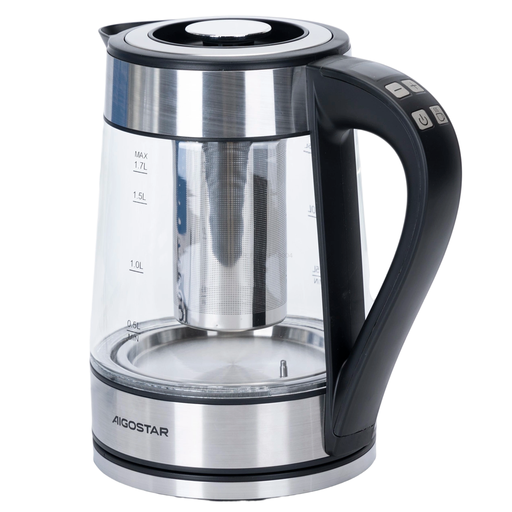
Why This Fits Their Persona: Perfect for users who want more than just boiling water. The precise temperature control and integrated tea filter allow for the optimal preparation of a wide variety of hot beverages.
Instead of just boasting a high wattage, this model offers real functional value with its temperature settings. The removable filter simplifies cleaning and helps prevent limescale issues.
13-level temperature control, a keep-warm function, and an integrated kettle with tea infuser. The digital display also shows the current water temperature.
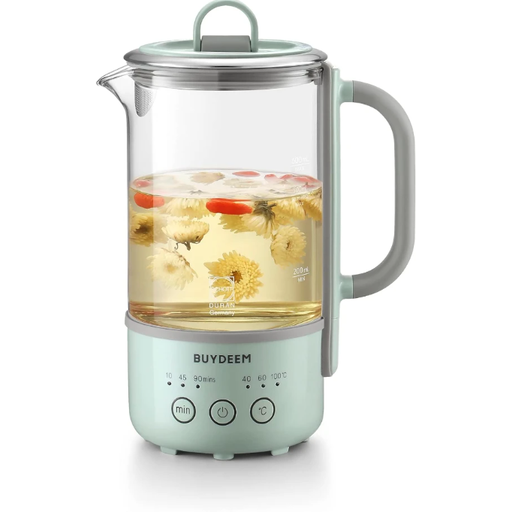
Why This Fits Their Persona: For anyone who values high-quality materials and a thoughtful design. Ideal as a compact travel kettle or for small kitchens, offices, and dorms, without compromising on quality.
It relies on proven quality: according to the manufacturer, it uses German Schott-Duran glass and food-grade 18/10 stainless steel. The focus is on material excellence rather than empty marketing promises.
Compact, award-winning design (iF DESIGN AWARD 2020) and high-quality, durable materials. The 8-hour keep-warm function is a practical bonus in this size class.
We have compiled a complete, up-to-date list of products that fully meet these strict selection criteria and safety standards.
The frequency depends on the water hardness in your area. In areas with hard water, it's recommended to descale the kettle every four to eight weeks. With soft water, cleaning every few months is sufficient. Regular descaling with vinegar essence or specialised descalers ensures a pure taste, maintains the appliance's efficiency, and extends its lifespan.
Each material has its pros and cons. Glass has the advantage of being completely taste-neutral and not leaching any substances into the water. Additionally, limescale buildup is immediately visible. The downside is the risk of breakage if handled improperly. Stainless steel kettles are more robust but can get very hot on the outside. Plastic kettles are lightweight and shatterproof, but low-quality models can affect the water's taste. A high-quality glass kettle made with borosilicate glass and solid safety features is a very safe choice.
"BPA-free" means that the chemical Bisphenol A was not used in the manufacturing of the plastic parts. This is an important, but now fundamental, safety requirement. However, it doesn't guarantee that no other plasticisers or chemicals are present in the plastic. For the purest taste, it is therefore advisable to choose a model where the hot water comes into contact only with glass and high-quality stainless steel.