
Lieferung heute & morgen

Qualitätsgarantie

Willkommens-Angebote freischalten: KOSTENLOSE Lieferung | Bis zu 80 % RABATT | Kostenlose 30-Tage-JoyPlus-Testphase
App herunterladen
Anyone looking to buy a kettle will find models for almost every household: from compact electric kettles and retro kettles to stovetop kettles. The differences are not limited to design – they also include capacity, temperature selection, cleaning and safety features.
To ensure your buying decision is not based solely on colour or advertising claims, it is worth considering how you will actually use the appliance. Three points in particular often lead to unsuitable purchases:
For one or two people, a 1-litre kettle may be sufficient. A 1.6-litre kettle is suitable for several cups of tea or coffee, while a 1.7-litre kettle is often used in family households.
The minimum fill level is important. If you regularly use the kettle for just one cup, the marking should show small quantities of water accurately. The maximum fill line must not be exceeded, as boiling water or steam may escape from the spout.
Heating power is measured in watts. Models with 2,000 to 2,400 watts can heat larger quantities of water in a comparatively short time, provided the power supply and the appliance’s construction are designed for this. The actual time also depends on the amount of water, its starting temperature and the kettle’s design.
A kettle with temperature control is appealing to tea lovers and coffee drinkers. Depending on the product instructions, green tea, black tea and instant coffee are often prepared at different temperatures. However, temperature selection does not replace the instructions on the relevant packaging.
A kettle with a keep-warm function is useful if the water will not be used immediately after heating. Pay attention to how long the water is kept warm and which temperatures can be selected. For example, the Bodum Bistro offers five settings between 60 and 100 °C, as well as a 30-minute keep-warm function. According to the product details, the Aigostar John Glass has 13 temperature settings and a one-touch keep-warm function.
With a glass kettle, you can see the water level and, in some cases, the heating process itself. However, glass surfaces can become very hot during use. Stainless steel and enamelled steel are also widely used materials, but they differ in weight, heat performance and care requirements.
The product description should specify the following safety features:
A removable limescale filter can trap particles and make cleaning easier. Nevertheless, the appliance should be descaled regularly. The manufacturer’s instructions should always be followed. Electrical appliances, bases, cables and plugs must not be immersed in water.
The following selection categorises specific models according to typical requirements. Technical details refer to the respective product descriptions.
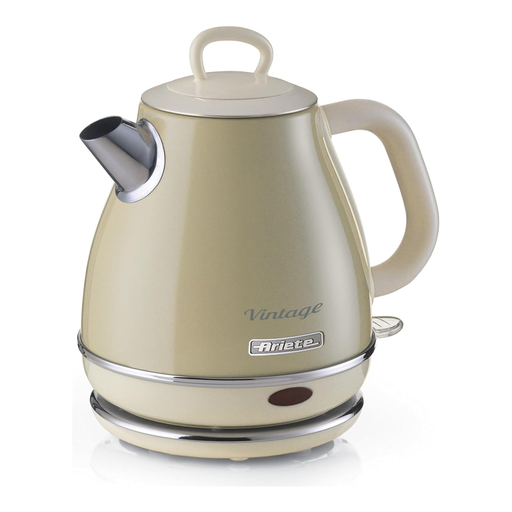
Why this product suits this profile: The 1-litre model is designed for smaller households and individual servings. Its 1,600-watt power, cordless design and 360° base support straightforward everyday use.
The smaller capacity helps prevent unnecessary overfilling when boiling small quantities. Automatic switch-off and the clearly stated product features address key safety requirements.
1-litre capacity, 360° rotating base, cordless jug and retro design.
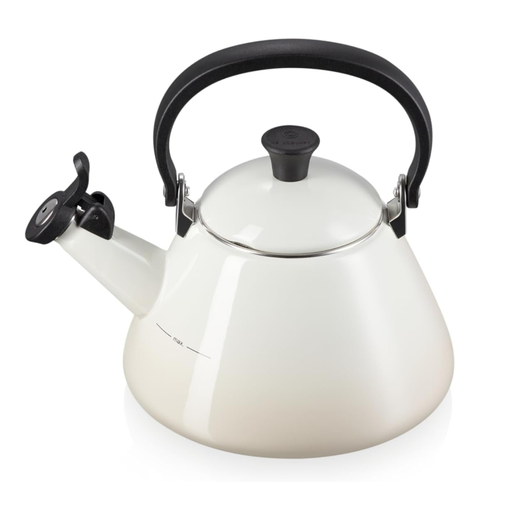
Why this product suits this profile: The enamelled steel kettle is specified as suitable for induction, gas, ceramic and electric hobs. With a capacity of 1.6 litres, it is ideal for several cups of tea or coffee, while its retro design complements style-conscious kitchens.
Compatibility with several types of hob is clearly specified. The fill line, traditional whistle and heat-resistant handle support safe operation.
Enamelled steel, 1.6-litre capacity, whistle when the water boils and suitability for induction hobs.
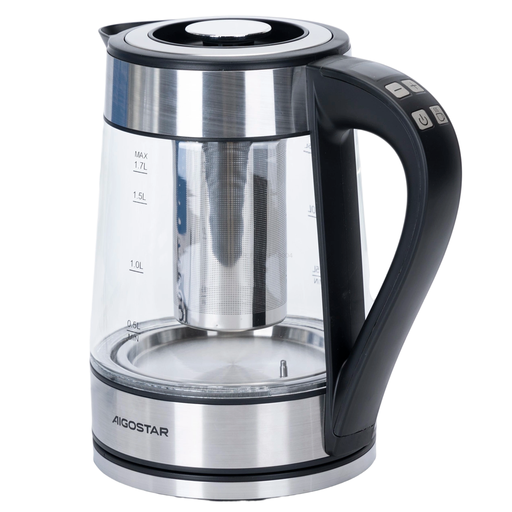
Why this product suits this profile: This model combines a 1.7-litre capacity with temperature selection, a keep-warm function, a removable filter and a tea strainer. It is therefore suitable for households that regularly prepare tea and other hot drinks.
The temperature settings are clearly specified as a 13-step adjustment system. Boil-dry and overheating protection, together with the removable filter, make the features easy to understand.
Glass body, 1.7 litres, 1,850–2,200 watts, temperature display, keep-warm function and removable filter.
We have put together a complete, regularly updated list of products that fully meet these strict selection criteria and the safety regulations applicable in the EU.
A stovetop kettle does not require an electrical base and can be used on induction, gas, ceramic or electric hobs, provided the manufacturer specifies this compatibility. Le Creuset models with a capacity of 1.6 litres are designed for this purpose. However, the water level is not always as easy to see as it is in a glass kettle.
A cordless kettle, on the other hand, is an electric jug that can be lifted off its base after heating. A 360° base makes it easier to position for both right- and left-handed users. For tea and coffee, models with temperature control or a tea strainer are particularly practical. If you only need boiling water, you can do without additional functions and keep operation simple and intuitive.
Service life depends, among other things, on water hardness, usage and care. In areas with hard tap water, the appliance should be descaled more frequently. Enamelled kettles should be cleaned gently, without abrasive products. Electrical models should be unplugged and allowed to cool completely before cleaning.
A kettle should never be operated empty, filled above the maximum mark or left unattended on a switched-on hob. If there is visible damage to the glass, cable or plug, stop using the appliance.
For a typical household, models with around 1,500 to 2,400 watts are common. Higher power can shorten heating time, but it does not automatically improve efficiency. Capacity, the amount of water and automatic switch-off are also important.
Yes, if you prepare different types of tea or other drinks. The temperature should be as easy and precise as possible to set. Fixed settings, a current temperature display or a thermometer can help you choose the right temperature. The tea manufacturer’s preparation instructions remain the most important guide.
This depends on water hardness and usage. If you can see limescale deposits or the kettle takes longer to heat, it is a good time to clean it. Always follow the manufacturer’s care instructions and use suitable descaling products only.