
Lieferung heute & morgen

Qualitätsgarantie

Willkommens-Angebote freischalten: KOSTENLOSE Lieferung | Bis zu 80 % RABATT | Kostenlose 30-Tage-JoyPlus-Testphase
App herunterladen
Buckwheat noodles combine a subtle nutty flavour with a firm, al dente texture. Depending on the recipe, they work as Japanese soba noodles, Korean buckwheat noodles, or versatile Asian noodles for soups, stir-fries and salads. When shopping online, however, it's not just the name "soba" that determines the product's qualities.
Two packets can differ significantly in buckwheat content, fat content, salt content and cooking time. If you only look at big marketing claims like "low fat", "traditional" or "with buckwheat", you might end up buying a packet with a very low buckwheat content or an instant version with seasoning and a higher salt level.
Soba is the Japanese term for buckwheat noodles. However, many products are mostly made from wheat flour, because wheat provides elasticity and a stable noodle structure. Among the available products, the stated buckwheat content ranges from 2 % tartary buckwheat to 40 % buckwheat flour.
A low percentage can be milder in flavour and offer a familiar wheat noodle texture when cooked. If you're looking for a more pronounced buckwheat taste, check the ingredients list and the quantitative declaration rather than relying solely on the product name.
Some dry noodles show 0 g fat per 100 g according to the product details. That applies to the noodles themselves. Oil in the wok, sesame, peanut sauce, coconut milk or a seasoning sachet will change the fat and energy content of the finished dish.
Instant products such as Nissin Soba Chili or Nissin Soba Classic also contain ingredients like palm oil or rapeseed sauce. They are therefore not directly comparable to plain buckwheat soba without a seasoning sachet.
A single 60 g packet is suitable for a small portion or as a side dish. Large packs of 500 g, 720 g, 800 g or 1 kg are more economical for regular households, but they need suitable dry storage after opening.
Cooking time is usually between 3 and 7 minutes, depending on the product. Instant varieties can be ready to serve after about 3 minutes, while classic dry noodles need to be boiled, drained and, for cold dishes, rinsed as well.
The buckwheat content is the most important comparison point for flavour and product character. Examples from the selection:
A higher percentage isn't automatically more practical for every recipe. For stir-fries and soups, a more elastic blend of wheat and buckwheat flour can hold up better. For cold soba dishes, on the other hand, the characteristic flavour often takes centre stage.
Always compare the information on the same basis, preferably per 100 g of uncooked product. The most relevant factors are:
The term "low-fat noodles" simply describes a low fat content and is not a statement about the overall nutritional quality of a dish. For a well-informed choice, both the ingredients list and the nutrition table matter.
Many buckwheat noodles contain wheat flour and therefore gluten. Although buckwheat is botanically not wheat, the finished noodle is not automatically gluten-free due to the recipe. Pay attention to the allergen labelling for wheat, gluten, buckwheat, soya, sesame and other ingredients.
Vegetarians should also check the seasoning sachet in instant products. Nissin Soba Chili lists soya sauce and possible traces of fish, shellfish, milk, mustard and sesame, among others. The labelling on the individual packet is always the deciding factor.
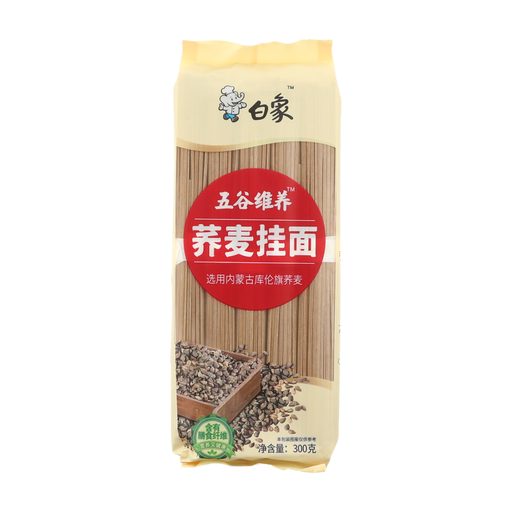
Why this product fits the profile: The 300 g pack offers a manageable introduction to noodles with buckwheat and, according to the product information, is ready in 3–5 minutes.
The buckwheat content of 15 % is clearly stated and not just implied by the product name.
300 g content, 339 kcal and 1.0 g fat per 100 g according to the product information; suitable for soups and sauce-based dishes.
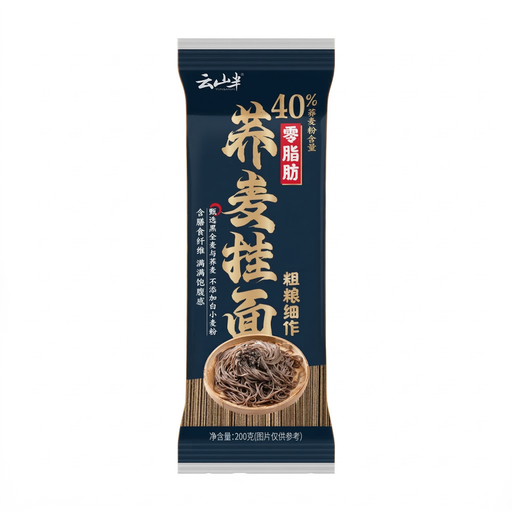
Why this product fits the profile: The declared buckwheat content of 40 % is aimed at shoppers who want to compare the grain content precisely.
The specific quantity prevents a general mention of "buckwheat" from being mistaken for a high percentage.
200 g pack size, 0 g fat and 4.4 g fibre per 100 g according to the product information.
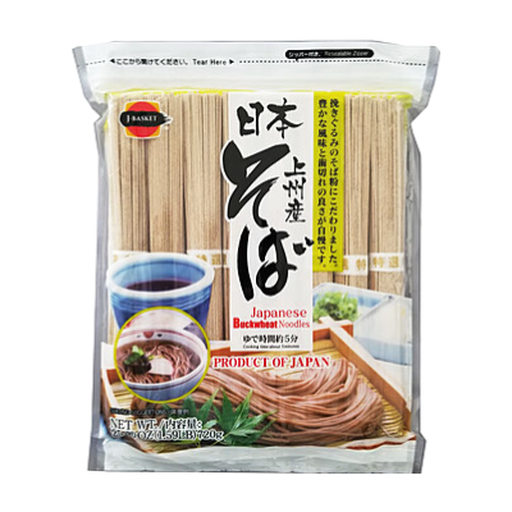
Why this product fits the profile: The large pack is suitable for households that regularly use soba noodles in warm broths or cold dishes.
The preparation time is clearly stated as 5 minutes; for cold soba, the cooked noodles are rinsed.
720 g content, 15 g protein and 1.6 g fat per 100 g according to the product data; intended for both warm and cold recipes.
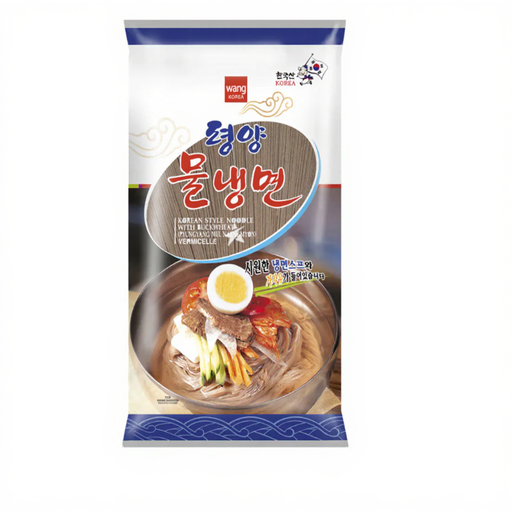
Why this product fits the profile: The combination of noodles and seasoning is designed for Korean cold noodle dishes and reduces preparation effort.
Noodles, seasonings and preparation are described separately; allergens such as wheat, soya, sesame and mustard should be noted.
624 g total quantity, 3–4 minutes cooking time and 0.6 g fat per 100 g according to the product description.
We've put together a complete, regularly updated list of products that fully meet these strict selection criteria and the safety regulations in force in the EU.
For classic buckwheat soba, add the dry noodles to plenty of boiling water. Stick to the cooking time stated on the packet and stir occasionally. For cold dishes, drain the noodles afterwards and briefly rinse them under cold water. This helps remove excess starch from the surface.
For soups, the cooked noodles can be added directly to a broth. For stir-fries, it's best to cook them only until they reach the desired al dente texture, then briefly toss them with vegetables, tofu or a sauce. Instant products usually need less time but often already contain a seasoning sachet. So check before buying whether you want a neutral noodle or a complete meal solution.
Not automatically. Many products contain wheat flour and therefore gluten. Even with a high buckwheat content, you need to check the ingredients list and allergen labelling. Only products that are specifically labelled as such are suitable for a gluten-free diet.
The specific best-before date is on the packaging. Unopened dry noodles should be stored in a cool, dry place away from direct sunlight, following the manufacturer's instructions. After opening, seal the packet well and use the contents promptly.
Yes, provided the product description allows for it. Cook the noodles, drain them and rinse them under cold water. They can then be served as a cold soba salad with vegetables, tofu, herbs or a sauce. With seasoning sets, take the salt content of the included sauce into account when planning your recipe.