
Lieferung heute & morgen

Qualitätsgarantie

Willkommens-Angebote freischalten: KOSTENLOSE Lieferung | Bis zu 80 % RABATT | Kostenlose 30-Tage-JoyPlus-Testphase
App herunterladen
A ceramic fan heater can be a useful portable source of extra heat for a bedroom, living room, office or student accommodation. It takes up little space and warms the air quickly. But eye-catching advertising claims don’t necessarily mean a heater is right for you. What matters is its technical specifications, safety features and where you plan to use it.
A 2000 W fan heater can provide more heat than a 1500 W model. However, at full power it also uses 2 kilowatt-hours of electricity per hour of operation. Wattage indicates maximum power consumption; it doesn’t automatically tell you how efficient the heater is.
A thermostat or ECO mode can reduce how long the heater runs or which heat setting it uses. However, this doesn’t guarantee lower energy consumption for the same amount of heat. Running costs depend above all on how long the heater is on and which heat setting is selected.
An electric fan heater initially warms the air around it. How suitable it is for your space depends on factors including room size, insulation, outdoor temperature, ceiling height and your preferred temperature. So a manufacturer’s claim such as “suitable for 10 to 15 m²” should be treated as a guide, not a guarantee that it will heat the room.
Overheat protection and tip-over protection are important features, but they can’t prevent every risk. Place the heater on a hard, level and stable surface. Keep it well clear of fabrics, curtains, furniture and other flammable items. Never cover the air outlets.
For a small personal area, 1000 to 1500 W may be enough. For a small or medium-sized room that has become particularly cold, a heater of up to 2000 W can offer more capacity. A second, lower heat setting is useful if you don’t need the heater to run at full power all the time.
A PTC fan heater uses a ceramic heating element. PTC stands for “Positive Temperature Coefficient”: the material’s electrical resistance increases as its temperature rises. This affects how the heat is produced, but doesn’t automatically make the heater energy-efficient. So also compare the heat settings, thermostat and timer controls.
A fan heater with a thermostat switches the heating on or off depending on the temperature you set. This is more practical for a study, bedroom or occasional extra warmth than a simple on/off switch.
A fan heater with a timer can switch itself off automatically after a set time. Models with 12- or 24-hour timers offer different levels of flexibility. A remote control is handy if the heater is next to the sofa or bed, but it shouldn’t encourage you to leave the heater running unattended for long periods.
An oscillating fan heater moves the airflow from side to side, helping it reach a wider area. Check that the oscillation angle suits your room layout. Noise levels are also worth considering in bedrooms and workspaces. Manufacturer decibel ratings are only comparable when measured under the same conditions.
Check the dimensions, weight and carry handle. A portable fan heater should stand firmly and be easy to move without pulling on the cable. Don’t use heaters in bathrooms or other damp environments unless they are specifically designed for them.
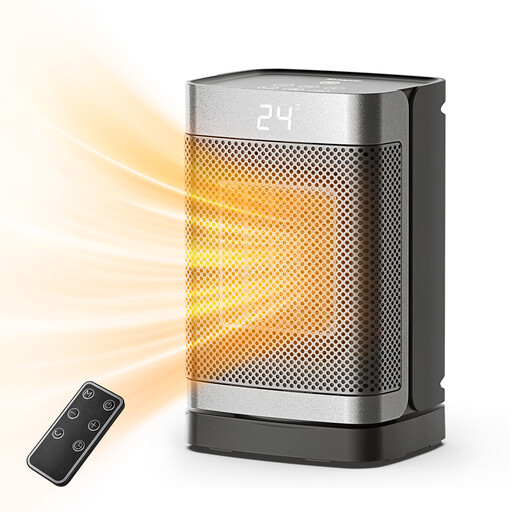
Why this product suits this user: This compact heater is designed for bedrooms, offices and studies. It has two heat settings, digital temperature control and a remote control.
The product details specify the heat settings, a 12-hour timer and safety features, rather than focusing solely on maximum power.
PTC technology, LED display, oscillation, and overheat and tip-over protection, according to the product details.
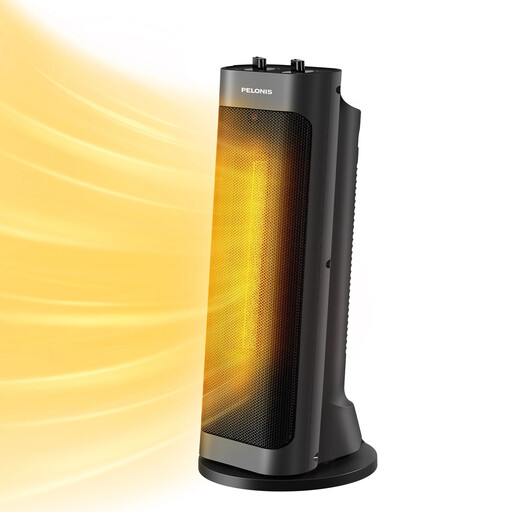
Why this product suits this user: Four heating modes, an adjustable thermostat and a stated 70-degree oscillation range offer plenty of ways to tailor the heat for an office, bedroom or living room.
The thermostat, multiple heating modes and oscillation make it easier to find a suitable setting than running the heater constantly at full power.
2000 W maximum power, 70-degree oscillation, and overheat and tip-over protection, according to the product description.

Why this product suits this user: Five modes, an ECO mode, a thermostat and a 24-hour timer make it a good choice if you want to adjust the heating to suit different times of day.
The timer and selectable modes can help limit unnecessary running time. You should still assess the ECO mode based on the heater’s actual electricity consumption.
24-hour timer, precise temperature control, ECO mode, and overheat and tip-over protection, according to the product details.
We’ve put together a complete, regularly updated list of products that meet these strict selection criteria and the safety requirements in force in the EU.
You can estimate your electricity costs using this formula:
Power in kW × hours of use × electricity price per kWh = cost
A 2000 W heater is equivalent to 2 kW. If you run it for two hours and your personal electricity rate is, for example, 0.35 euros per kWh, the cost would work out at 1.40 euros. Actual costs depend on your tariff, heat setting, thermostat and how long the heater runs.
Also bear the following in mind:
It can be used to heat a bedroom for a limited time, as long as the model is designed for indoor use and is positioned safely. A timer and thermostat can make it easier to use. Only leave it running while you sleep in accordance with the manufacturer’s instructions, and never cover the heater.
Its lifespan depends on how long it is used, exposure to dust, how often it is moved, maintenance and the quality of its individual components. There’s no reliable one-size-fits-all figure in years. Clean the air vents as instructed and check the relevant manufacturer’s warranty terms.
At full power, it uses more electricity than a 1000 or 1500 W model. Costs depend on the heater’s power, how long it runs and your electricity tariff. A thermostat, lower heat setting or timer can limit how long it runs, but won’t reduce the cost of an hour’s use at the same power consumption.