
Lieferung heute & morgen

Qualitätsgarantie

Willkommens-Angebote freischalten: KOSTENLOSE Lieferung | Bis zu 80 % RABATT | Kostenlose 30-Tage-JoyPlus-Testphase
App herunterladen
Condensation on windows, musty smells or laundry that takes a long time to dry are common signs of high humidity. The right dehumidifier can help remove excess moisture from the air. Before you buy, though, it’s worth checking the details: performance figures, room sizes and convenience features aren’t always directly comparable.
A rating such as “20 litres per day” sounds clear-cut. However, actual dehumidifying performance depends on the temperature and relative humidity. Manufacturers often test their products in warm, very humid conditions. In a cool German cellar, the actual daily output may be lower.
So don’t just compare the litre rating. Also check:
A compact tank can fill up quickly in a very damp room. Without automatic shut-off, there’s a risk of water overflowing. Look for a full-tank indicator and automatic shut-off. For longer periods of use, a dehumidifier with a hose is a sensible choice.
A hose connection is particularly useful in a cellar, utility room or for unattended operation. Always position the drain hose so it slopes down towards a suitable drain.
Most electric dehumidifiers use a compressor and fan. The noise can be disruptive in a bedroom or home office. So consider ratings of 30 to 50 dB(A) in the context of the operating mode. Sleep mode often reduces noise and display brightness, but it won’t make the appliance completely silent.
For small bedrooms, bathrooms or individual living spaces, compact models with a capacity of around 800 millilitres to 12 litres per day may be suitable. For larger cellars, utility rooms or several connected spaces, models rated at 16 to 30 litres per day may be a better fit.
Manufacturers don’t use a consistent measure for room size: some give square metres, while others specify cubic metres. If you have high ceilings or an open-plan layout, room volume is the more useful measure. A dehumidifier for a cellar should also have an automatic defrost function if the room is often cool.
Look for:
A dehumidifier for a bathroom should be kept away from the shower, bath and sink, and protected from splashes. The appliance is designed for indoor use, but shouldn’t be operated somewhere where water could get onto its casing.
You can’t judge whether a product is “energy efficient” from a marketing claim alone. Compare the power consumption in watts and check whether it has an automatic mode. This stops or reduces operation once the set humidity level is reached.
A simple estimate is:
Power consumption in kW × hours of operation × electricity price = running costs
A 200-watt appliance running for five hours a day uses 1 kWh per day in theory. Actual consumption depends on room temperature, humidity, target level and operating mode.
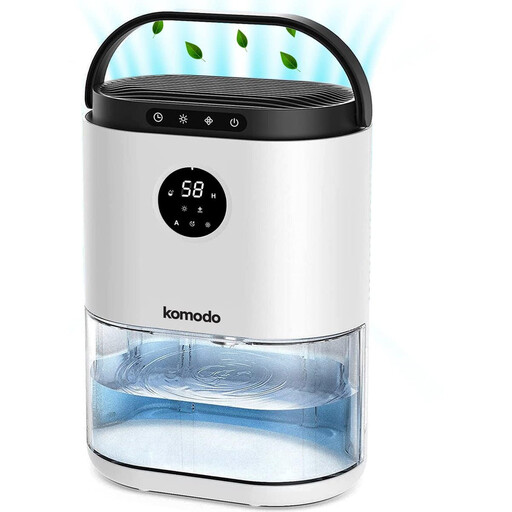
Why this product suits this profile: Product information states that this compact appliance is designed for rooms up to 30 m², making it suitable for individual rooms with moderate humidity.
The removable 2.3-litre tank, full-tank shut-off and three modes mean you won’t need to check on it as often.
Product data lists a noise level of 32–34 dB, 65 watts of power consumption, an 8- to 48-hour timer and castors.
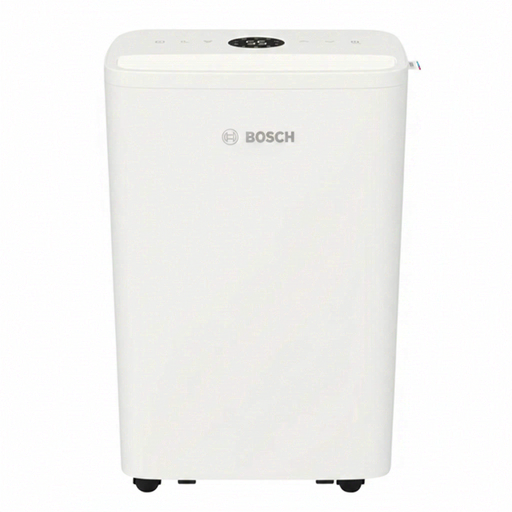
Why this product suits this profile: A good option if you prefer clear controls, several automatic functions and a hose for continuous drainage.
Product information lists a 2.5-litre tank, a full-tank alert, automatic shut-off and a drain hose included in the box.
10 litres per day, 36 dB according to the manufacturer, plus night, laundry, defrost and automatic modes.
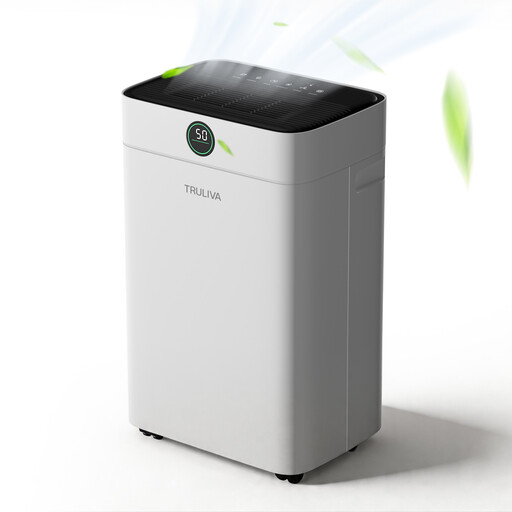
Why this product suits this profile: According to the product description, this model is aimed at households with larger rooms, cellars or laundry that needs drying regularly.
The 2.8-litre tank can be supplemented with the hose supplied, and the product also has an automatic defrost function.
Up to 25 litres per day under the stated test conditions, a laundry-drying mode, castors and a sleep mode rated below 50 dB according to product information.
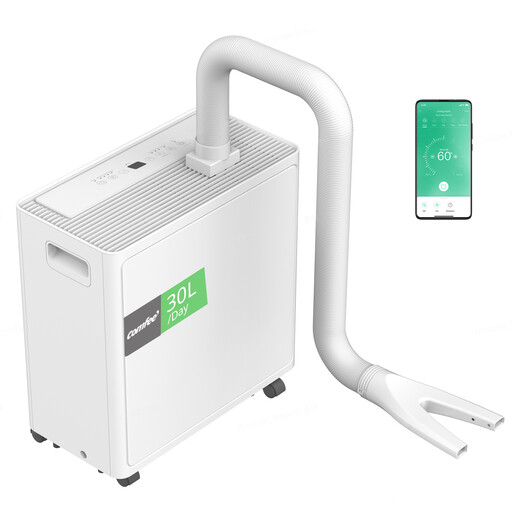
Why this product suits this profile: Suitable if you want to cover a larger area and monitor or adjust humidity using your smartphone.
Product information lists a 3.2-litre tank, continuous drainage, full-tank protection and a child lock.
30 litres per 24 hours, app control, four operating modes, laundry drying and a stated noise level of 45.3–47 dB(A).
We’ve put together a complete, regularly updated list of products that meet these strict selection criteria and comply fully with the safety regulations in force in the EU.
Place the dehumidifier on a flat, stable surface, leaving plenty of space around the air inlet and outlet. If it has been transported at an angle, leave it upright for several hours before plugging it in, as instructed in the manual.
For even performance:
A dehumidifier to help prevent mould won’t identify or fix the cause of damp. If walls are persistently damp, water is getting in or you can see mould, property owners should have the underlying structural issue investigated. Tenants should inform their landlord and keep a record of the situation.
It depends on its power rating, how long it runs and whether it has an automatic mode. The wattage on the rating plate gives you a starting point for calculating consumption. An automatic mode can reduce running time once the target humidity is reached. For a realistic comparison, also consider the timer, target humidity and operating conditions.
Place it on a flat surface with a clear flow of air, away from walls and well away from splashes. In a cellar, choose a spot with enough space around it and away from the walls. In a bathroom, keep it outside the area that gets directly wet.
Its lifespan depends on operating hours, ambient temperature, maintenance and correct placement. A clean filter, dry storage location and following the instructions can help support regular use. With compressor models, it’s normal to wait briefly before restarting the appliance, so be sure to observe the recommended pause.