
Lieferung heute & morgen

Qualitätsgarantie

Willkommens-Angebote freischalten: KOSTENLOSE Lieferung | Bis zu 80 % RABATT | Kostenlose 30-Tage-JoyPlus-Testphase
App herunterladen
By Joybuy Product Recommendation Officer, August 30, 2026
Damp walls, a musty smell in the basement, or laundry that just won't dry in winter—consistently high humidity in living spaces is not only unpleasant but can also lead to structural damage and mould growth. An electric dehumidifier promises a quick remedy. However, the market is flooded with devices making grandiose advertising claims that often fail to deliver in practice.
Before you make a purchasing decision, it's crucial to understand the common pitfalls. Many buyers rely on misleading metrics or overlook critical design features, resulting in an unsuitable device and unnecessary costs. This guide will show you what to look for to make an informed choice.
To make the right choice, you should focus on objective, technical features that are directly tailored to your needs.
The rated capacity (e.g., 20L dehumidifier) is a benchmark. What's crucial is its suitability for your room size and the prevailing temperatures.
For use as a room dehumidifier for mould or for long-term humidity regulation, unattended operation is critical.
A device's functionality extends beyond simple dehumidification.
Instead of making a one-size-fits-all recommendation, we have identified models that meet specific requirements and avoid the pitfalls mentioned.
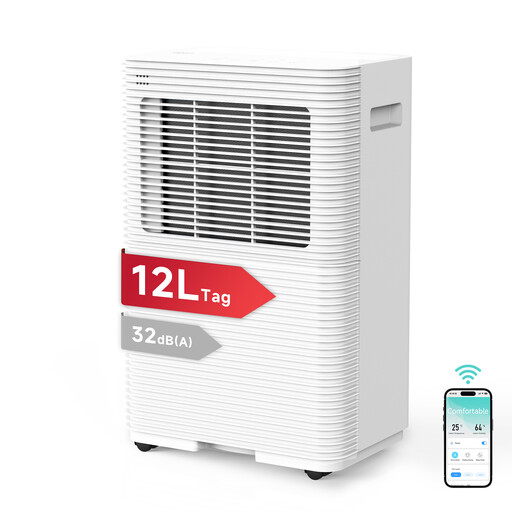
Why this model is a good fit: Ideal for use in noise-sensitive environments like bedrooms or a home office, where a loud device would disrupt daily life. The smart control via an app offers added convenience.
Directly addresses the pitfall of ignoring operational noise. According to the manufacturer, the device operates at just 32 dB in sleep mode, which is very quiet for a compressor dehumidifier.
Very quiet operation in sleep mode and convenient remote control via a Wi-Fi app for scheduling and monitoring.
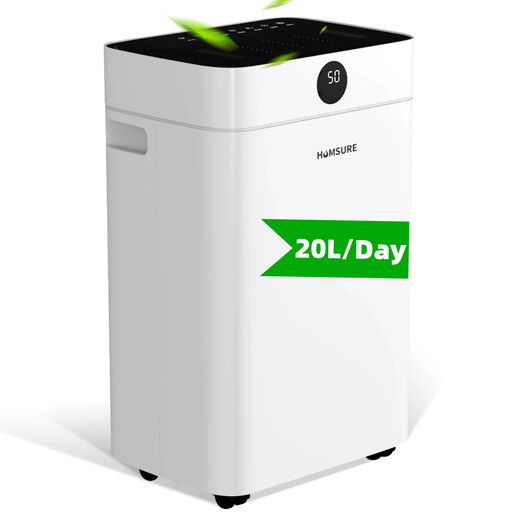
Why this model is a good fit: Designed for unattended use in rooms with consistently high humidity. The 20 L/day capacity is suitable for basements up to 50 m?, and the continuous drain allows for maintenance-free operation.
Solves the problem of impractical water disposal with its included drain hose. The auto-defrost function also ensures performance in cooler environments, countering the pitfall of unrealistic performance claims.
Balanced performance for standard room sizes, includes a hose connection for continuous operation, and a special laundry dry mode.
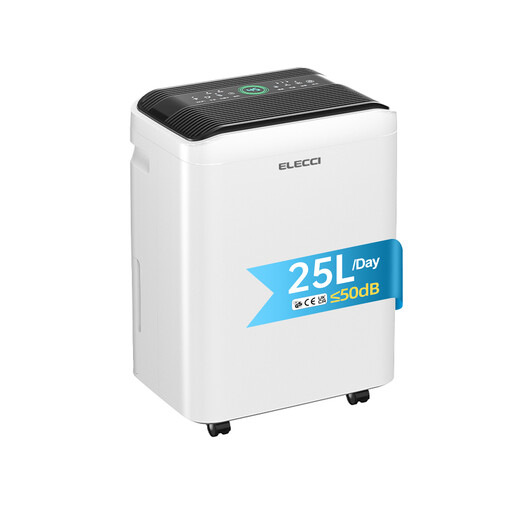
Why this model is a good fit: For users with large rooms or severe humidity problems who need high dehumidification performance. The 25 L/day capacity provides performance reserves for demanding tasks.
Offers a high, verifiable dehumidification capacity that also delivers in practice. The large 4.8-litre tank and hose connection provide maximum flexibility, avoiding the pitfalls of inadequate performance and impractical handling.
High dehumidification capacity (25 L/day) combined with relatively quiet operation (36 dB according to the manufacturer) and a very large water tank.
We have compiled a complete, up-to-date list of products that fully meet these strict selection criteria and German safety regulations.
Power consumption depends on the device's power input (watts) and duration of use. A typical 20L dehumidifier has a power input between 280 and 400 watts. For example, if a 350-watt device runs for 8 hours a day, it consumes 2.8 kilowatt-hours (kWh). The exact cost depends on your electricity tariff, but investing in an energy-efficient model with a hygrostat can significantly reduce operating costs.
For optimal efficiency, the device should be placed as centrally as possible in the room. Maintain a distance of at least 25-30 cm from walls and furniture to allow air to circulate freely. Never block the air intake or outlet. In multi-level damp areas, such as a basement with an adjoining hallway, positioning it in the lowest or dampest area is most effective.
A dehumidifier with a hose connection is not strictly necessary, but it is highly recommended for basement use. In a damp basement, a 20-litre unit can fill its tank within a day. If you don't want to or can't empty the tank daily, continuous drainage via a hose offers a maintenance-free and safe solution to ensure constant dehumidification and prevent the tank from overflowing.