
Lieferung heute & morgen

Qualitätsgarantie

Willkommens-Angebote freischalten: KOSTENLOSE Lieferung | Bis zu 80 % RABATT | Kostenlose 30-Tage-JoyPlus-Testphase
App herunterladen
Steamy windows, musty smells, laundry that takes a long time to dry or dark patches on walls are typical signs of high humidity. A dehumidifier can help improve indoor air quality, but it cannot replace regular ventilation or address structural causes such as water ingress or leaking pipes.
Three main marketing traps often lead to poor purchasing decisions:
For a bedroom, bathroom or smaller living space, a model with 12 to 16 litres per day is often sufficient. A 20L dehumidifier or a model with a capacity of 25 litres per day may be useful where moisture levels are higher, in utility rooms or in larger spaces.
However, the litre rating is not a guaranteed daily output for every home. A model rated at 20 l/day may collect less water in significantly cooler conditions. For a basement, the Auto-Defrost function is therefore also important: it can help reduce ice build-up on the heat exchanger at low temperatures. The temperature range specified for the individual model remains decisive.
A small tank needs to be emptied more frequently when humidity is high. For occasional use, a water tank of around 1.8 to 2.5 litres is usually sufficient. If you are looking for a dehumidifier for a basement, utility room or extended continuous operation, look for the following:
A hose connection is only practical if there is a suitable drain nearby. A pump is not automatically included and must be considered separately if the drain is higher than the appliance.
A humidistat measures relative humidity and automatically switches the compressor on or off at a set target level. This prevents continuous operation, can save electricity and makes the appliance easier to use in a bedroom.
A timer is useful for drying laundry for a limited period or running the appliance at specific times of day. Wi-Fi control is particularly useful if you want to monitor the appliance while away from home or schedule it via an app. However, it does not replace checking the water tank unless a drain hose is connected.
A dehumidifier can reduce relative humidity and thereby limit condensation on cold surfaces. However, it does not remove existing mould or eliminate the source of moisture. If you notice visible mould, recurring damp patches or a strong musty smell, the cause should be professionally investigated.
For living spaces, a range of approximately 40 to 60 per cent relative humidity is often used as a practical guide. The ideal target depends on the room and the building fabric. A separate hygrometer can be useful, as the sensors in different appliances may produce different readings.
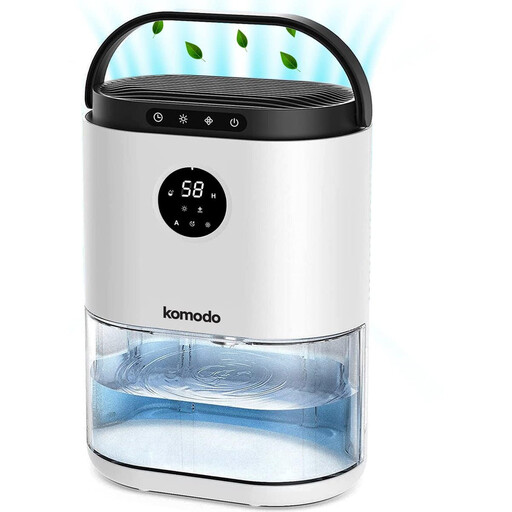
Why this product suits this profile: This compact model is designed for smaller rooms of up to the stated 30 m² and is suitable for occasional dampness in bedrooms, home offices or bathrooms.
The product data specifies 32–34 dB in quiet operation, a timer from 8 to 48 hours and automatic shut-off when the tank is full.
65 W power consumption, three modes and a removable 2.3-litre tank.

Why this product suits this profile: Designed for living spaces of up to the stated 40 m², this model combines dehumidification, app control and a sleep mode.
The product specifications state 20 l/day at 30 °C and 80% relative humidity, making the performance rating easier to assess. A 35 dB mode is specified for night-time use.
Wi-Fi app, 24-hour scheduling, laundry-drying function and 2.5-litre tank.
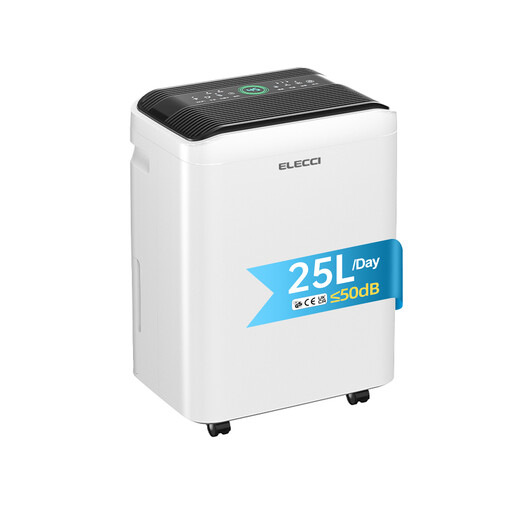
Why this product suits this profile: This appliance is aimed at users dealing with higher moisture levels in basements, utility rooms or spaces of up to the stated 50 m².
The combination of Auto-Defrost, a 4.8-litre tank and a hose connection helps reduce interruptions during extended use.
Up to 25 l/day under the stated test conditions, three fan speeds, a 24-hour timer and laundry mode.

Why this product suits this profile: Designed for smaller rooms of up to the stated 24 m², this model offers app control, scheduling and a quiet sleep mode.
The specifications state a 32 dB sleep mode, a 1.8-litre tank, plus manual and continuous drainage.
12 l/day under the stated conditions, Wi-Fi control, 24-hour scheduling and laundry-drying function.
We have put together a complete, regularly updated list of products that fully meet these strict selection criteria and the safety regulations applicable in the EU.
Running costs depend on power consumption, daily operating time and your electricity tariff. The simple calculation is:
Power consumption in kW × operating hours × electricity price per kWh = running costs.
A 300-watt appliance theoretically uses 3 kWh when operated for ten hours. Actual consumption may be lower due to the humidistat, pauses and different operating modes.
Before first use, a compressor-based dehumidifier should be left upright after transport, in accordance with the instruction manual. During operation, the appliance needs a stable, level surface and sufficient clearance for air intake and exhaust. Air grilles must not be covered. Models containing R290 use a flammable refrigerant, so heat sources, naked flames and unauthorised repairs must be avoided. Unplug the appliance before cleaning, moving it or connecting the drain hose.
The washable filter should be checked and cleaned regularly. A clogged filter can impair airflow and dehumidification performance.
This depends on the humidity level, room size and target value. Using the appliance with a humidistat is advisable rather than running it continuously without regulation. When drying laundry, you can use a time-limited Dry mode.
Its lifespan depends on operating hours, filter care, transport and where it is installed. Keeping the filter clean, ensuring adequate ventilation and emptying the tank before moving the appliance can reduce typical strain. With compressor models, a short start-up delay after switching off may be normal.
Yes, provided the noise level, dimensions and safety clearances are suitable. A sleep mode with a lower noise level and a timer are useful features to look for. The appliance should not be placed directly next to the bed, and the airflow must not be blocked.