
Lieferung heute & morgen

Qualitätsgarantie

Willkommens-Angebote freischalten: KOSTENLOSE Lieferung | Bis zu 80 % RABATT | Kostenlose 30-Tage-JoyPlus-Testphase
App herunterladen
A digital tyre pressure gauge can make checking the pressure of your car, SUV, motorbike, bicycle, motorhome or trailer easier. However, devices vary considerably in terms of measurement range, valve connection, power supply and operation. If you focus solely on a high PSI rating or a large display, you may end up buying a product that does not suit the way you intend to use it day to day.
A digital tyre pressure gauge with a rating of 200 or 300 PSI may sound versatile. However, the pressure actually required by most car tyres is significantly lower. A wide measurement range is therefore only relevant if you also intend to use the device for special applications such as certain trailers, air springs, balls or other inflatable items.
A clear display, suitable resolution and a secure connection to the tyre valve are more important. When comparing products, you should also check whether the display can be switched between bar, PSI, kPa and kg/cm². In Germany, bar is particularly practical for everyday vehicle use.
Many digital tyre pressure gauges for cars are designed for Schrader valves. This type of valve is common on cars, motorbikes and many bicycles. Bicycles with Presta valves, on the other hand, require a suitable adapter. Without one, the pressure cannot be measured reliably, or the connection may not fit at all.
Before buying, users should therefore check:
A standalone tyre pressure gauge displays the existing pressure but does not inflate the tyre. A tyre inflator with pressure display or a portable tyre compressor, on the other hand, can measure the pressure and supply air. This combination is practical when you are on the move, but it requires a power source or a charged battery.
With a compressor, you should also consider airflow, operating time, cable or battery configuration, and automatic shut-off. A high maximum rating such as 150 PSI alone says little about how quickly a car, motorbike or bicycle tyre can be inflated in everyday use.
The measurement range should suit your vehicle and intended application. For cars, SUVs and motorbikes, a range that covers the recommended tyre pressure with some reserve is often sufficient. A 200 PSI tyre pressure gauge offers additional uses, but is not automatically more accurate than a model with a smaller range.
A display in 0.1 increments can make readings easier to interpret. Products with an illuminated display or integrated torch can also be used in poor lighting conditions. Accuracy figures should be regarded as manufacturer specifications. The AstroAI model, for example, is stated to measure according to ANSI B40.7 2A; its actual suitability still depends on the condition of the connection and correct use.
A well-sealed valve head is essential. If a noticeable amount of air escapes when attaching or removing it, the result may be inaccurate. Brass connections and an extended nozzle can make handling easier, but they do not replace a clean, straight connection to the valve.
The casing should be easy to grip and able to withstand the intended use. Compact dimensions are useful for storage in the boot, glove compartment or bicycle bag. Battery-powered devices require spare batteries, while the charge level of battery compressors should be checked regularly.
A tyre pressure gauge for cars and bicycles is generally attached manually to the valve. A tyre pressure monitoring system, or TPMS for short, continuously monitors pressure using sensors and displays deviations while driving or when the vehicle starts. Both solutions serve different purposes:
The vehicle manufacturer’s reference values remain the deciding factor. They are often shown on the B-pillar, inside the fuel flap or in the owner’s manual.
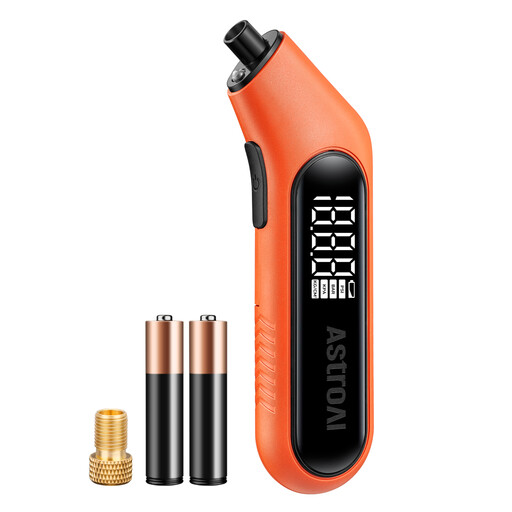
Why this product suits this profile: This manual gauge is suitable for users who want to check the tyre pressure of a car, SUV, lorry, motorbike or bicycle themselves, without needing a compressor.
Four pressure units, a display up to 300 PSI and an extended connection make selection easier and can reduce losses at the connection.
Large illuminated display, integrated torch and automatic shut-off after approximately 30–40 seconds, according to the product information.
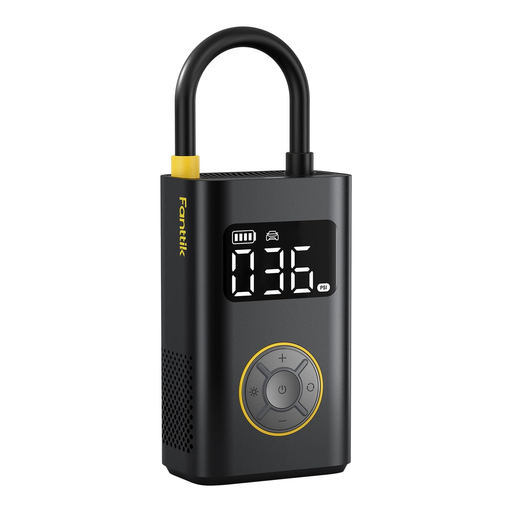
Why this product suits this profile: This cordless compressor is designed for vehicle owners who want to check pressure and top up their tyres while on the move, without a 12-volt connection.
The preset shut-off reduces the risk of continued inflation. The integrated hose and accessory compartment keep loose parts together.
Maximum pressure of up to 150 PSI according to the product description, four preset modes plus a manual mode, and up to 23 minutes of operating time.
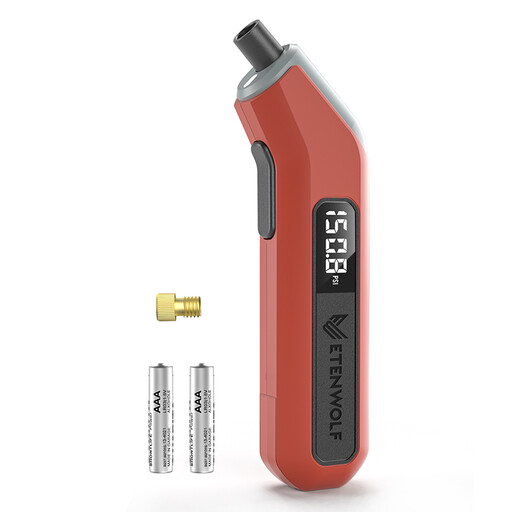
Why this product suits this profile: Its compact design fits in a bicycle or motorbike bag and is suitable for regular checks on different types of valve.
The included Presta valve adapter addresses the common compatibility issue with bicycles. The display is designed for different pressure ranges.
Measurement range up to 200 PSI according to the product name, LED display and two included AAA batteries.
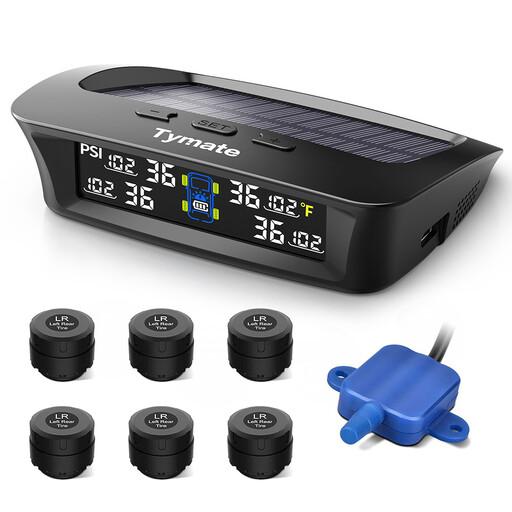
Why this product suits this profile: This system is designed for motorhomes, trailers, SUVs and vehicles with several monitored tyres where continuous readings are required.
Pressure and temperature alerts show when individual tyres deviate from the expected values. The package includes sensors, a repeater and a display unit.
Measurement range up to 0–116 PSI, six types of alarm according to the product description, and sensor batteries with a stated lifespan of approximately two years.
We have put together a complete, regularly updated list of products that fully meet these strict selection criteria and the safety regulations applicable in the EU.
For a comparable reading, the tyre should be as cold as possible. Attach the gauge to the valve before taking the reading. With a compressor, first set the value specified by the vehicle manufacturer. After inflating, it is advisable to check the pressure again.
Care includes:
Checking the pressure before longer journeys, when the load changes and after significant temperature changes is advisable. Many vehicle manufacturers also recommend checking it regularly at short intervals. The exact schedule depends on the vehicle, tyres and how they are used.
Their lifespan depends on the batteries, valve mechanism, casing and storage conditions. A manual tyre pressure gauge can remain usable for a long time if stored in a dry place and protected from impacts. External sensor batteries in a TPMS must be replaced after the service life specified by the manufacturer. Battery compressors should be charged regularly and protected from moisture.
With a battery-powered gauge, the main running costs are for replacement batteries. A 12-volt compressor uses the vehicle battery while operating. A cordless compressor does not incur ongoing energy costs in the traditional sense, but it does need to be recharged regularly. The key consideration is therefore not just the purchase price, but whether the power supply suits the intended use.