
Lieferung heute & morgen

Qualitätsgarantie

Willkommens-Angebote freischalten: KOSTENLOSE Lieferung | Bis zu 80 % RABATT | Kostenlose 30-Tage-JoyPlus-Testphase
App herunterladen
A tyre pressure monitoring system for a motorhome and trailer can display pressure and temperature readings while you’re on the move. This is particularly useful for long vehicle combinations, heavy motorhomes and frequent motorway journeys. However, TPMS kits vary considerably in the number of sensors, wireless range, alarm functions and fitting requirements.
If you focus only on terms such as ‘real time’ or ‘0–188 PSI’, you could miss important details. Three common buying pitfalls are worth watching out for:
The right number depends on all the tyres you want to monitor, not just those on the towing vehicle:
Before ordering, take the axles, twin wheels and spare tyres into account when making a list of what you want to monitor. A system may support several tyres even if the kit itself contains only 4, 6, 8 or 10 sensors.
A tyre pressure and temperature monitoring system should suit your tyres and the type of vehicle you intend to use it with. The following specifications are relevant for motorhomes, caravans and trailers:
However, a tyre pressure sensor with an alarm is no substitute for checking your tyres when the vehicle is stationary. Before setting off, check the tyre pressure, valves, visible damage and load in accordance with the vehicle or tyre manufacturer’s instructions.
With a trailer or semi-trailer, the wireless signal often has further to travel than it does in a car. According to the product specifications, GUTA systems operate at 433,92 MHz. Versions with a repeater or signal booster are designed for longer vehicle combinations.
Also look out for:
Fit the sensors according to the instructions and check regularly that they’re secure. A TPMS provides an additional display and warning function; it’s not a replacement for the required vehicle maintenance.
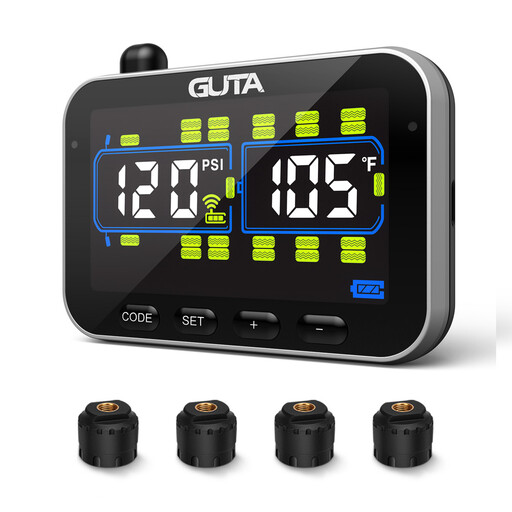
Why this product suits this profile: The kit covers four monitored tyres and has a colour display for pressure and temperature readings. It’s designed for many motorhomes without an additional trailer.
The number of sensors is clearly stated. Before buying, check that four positions are genuinely enough for your particular vehicle.
Pre-paired sensors, six types of alarm, an 850-mAh battery and, according to the product specifications, a sensor battery life of around four years.
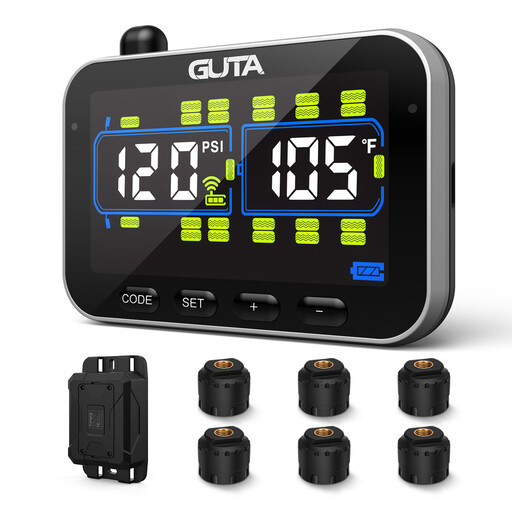
Why this product suits this profile: Six sensors let you monitor a motorhome with four tyres and a trailer with two. A repeater is included in the kit.
The signal booster addresses the common issue of range on longer vehicle combinations. Check the stated vehicle length against the actual position where you’ll fit the equipment.
433,92-MHz communication, a repeater, automatic calibration, and alerts for changes in pressure, temperature and battery status.
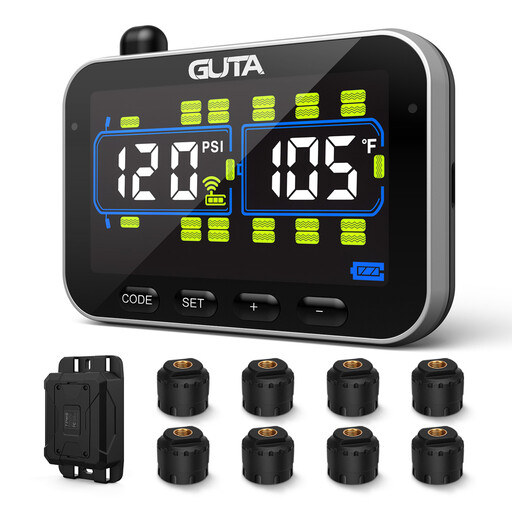
Why this product suits this profile: Eight sensors provide extra positions for tandem trailers, larger caravans or vehicles with multiple axles. The repeater helps support long wireless connections.
Having more sensors reduces the risk of buying a kit that’s underspecified. You’ll still need to check the actual number of tyres and the system’s permitted capacity.
Pressure range stated in the product specifications as up to 0–14 BAR, temperature range of -40 to 105 °C, and six defined alarm types.
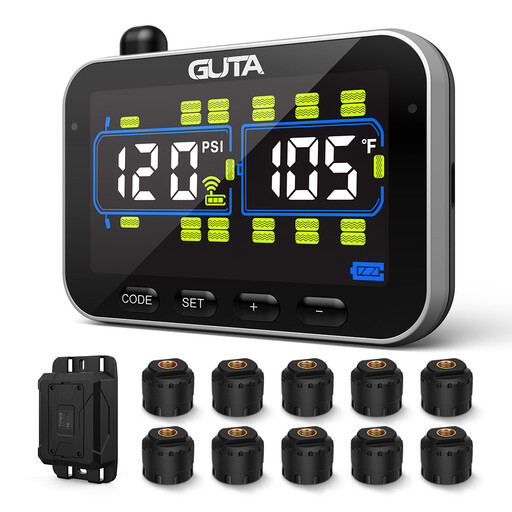
Why this product suits this profile: Ten sensors are suitable for larger vehicle combinations and uses involving many monitored tyres, provided the system configuration and range suit your fleet.
The higher sensor count helps with more complex vehicle combinations. Before use, label each sensor clearly, assign it to the right tyre position and carry out regular maintenance.
A repeater, pre-paired sensors, automatic sleep mode after ten minutes and, according to the product specifications, system capacity for up to 24 tyres.
We’ve put together a complete, regularly updated list of products that meet these strict selection criteria and fully comply with the safety regulations in force in the EU.
First, assign the sensors to the relevant tyre positions and screw them onto the valves. With pre-paired kits, the display can identify the different positions as soon as the sensors are fitted. Next, check the tyre pressure when the tyres are cold, calibrate the reference pressure and check the alarm thresholds against the vehicle and tyre specifications. For long vehicle combinations, position the signal booster between the sensors and display as instructed.
The GUTA kits mentioned here have an estimated life of around four years for external sensors with CR2032 batteries. Actual battery life depends on temperature, measurement intervals, storage and use. Take any low sensor battery warning seriously. After changing a tyre or valve, also check that the sensor is still secure and airtight.
Typical ongoing costs include replacement batteries, extra sensors if needed, and replacement valve components if they’re damaged. On the systems described, the display unit is charged via USB-C, while the external sensors use CR2032 batteries. Before buying, check the price and availability of compatible replacement sensors.