
Lieferung heute & morgen

Qualitätsgarantie

Willkommens-Angebote freischalten: KOSTENLOSE Lieferung | Bis zu 80 % RABATT | Kostenlose 30-Tage-JoyPlus-Testphase
App herunterladen
A dish drying rack should keep plates, cups, cutlery, and cookware organised after washing up. In small apartments or kitchens with limited countertop space, the stated capacity is only part of the equation. The right dimensions, a stable base, and a drainage solution that reliably collects or directs water are just as important.
Product descriptions often highlight how many plates or cups a rack can hold. However, the required countertop space is easily overlooked. A 2-tier dish rack makes efficient use of vertical space, but models taller than 30 cm may interfere with wall cabinets or shelves. Before buying, measure the available space beside the sink as well as the clearance beneath any cabinets above it.
An integrated or removable drip tray protects the countertop from standing water. However, cleaning becomes more cumbersome if there is no drain outlet or the tray cannot be removed. Residual water should be emptied regularly to prevent limescale deposits and unpleasant odours. A dish rack with a drip tray is only truly practical when the tray is easy to access and clean.
A stainless steel dish rack is often associated with durability. Even so, the exact material specification should be checked: some models are made from stainless steel, while others use coated steel or plastic. Weight distribution also matters. Heavy pots placed on one side or too many plates on the upper tier can compromise stability. Non-slip feet and a level setup surface are valuable features for everyday use.
Measure the length, depth, and height of the intended location. As a general guide:
A dish drying rack with separate sections keeps plates upright and prevents cups or bowls from nesting inside one another. A cutlery holder is useful when knives, forks, and cooking utensils need to dry separately. Check whether the holder can be removed and whether water can drain from it.
Capacity figures are not always directly comparable. “Up to 17 plates,” for example, describes a different configuration from “10 plates and 12 cups.” For households that wash dishes regularly, a 2-tier model may be a sensible choice. Those who usually wash only a few items by hand can often manage with a compact single-tier dish drainer.
A drip tray made from PP or ABS plastic is lightweight and can be removed. On some models, a drain outlet or rotating water diverter directs water towards the sink. Without one of these features, the tray must be emptied by hand.
Pay attention to:
For coated or metal racks, avoid abrasive products and harsh cleaners unless the care instructions specify otherwise.
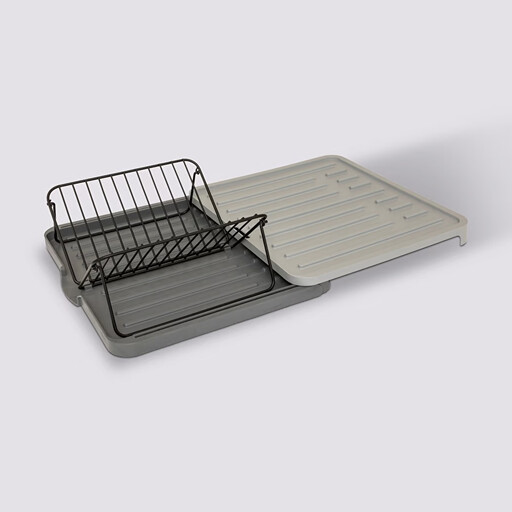
Why it fits: Measuring 58.2 × 36.2 × 10.3 cm, this flat model offers a straightforward solution for households that do not need an additional tier.
The PP drip tray is designed to fit the rack and collects draining water instead of allowing it to spread across the countertop.
Steel frame, space for up to six glasses according to the product details, and a weight of 1.01 kg.
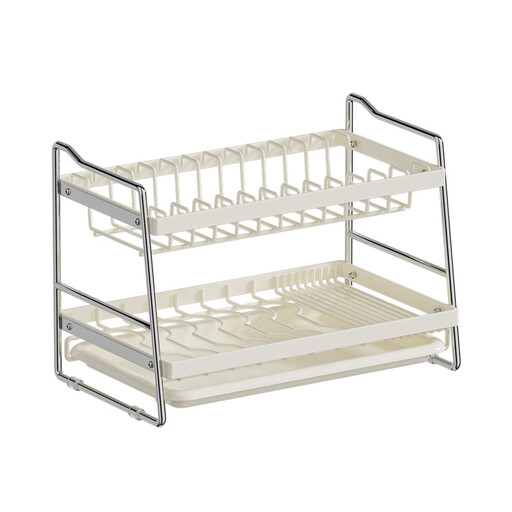
Why it fits: Measuring approximately 40 × 23.6 × 28.7 cm, the 2-tier design makes efficient use of vertical space while keeping the footprint relatively narrow.
The product details specify integrated drip boards and a freestanding design, so no attachment to the sink is required.
Two tiers, a white finish, and separate water drainage according to the product description; assembly of individual parts is required.
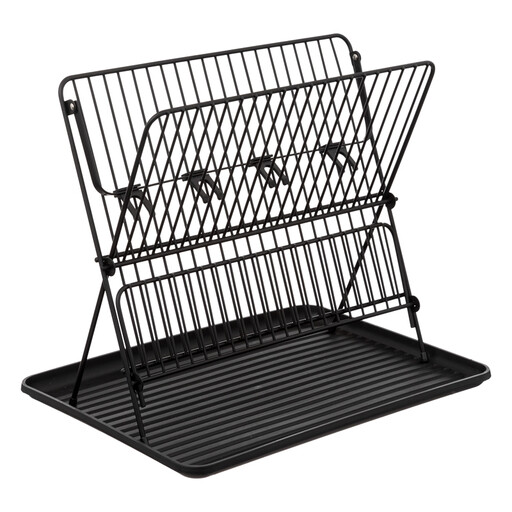
Why it fits: The foldable design is ideal for kitchens where the dish drying rack should not remain permanently on the countertop.
The removable drip tray can be emptied and cleaned regularly. The product description also recommends distributing the load evenly.
Two tiers, a foldable design, and a removable tray; the upper compartment should not be overloaded on one side.
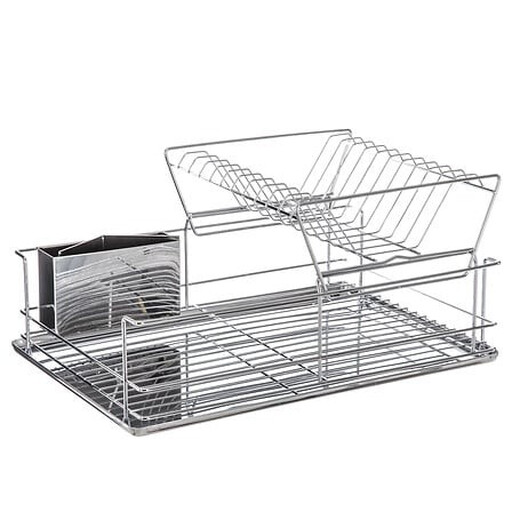
Why it fits: Measuring 47 × 32.3 × 22.5 cm, this model is designed for users who want to dry plates and cups on separate tiers.
The dimensions and stated layout can be clearly checked before purchase. According to the product description, the model holds up to 10 plates and 12 cups.
Corrosion-resistant steel or stainless steel according to the product details, plus two tiers for organised storage.
Browse the complete selection of dish drainers with drip trays for different countertop sizes, household needs, and usage habits.
Place the countertop dish rack on a level, stable surface. Plates should stand as upright as possible in their designated slots; heavy pots belong on the lower tier or directly on the countertop. Empty the drip tray after the dishes have dried, then wipe the rack, cutlery holder, and tray with a mild cleaning agent.
A fixed service life cannot be stated reliably without information from the manufacturer. It depends on factors including the material, moisture exposure, load, and care. Regularly inspect weld points, coatings, plastic components, and feet. If you notice visible corrosion, cracks, or unstable connections, stop using the product under load.
First, measure the available length and depth beside the sink. A model measuring around 40 to 43 cm in length with a narrow footprint may be suitable for compact countertops. With a 2-tier dish rack, you must also consider the clearance beneath wall cabinets.
No. Stainless steel can be well suited to humid environments, but it is not the only selection criterion. Depending on the design and care, coated steel or plastic may also be suitable. More important factors include clear material specifications, sturdy connections, easily accessible surfaces, and an effective drainage solution.
Empty the drip tray regularly and wipe away any residual water. In areas with hard water, visible deposits can be removed with a suitable mild cleaning agent. Follow the care instructions provided by the manufacturer and allow the dish drying rack to dry completely after cleaning.