
Lieferung heute & morgen

Qualitätsgarantie

Willkommens-Angebote freischalten: KOSTENLOSE Lieferung | Bis zu 80 % RABATT | Kostenlose 30-Tage-JoyPlus-Testphase
App herunterladen
A dish rack is an indispensable tool in any kitchen where dishes are washed by hand. It keeps things organised and allows dishes, glasses, and cutlery to air-dry hygienically. However, the market is flooded with options, and not every model delivers on its promises. Many buyers get frustrated with products that show defects after only a short time. This guide will show you which pitfalls to avoid and what features truly matter when making your choice.
Before you make a purchase, it's helpful to know the typical weaknesses of many common models. These three flaws are the most frequent sources of dissatisfaction:
To avoid the problems mentioned above, you should check three key parameters before buying. These will largely determine the functionality and longevity of your new kitchen accessory.
The material has a direct impact on hygiene, durability, and maintenance.
Measure the available space on your countertop carefully before choosing a model. Also, consider the height under any wall cabinets.
Good management of dripping water is crucial for hygiene.
Based on the criteria mentioned, we have compiled a few models for different needs and household sizes.
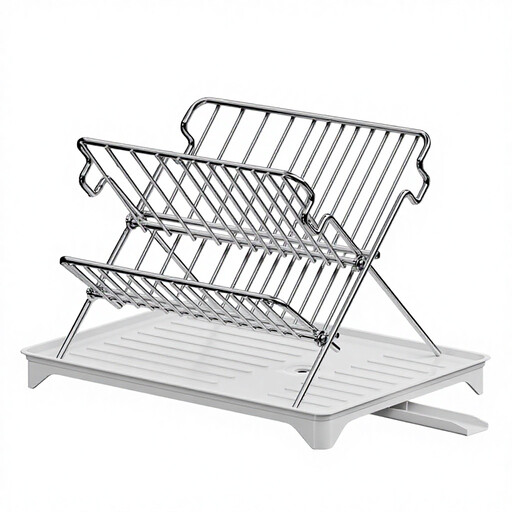
Why This Fits Their Persona: This model is ideal for small kitchens where countertop space needs to be flexible. It offers plenty of room on two tiers but can be compactly stored when not in use to free up valuable space.
The collapsible feature solves the problem of permanent space constraints. The combination of stainless steel and PP material is also resistant to rust and moisture.
Collapsible design for maximum space-saving; integrated water drain directs water away.
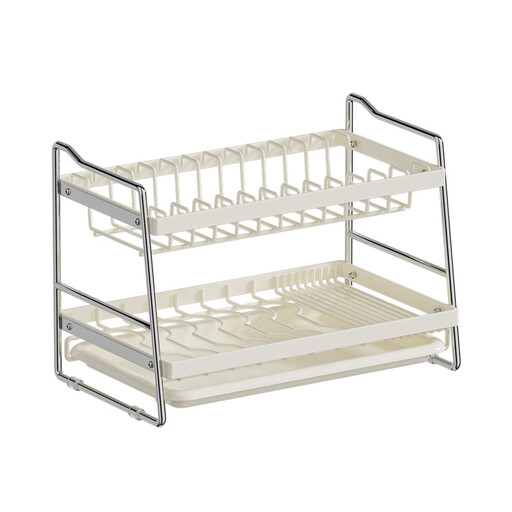
Why This Fits Their Persona: With its two-tier structure, this rack provides enough space for a family's daily load of dishes. Plates, cups, and cutlery can be neatly organised in their designated compartments.
The sturdy construction and high capacity prevent the problem of overloading and instability. The integrated drip tray reliably catches water and keeps the countertop dry.
High capacity thanks to the 2-tier design; separate compartments for better organisation.
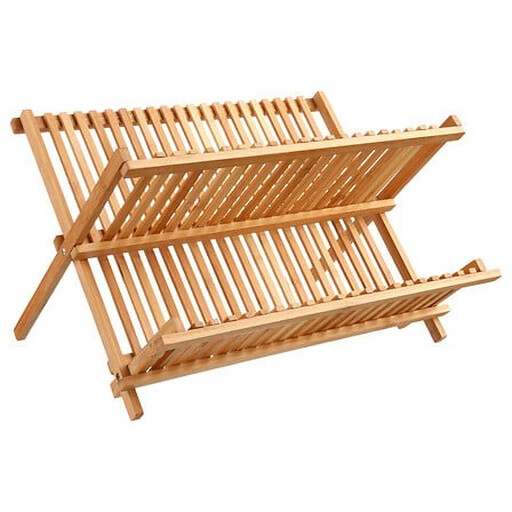
Why This Fits Their Persona: For buyers who value natural materials and a warm aesthetic. Bamboo is a fast-growing renewable resource and adds a conscious accent to the kitchen that stands out from cool metal or plastic.
This model offers an alternative to rusting metal or discolouring plastic. With proper care—regular drying—it is a durable and visually appealing solution.
Made from the renewable resource bamboo; holds up to 21 plates and is collapsible when needed.
We have compiled a complete, up-to-date list of products that fully meet these strict selection criteria and UK safety regulations.
Regular cleaning is crucial. For models with a drip tray, it should be emptied and wiped dry daily to prevent standing water. Once a week, it's recommended to clean the entire rack with warm water and washing-up liquid. For stubborn limescale deposits, a solution of water and vinegar can help.
High-quality stainless steel (e.g., Type 304) generally offers the highest durability, as it is very robust and resistant to rust. Properly maintained bamboo can also last for many years but is more susceptible to moisture damage. Plastic models are often the least durable and can become brittle over time.
A dish rack, also known as a dish drying rack, is a three-dimensional structure with specific holders for plates, compartments for cups, and a basket for cutlery. It is designed for organised drying. A draining mat, on the other hand, is usually a flat, often roll-up mat or grid that is placed directly on the countertop or in the sink. It offers less structure but is very space-saving.