
Lieferung heute & morgen

Qualitätsgarantie

Willkommens-Angebote freischalten: KOSTENLOSE Lieferung | Bis zu 80 % RABATT | Kostenlose 30-Tage-JoyPlus-Testphase
App herunterladen
A dual-tip art marker combines two nibs in one pen. This saves space in your pencil case while allowing you to create both fine lines and broad areas of colour. For illustrators, hobby artists, students and hand-lettering enthusiasts, this combination is practical – provided the ink coverage, ink type and nib shape suit the intended use.
However, some typical marketing claims can lead to the wrong choice. A high number of colours does not automatically mean that a set is suitable for portraits, watercolours or fine outlines. Terms such as ‘quick-drying’ or ‘blendable’ also say little if the paper being used is not taken into account.
A marker set with lots of colours sounds comprehensive. For certain subjects, however, the selection matters more than the total number. For portraits, graduated skin-tone markers and hair colours are useful. For journalling, pastel and neon colours may be more practical. If you mainly create sketches, you will often need several shades of grey and a precise fineliner nib instead.
Alcohol markers generally dry quickly and can be layered on suitable marker paper. However, the ink can bleed through thin copy paper and often has a noticeable smell. Watercolour markers, brush pens and other water-based artist pens are better suited to paper projects involving water-based gradients, but too much liquid can roughen the paper.
A broad chisel tip is suitable for areas and headings, but it cannot replace a flexible brush tip. A 0.4 mm fineliner nib is designed for outlines, notes and details. If you are looking for brush-tip calligraphy pens for varying line widths, you should therefore look for a brush tip with a documented size range.
Check which combination is actually included in the pen:
A dual-tip marker with Fine and Brush tips is more versatile for many creative applications than a model with two fixed round tips.
Colour-coded caps and numbered pens make sorting easier. A colour chart helps you record the actual ink colour on the paper you use. Replacement nibs are particularly useful for frequent users. The caps should also be closed firmly after every use. For longer-term storage, keeping the markers horizontally in a dry place away from direct sunlight is advisable.
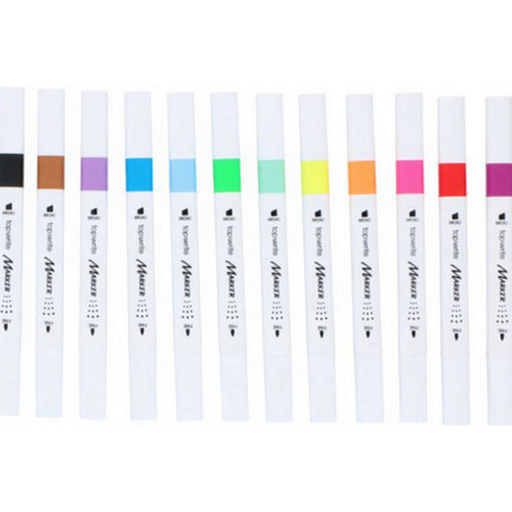
Why this product suits this profile: This 12-piece set is aimed at users who want to start with coloured notes, school projects, simple drawings or journalling.
The two tips, measuring 3.5 mm and 5.8 mm, are clearly specified. This makes it easier to assess before buying whether they are suitable for fine markings and broader highlighting.
Compact set size, two fixed tip sizes per marker and quick-drying ink according to the product description.
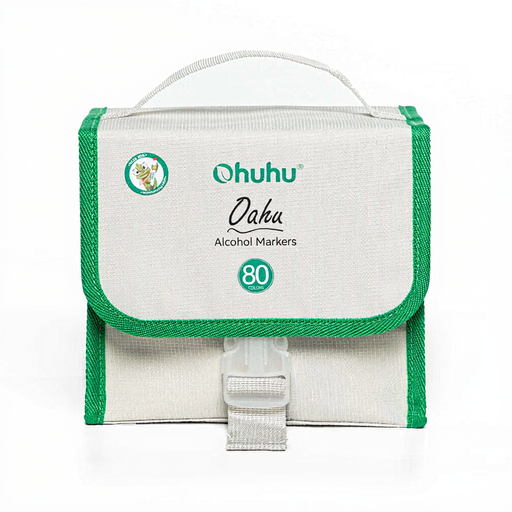
Why this product suits this profile: Illustrators and hobby artists who need a wide range of colours for sketches, colouring and layering get a comprehensive alcohol marker set.
The product details specify the ink type, nib shape, number of colours and a colourless blender. This makes it easier to check whether the set suits your paper and the technique you want to use.
80 colours plus a blender, Broad Chisel and Fine tips, as well as a nylon carry case according to the product description.
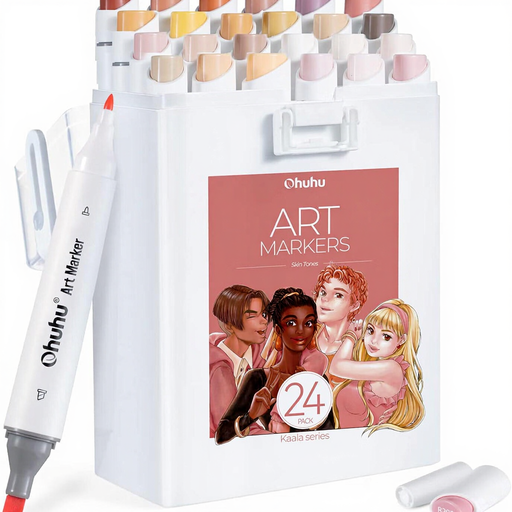
Why this product suits this profile: For portraits, character drawings and fashion illustrations, a focused selection of skin and hair tones is often more practical than a non-specific complete set.
The selection is specifically focused on 24 skin tones. Buyers therefore do not pay for lots of colours that are unlikely to be used for their planned portrait or character project.
Alcohol-based ink, Slim Chisel and Fine tips, plus a case for storing the 24 markers.
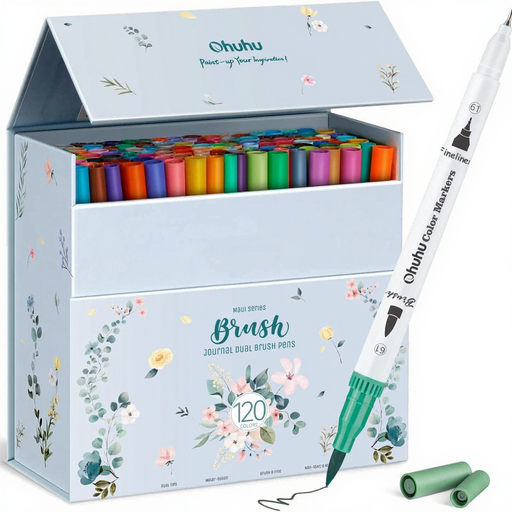
Why this product suits this profile: Frequent users, students and creatives working on a wide range of projects benefit from the broad colour palette and flexible brush design.
The tips are specifically described as a 0.4 mm fineliner and a 1–6 mm Brush Tip. A colour chart and eight replacement nibs are also included.
Water-based ink, 120 numbered colours, eight replacement nibs and a storage box according to the product details.
Test every marker for colouring on a scrap piece of the intended paper first. When using alcohol markers, a protective sheet is recommended as the ink can bleed through thin pages. Water-based brush pens can be combined with a damp brush to create watercolour effects; the ink should be worked with promptly.
Follow these simple rules to extend the markers’ usable life:
We have put together a complete, regularly updated list of products that fully meet these strict selection criteria and the safety regulations applicable in the EU.
How long a marker lasts depends on ink coverage, paper, how intensively it is used and whether the caps are closed properly. It is not possible to give a reliable one-size-fits-all lifespan. Dry nibs are often caused by caps that have not been closed fully or by prolonged storage.
Alcohol-based ink can produce odours, permanently stain surfaces and bleed through paper. You should therefore follow the manufacturer’s age recommendation, ensure good ventilation and use a washable protective sheet. For younger children, water-based markers may be more practical when used under supervision.
For brush pens used without much water, smooth, sturdy drawing or layout paper is often sufficient. For watercolour effects, heavier watercolour or mixed-media paper is suitable. The key is to test a stroke first: check for bleeding, show-through and how the brush tip responds before starting a finished project.