
Lieferung heute & morgen

Qualitätsgarantie

Willkommens-Angebote freischalten: KOSTENLOSE Lieferung | Bis zu 80 % RABATT | Kostenlose 30-Tage-JoyPlus-Testphase
App herunterladen
An electric fan heater can provide short-term warmth in living rooms, bedrooms or work areas. The choice ranges from compact ceramic fan heaters to portable electric heaters with thermostats. However, anyone who focuses only on wattage or eye-catching marketing claims may overlook important differences in noise levels, controls and safety.
A 2000-watt fan heater uses approximately 2 kWh per hour when running at full power. Whether this output is suitable also depends on the room size, insulation, ceiling height and outdoor temperature. A 1500-watt appliance may be sufficient for a small work area, while a poorly insulated room may require more heating power or take longer to warm up.
A heating appliance produces heat using electricity. At the same power consumption, the physical differences between various electric heaters are limited. Energy can primarily be saved through thermostat control, lower power settings, ECO mode and a fan heater with a timer. Claims such as ‘up to 40%’ should be understood as manufacturer statements and not applied universally to every room.
A fan heater with overheat protection and tip-over protection provides additional safeguards. Nevertheless, the appliance must not be covered, operated on soft textiles or placed directly next to curtains. The instructions, the distance from flammable materials and a suitable socket remain crucial.
First, check the stated heating power and the room size specified by the manufacturer. Depending on the building conditions, appliances with 1500 watts are often suitable for smaller rooms or individual zones. Models with 1800 to 2000 watts are designed for larger areas, but use correspondingly more electricity when operating at full power.
Look for multiple settings. An appliance with 750, 1000, 1250 or 1500 watts can be more flexible in everyday use than a model that operates exclusively at full power. A fan heater with a thermostat switches the heating on or reduces the output according to the selected target temperature.
A ceramic fan heater uses a PTC heating element. This design is often associated with rapid heat output and a compact construction. A fan distributes the warm air, but can create operating noise. For bedrooms or work areas, the stated decibel levels and different operating modes are therefore relevant.
A convector, by contrast, works through natural air circulation. This eliminates the typical fan noise, although the heat is distributed differently and may take longer to reach the rest of the room. An electric oil-filled radiator stores heat in a heat-transfer medium and releases it more evenly. It is often heavier and less immediately portable than a small fan heater.
For everyday use, a heater with a remote control, LED display, oscillation and timer can be convenient. Check whether the timer enables a switch-off time or programmed switching on and off. The manufacturer’s noise specifications should be given in dB. A low figure can be important for bedrooms or home offices, but says nothing about the heating output.
The basic features should ideally include:
A heater should not be used in damp environments unless it has been expressly approved for this purpose. For a bathroom, the specific protection rating is therefore crucial. An ordinary portable electric heater should not be used there.

Why this product suits this profile: This compact appliance offers four modes, including ventilation, 750 watts, 1500 watts and ECO. The remote control, LED display and oscillation make it easy to use in the bedroom, office or study.
The different power settings mean you do not have to heat continuously at 1500 watts. The timer can be set from 1 to 12 hours.
PTC heating element, ECO mode, remote control, oscillation, plus overheat and tip-over protection according to the product description.

Why this product suits this profile: For rooms measuring 10 to 20 m², the manufacturer specifies a temperature range of 5 to 35 °C and a noise range of 25 to 42 dB. This suits users who prioritise adjustability and low noise levels.
The stated noise range and adjustable thermostat make the choice more transparent than a general description such as ‘quiet fan heater’.
1500 watts, thermostat from 5 to 35 °C, 12-hour timer, remote control and several safety features according to the manufacturer’s specifications.
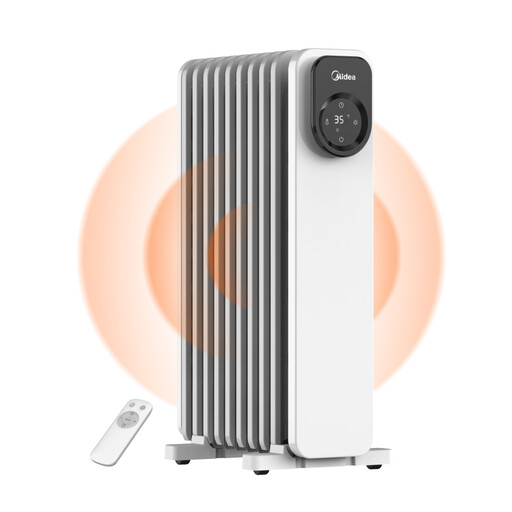
Why this product suits this profile: With 2000 watts, nine fins, a remote control and thermostat, this portable oil-filled radiator suits users who prefer more even heat distribution and several operating modes.
The description specifically states that it is suitable for well-insulated rooms or occasional use. This prevents unrealistic expectations for every room size.
2000 watts, nine heating elements, four modes, remote control, plus overheat and tip-over protection according to the product information.
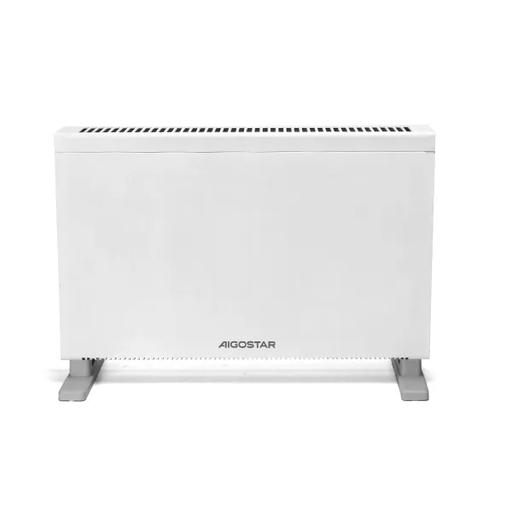
Why this product suits this profile: According to the product description, this convector is designed for 20 to 25 m² and uses natural convection. It can be controlled via the LED touch panel or remote control.
The stated room-size range, two power settings and switch-off programming of up to 24 hours make it easier to plan its use realistically.
1800 to 2000 watts, natural convection, temperature selection from 5 to 35 °C, remote control, plus tip-over and overheat protection.
We have put together a complete, regularly updated list of products that fully meet these strict selection criteria and the safety regulations applicable in the EU.
You can estimate the running costs as follows:
Power in kW × operating hours × electricity price = cost
A 2000-watt appliance is equivalent to 2 kW. Two hours at full power therefore results in consumption of 4 kWh. Thermostat operation and a timer can reduce the actual running time, but do not replace good room insulation. Connect the appliance directly to a suitable wall socket and avoid unsuitable multiway adaptors or extension leads.
Keep at least the distance from furniture, curtains and textiles specified in the instructions. Never cover the appliance and do not use it to dry clothing. After use, the fan heater should be switched off and disconnected from the mains if it will not be used for an extended period.
This depends on the room size and insulation. For smaller areas, 1000 to 1500 watts may be sufficient. 1800 to 2000 watts provide greater heating output, but also consume more electricity when used at full power. The thermostat, power settings and the manufacturer’s stated room size are also important.
Continuous operation while you are asleep is only advisable within the limits set out in the instructions. Use a timer, position the appliance in an unobstructed location and make sure it has tip-over and overheat protection. A fan heater must never be covered or operated on a bed, sofa or carpet.
A convector with natural convection and an oil-filled radiator operate without a running fan and can therefore be quieter. A ceramic fan heater usually needs airflow to distribute the heat. The specific dB figures for each model and the selected operating setting are the deciding factors.