
Lieferung heute & morgen

Qualitätsgarantie

Willkommens-Angebote freischalten: KOSTENLOSE Lieferung | Bis zu 80 % RABATT | Kostenlose 30-Tage-JoyPlus-Testphase
App herunterladen
An electric fan heater can warm rooms quickly and can be used flexibly wherever a permanently installed electric heating system is not available. This is practical for tenants, home-office users and private households: simply position the appliance, plug it in and store it away again when needed. However, not every model is suitable for every room.
Three common buying misconceptions can lead to unnecessary costs:
Power is measured in watts. Typical appliances for individual rooms operate at 1200 to 2000 watts. A 2000-watt fan heater can warm a room more quickly, but it is not automatically suitable for large or poorly insulated areas.
As a rough guide:
An energy-efficient fan heater does not inherently produce more heat from the same amount of electricity. However, features such as Eco mode, a thermostat and adjustable power levels can prevent the appliance from running for longer or at a higher setting than necessary.
A ceramic fan heater, also known as a PTC fan heater, uses a ceramic heating element and a fan. The warm air is circulated around the room. This design is particularly suitable for bedrooms, offices, living rooms or use under a desk. An oscillating fan heater can distribute heat over a wider area through automatic movement from side to side.
An infrared patio heater works differently. The radiant heat is directed at people, furniture or surfaces. For balconies, patios or gardens, this is often more practical in windy conditions than a conventional fan heater. The specified IP rating, a stable base and the area of use intended by the manufacturer are all important here.
A fan heater with thermostat switches the heating function on or off depending on the set temperature. This can limit operation more effectively than leaving an appliance running continuously. A fan heater with timer is suitable when you want to set a specific operating time, for example when pre-heating an office. Models with a remote control make operation easier from a distance.
The product description should clearly specify the following features:
CE marking is relevant for many electrical products in the European Economic Area. However, it does not replace checking the specific operating and safety instructions.
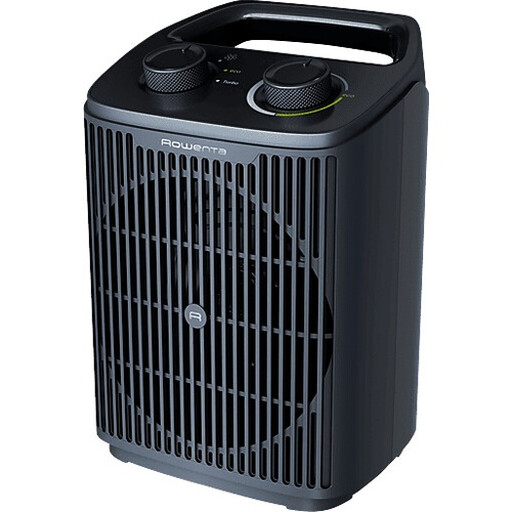
Why this product suits this profile: This compact model is designed for users looking for straightforward supplementary heating for a living room, bedroom or office, and who can do without app or remote-control features.
The description specifies a portable, compact design and explicitly highlights unobstructed airflow and keeping a safe distance from flammable materials.
2000 watts, a portable design and simple controls for occasional indoor use.

Why this product suits this profile: For home offices and medium-sized rooms, the manufacturer specifies a suitable area of 15 to 25 m², an adjustable temperature range of 5 to 35 °C, as well as a remote control and timer.
The specifications include a specific temperature range, a stated noise level of 25 to 42 dB and several safety features, rather than just general claims about comfort.
PTC ceramic heating, oscillation, thermostat, 12-hour timer and, according to the manufacturer, energy savings of up to 40 per cent in the relevant mode.
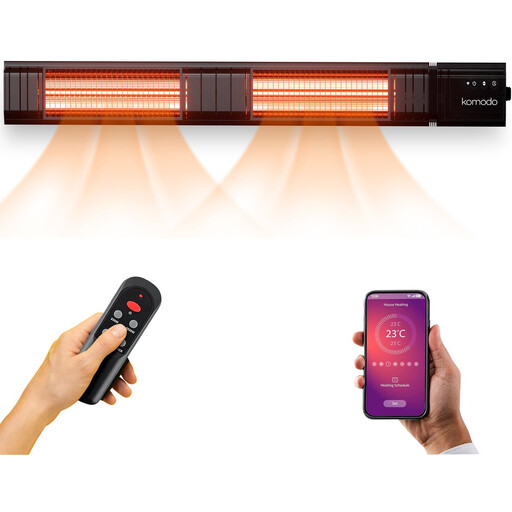
Why this product suits this profile: This infrared patio heater is aimed at users who want to heat a balcony, patio or sheltered outdoor area in a targeted way.
The IP65 rating is clearly specified: protection against dust and water jets, but no approval for submersion. The heater must not be covered.
3000 watts, nine heat settings, 180-degree oscillation, plus a remote control and app according to the product description.
The costs can be estimated as follows:
Power in kilowatts × operating hours × electricity price per kilowatt-hour = electricity costs
A 2000-watt appliance is equivalent to 2 kilowatts. Running it for two hours therefore amounts to 4 kilowatt-hours. The actual cost depends on your individual electricity tariff. A thermostat or timer can reduce the operating time, but does not change consumption while the heating function is active.
A portable fan heater can be useful for short periods of warming up. As a permanent primary heating solution for large rooms, it is usually not the obvious choice because of its direct electricity consumption. Before buying, you should also consider the socket, fuse and whether other high-powered appliances will be used at the same time.
A heater for use in a bedroom or office should be placed on a level, non-flammable surface. The air outlet must remain unobstructed. Keep the distance specified in the instructions from curtains, textiles, paper and furniture; for several of the products mentioned, a minimum distance of around 1 metre from flammable objects is recommended.
For bathrooms or outdoor areas, only use a model whose manufacturer explicitly approves it for that purpose and specifies a suitable IP rating. A standard ceramic fan heater is not automatically suitable for damp rooms. If you notice an unusual smell, smoke, a damaged cable or unusual noises, switch the appliance off, disconnect it from the mains and have it checked.
We have put together a complete, regularly updated list of products that fully meet these strict selection criteria and the safety regulations applicable in the EU.
At full power, a 2000-watt fan heater uses 2 kilowatt-hours per hour. A thermostat, Eco mode and timer can reduce average consumption by limiting the heating time.
This depends on the operating instructions and the available safety features. Tip-over protection and overheating protection do not replace safe positioning. The appliance should not be covered and must not be placed near bedding, curtains or other textiles.
It is not possible to give a reliable general lifespan. This is influenced by factors including usage time, dust exposure, storage and care. Regularly cleaning the air inlets and outlets, keeping the cable undamaged and allowing the appliance to cool completely before storing it can support proper use.