
Lieferung heute & morgen

Qualitätsgarantie

Willkommens-Angebote freischalten: KOSTENLOSE Lieferung | Bis zu 80 % RABATT | Kostenlose 30-Tage-JoyPlus-Testphase
App herunterladen
An electric fan heater can provide short-term warmth in bedrooms, offices or smaller living areas. However, the power rating and advertising claims alone are not enough to make a safe choice. Room size, the level of noise, controls and safety features are all crucial considerations.
An electric heater rated at 2,000 watts can warm a room faster than a 1,000-watt model. However, it also uses more electricity when operating at full power. The simple calculation is:
Power in kilowatts × operating time in hours × electricity price = cost
A 2,000-watt appliance is equivalent to 2 kilowatts. At full power for two hours, it therefore uses 4 kilowatt-hours. A thermostat, several heat settings or an ECO mode can reduce the operating time and therefore consumption. However, they do not make the fan heater completely independent of electricity prices.
A quiet fan heater is particularly important in the bedroom or home office. Without a decibel rating, however, the claim is difficult to assess. Fan noise, airflow and switching sounds can vary depending on the operating setting. If you want to heat your room at night or during video calls, look for a specific manufacturer’s rating and check whether a reduced-noise mode is available.
An overheating protection feature or tip-over protection is important technical equipment, but it does not replace safe use. Heaters must not be covered and should be placed on a stable, dry and level surface, at a safe distance from curtains, furniture, bedding and other flammable materials. An ordinary fan heater is generally unsuitable for bathrooms, showers or other damp areas. The relevant manufacturer’s instructions and the appliance’s IP rating are decisive.
As a rough guide, around 60 to 100 watts per square metre is often used. Insulation, ceiling height, outdoor temperature and existing heating can all affect this figure. The room size stated by the manufacturer is therefore a better starting point than wattage alone.
A ceramic fan heater with a PTC heating element can deliver heat quickly. However, the word ‘ceramic’ does not automatically mean lower overall consumption. Power, operating time and regulation remain the key factors affecting running costs.
A fan heater with thermostat adjusts the heating output according to the set target temperature. This is more practical in everyday use than leaving the appliance running continuously. A fan heater with timer can limit the operating time, for example while you are falling asleep or during your morning warm-up period.
A remote control makes it easier to operate the heater from your bed or desk. You should also check:
A compact fan heater is suitable as a portable room heater for use in different locations. Models with oscillation distribute warm air across a wider angle. An electric oil-filled radiator, by contrast, operates without a fan and releases heat more evenly and for longer after being switched off. However, it generally requires more floor space and responds more slowly.
Pay attention to the cable length, base, carry handle, weight and minimum clearances. Even if an appliance is easy to move, it should not be repositioned while operating. Always switch it off, unplug it and allow the casing to cool before moving it.
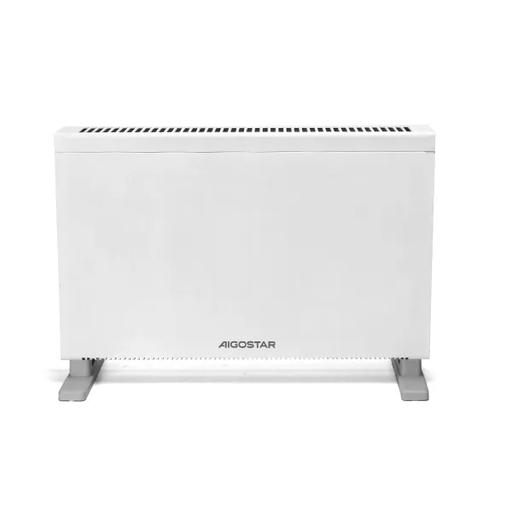
Why this product suits this profile: This convector heater offers two power settings, LED touch controls, a remote control and a 24-hour timer. According to the product information, it is intended for rooms of approximately 20 to 25 m².
The stated room size, timer and thermostat make it easier to use the heater according to your needs rather than leaving it running continuously without control.
2,000 watts, remote control, ECO mode, 24-hour timer, plus tip-over and overheating protection according to the product description.

Why this product suits this profile: According to the product information, this PTC ceramic heater is designed for 15 to 25 m² and offers temperature control from 5 to 35 °C, a remote control, oscillation and a 12-hour timer.
The stated noise level of 25 to 42 dB is easier to assess than an unexplained advertising claim that the heater is ‘quiet’.
2,000 watts, 8-layer safety protection according to the product description, 70-degree oscillation and precise temperature adjustment.
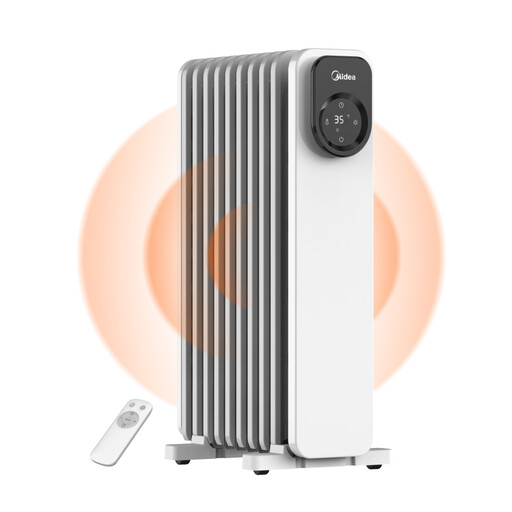
Why this product suits this profile: This 2,000-watt portable radiator operates without a fan. Its nine fins, four operating modes, thermostat, remote control and LED touchscreen are designed for longer periods in the living room or home office.
The fan-free design avoids the typical noise source found in fan heaters. At the same time, the thermostat and several operating modes help limit continuous operation.
Quiet operation without a fan, castors for easy repositioning, 2,000 watts, plus overheating and tip-over protection according to the product description.
We have put together a complete, regularly updated list of products that fully meet these strict selection criteria and the safety regulations applicable in the EU.
Before using the heater for the first time, read the instruction manual and connect the fan heater directly to a suitable socket. A multi-plug adaptor or extension lead should only be used if it is approved for the stated power rating. The following rules apply during operation:
This depends on the power rating and operating time. A 1,500-watt appliance uses 1.5 kilowatt-hours when running at full power for one hour. A thermostat, timer and lower heat setting can reduce actual consumption. For an accurate cost estimate, multiply the energy used by your current electricity price.
For individual rooms and short periods, an electric fan heater can provide flexible supplementary heating. As a permanent replacement for central heating, electricity consumption, heat distribution and safety requirements need to be carefully considered. In poorly insulated or large rooms, the area recommended by the manufacturer is particularly important.
Models with a specific decibel rating, thermostat, timer and tip-over protection are worth considering for the bedroom. An electric oil-filled radiator operates without fan noise, while a ceramic fan heater usually delivers heat more quickly. The key factors are the desired heat-up speed, the available space and the permitted operating method stated in the instructions.