
Lieferung heute & morgen

Qualitätsgarantie

Willkommens-Angebote freischalten: KOSTENLOSE Lieferung | Bis zu 80 % RABATT | Kostenlose 30-Tage-JoyPlus-Testphase
App herunterladen
If you’re looking to buy eSUN PLA filament 1.75 mm 1 kg, you’ll find a range of material types, colours and finishes. Standard PLA, eSUN PLA+, eSUN PLA Silk and eSUN PLA Matte Rainbow differ in more than just appearance. Depending on your printer, the part you’re making and how you plan to use it, certain properties may matter more than a low price per spool.
As a Joybuy Product Recommendation Officer, I’ve filtered the key details to show beginners, makers, model builders and frequent users what to look for when buying.
1.75 mm filament won’t necessarily fit every 3D printer. Before buying, check which filament diameter your FDM 3D printer, extruder and nozzle support. A 1 kg spool is only practical, too, if there’s enough room on the spool holder.
Variations in diameter can affect material feed. That’s why details about dimensional accuracy, winding and the recommended printing temperature matter more than marketing claims such as ‘high speed’.
A glossy silk filament looks decorative, but that doesn’t automatically make it suitable for parts under mechanical stress. Conversely, matt filament can give you a more uniform appearance, but that doesn’t make every model stronger.
For functional prototypes and parts that need to withstand greater loads, high-strength PLA or PLA+ may be a better choice. However, actual strength also depends on wall thickness, infill, print orientation, temperature and layer adhesion.
PLA absorbs moisture from the air if left unprotected for a long time. This can lead to inconsistent extrusion, bubbles, popping sounds during printing or a poorer surface finish. Vacuum-sealed packaging with desiccant is a useful feature, but it doesn’t replace dry storage once the packaging has been opened.
Look for the combination of 1.75 mm diameter and 1 kg filament weight. The spool weight usually refers to the material, not the plastic reel. For frequent printing, 1 kg of filament offers good value and means fewer spool changes.
A neatly wound spool can reduce the risk of tangles and interruptions to the material feed. Even so, make sure you secure the free end of the filament in the designated slot after each print.
The term biodegradable filament needs some context. PLA is often made from renewable raw materials, but it doesn’t necessarily break down quickly in normal household or garden conditions. Follow local guidance for disposal and recycling.
The recommended temperature range varies depending on the product type, printer, nozzle and surroundings. Always check the product page and, when trying a new material, start with a small temperature or calibration test.
The following settings can also affect print quality:
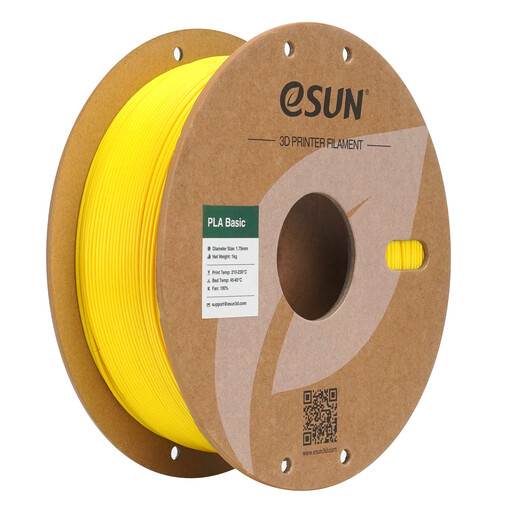
Why this product suits this profile: This yellow PLA Basic is intended for general printing tasks and first projects where easy-to-use material and a highly visible colour are priorities.
The product name clearly specifies 1.75 mm and 1 kg, making it easier to check key compatibility details before you buy.
PLA Basic, a yellow colour option and a 1 kg spool for general FDM printing projects.
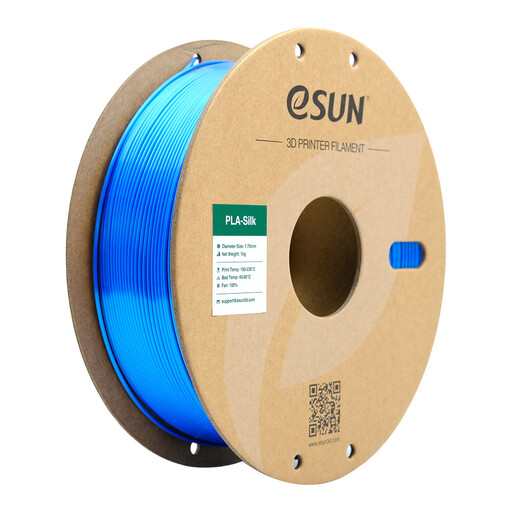
Why this product suits this profile: The blue Silk option is for users who prefer a glossy, silk-like finish for models, vases or decorative objects.
This option makes the surface finish a clear selection criterion, rather than encouraging you to equate gloss with mechanical strength.
Silk-like finish, 1.75 mm diameter and a 1 kg spool, according to the product information.
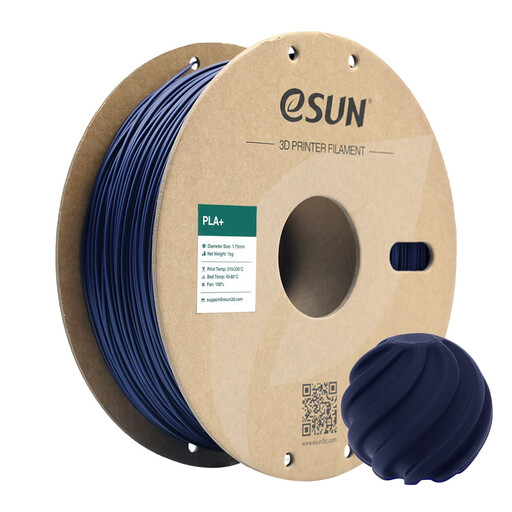
Why this product suits this profile: Dark blue PLA+ is a good option for makers and model builders looking for a coloured spool for prototypes, models and functional printed parts.
This PLA+ option isn’t chosen on colour alone; its stated properties, such as high toughness and layer adhesion, are also worth considering.
PLA+ material, 1.75 mm diameter and 1 kg of filament; according to the product information, it’s suitable for a range of FDM printing projects.
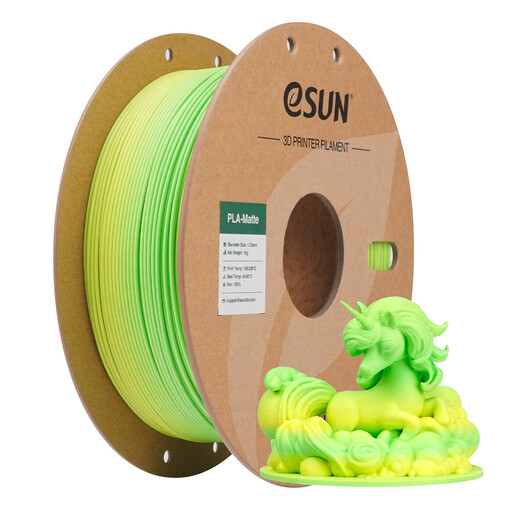
Why this product suits this profile: This matt rainbow filament is for creative users who want to make multicoloured decorative objects, figures or models from a single spool.
The matt finish keeps strong reflections to a minimum. Bear in mind that the colour changes are a design feature, not a precisely predictable colour transition.
Matt texture, rainbow colours, 1.75 mm diameter and 1 kg of filament, as stated in the product name.
We’ve put together a comprehensive, regularly updated list of products that meet these strict selection criteria and fully comply with the safety regulations in force in the EU.
The right temperature depends on the specific variant, nozzle and printer. Follow the manufacturer’s guidance on the relevant product page and run a small test print when trying a new filament. PLA Silk and PLA Matte Rainbow may produce a different surface finish if you change the speed or temperature.
Store the filament in a dry, dust-free place and keep it as airtight as possible. Desiccant in the storage container can help reduce moisture absorption. If the material becomes brittle or crackles as it feeds in, drying it appropriately, following the filament and dryer manufacturers’ recommendations, may help.
It depends on the model size, wall thickness, infill, support structures and failed prints. Small decorative objects use far less material than large prototypes. Your slicer can show the estimated material usage before you start printing.