
Lieferung heute & morgen

Qualitätsgarantie

Willkommens-Angebote freischalten: KOSTENLOSE Lieferung | Bis zu 80 % RABATT | Kostenlose 30-Tage-JoyPlus-Testphase
App herunterladen
A food slicer can make preparing vegetables, fruit, bread, cheese, meat and cold cuts much easier. However, models vary considerably in their blades, slice thickness, ease of use and safety features. An impressive product description alone won’t tell you whether a model is right for your household.
Three common buying mistakes often lead to the wrong choice:
First, think about which foods you’ll be slicing regularly. A vegetable cutter or vegetable slicer is best suited to cucumbers, potatoes, carrots and other firm produce. Depending on the attachment, a mandoline can also slice, grate or cut julienne strips. However, the term mandoline slicer isn’t consistently defined, so check which blades are actually included.
For bread, cheese, cold cuts and meat, a food slicer is often a better choice. If you need to slice larger quantities, a meat slicer with a sufficiently long cutting path may be useful. A cheese slicer or butter plane, on the other hand, has a more specialised purpose and is usually more compact.
A stainless steel blade is more corrosion-resistant and can be cleaned hygienically with proper care. Also look for:
For a potato cutter, the shape of the cutting attachments is also important. A model for chips works differently from a slicer designed for thin potato slices. Special fruit cutters can be a useful extra for fruit such as watermelon or apples, but they’re no substitute for a versatile food slicer.
Food residue can easily get stuck around fine blades, pushers and joins. Check whether the parts can be removed and how they should be cleaned. A stated dishwasher-safe rating only applies to components specifically designated as dishwasher-safe. Electrical appliances must not come into contact with water, particularly the motor or controls.
For occasional use, a manual kitchen slicer is often enough. If you regularly prepare even slices of bread, cheese or cold cuts, an electric food slicer may be worth considering. Factor in power consumption, noise, counter space and cleaning requirements when making your decision.
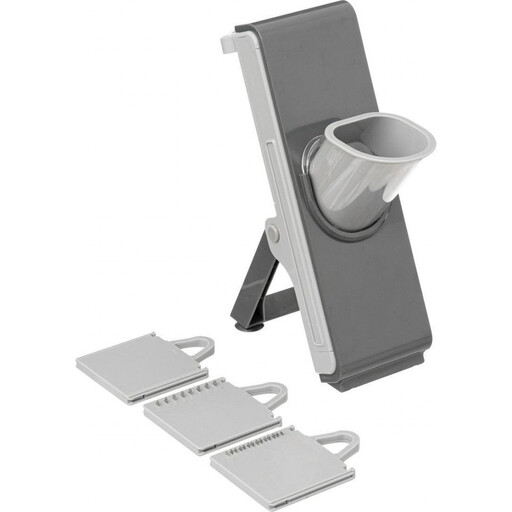
Why it suits this type of user: This manual mandoline is ideal for households that want to slice, grate or chop fruit and vegetables without a motor. Its dimensions and weight of 550 g make it easy to store.
Its three functions—slicing, grating and chopping—are clearly described. A supplied pusher acts as a finger guard.
Stainless steel blades, manual operation and compact dimensions of 26.5 × 15 × 9.5 cm.

Why it suits this type of user: Designed for bread, fruit and vegetables, this appliance offers slice thicknesses from wafer-thin to around 20 mm. The removable food carriage makes cleaning easier.
The product details specify the slice range, 18 cm cutting path, and safety and continuous-operation switches, rather than relying on vague claims about performance.
Electric operation, a glass safety base and a removable carriage.
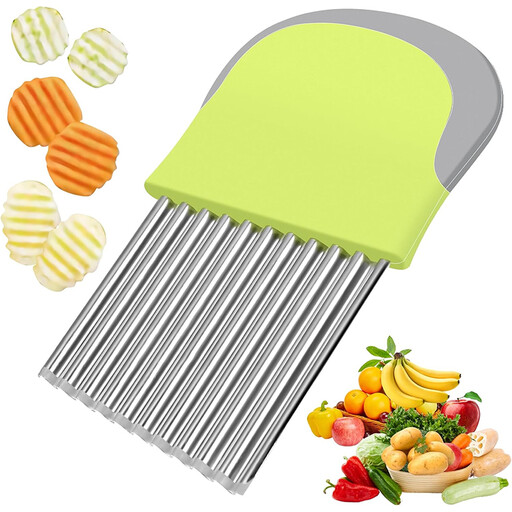
Why it suits this type of user: If you often prepare potatoes for side dishes or homemade chips, this purpose-built cutter comes with a green, non-slip handle.
It’s designed specifically for potatoes and baton cuts, rather than making vague claims about versatility.
430-grade stainless steel according to the product name, and a large handle with a non-slip finish.
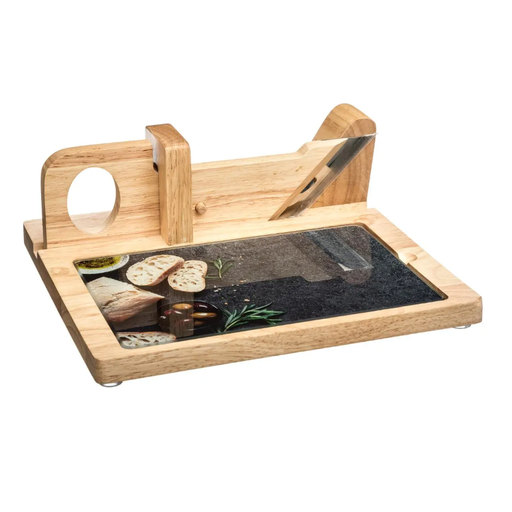
Why it suits this type of user: Combining a slicer with a wooden board, this product is designed for serving cold cuts, cured meat and cheese at gatherings at home.
The guidance explicitly rules out frozen foods and bones, making the intended use clear.
Integrated wooden board and stainless steel blade for slicing and serving.
We’ve put together a complete, regularly updated list of products that meet these strict selection criteria and fully comply with the safety regulations in force in the EU.
For regular vegetable preparation, a vegetable cutter, vegetable slicer or mandoline with a finger guard is a good choice. Check that the slice thickness and blade type are suited to the slices, strips or grated results you want. For very soft vegetables or fruit, a specialised cutting tool may work better than a coarse grater.
Its lifespan depends on the material, how heavily it’s used, and how it’s cleaned and stored. Remove any residue from stainless steel blades after use, then dry them thoroughly. Don’t use manual models on bones or frozen foods unless they’re specifically designed for this. Check electric appliances regularly for visible damage to the motor and cable.
Power consumption depends on the motor’s rating and how long the slicer is used. For occasional, short slicing tasks, usage time is usually limited. To get a realistic idea, compare the stated power consumption in watts with how long you expect to use the appliance. Standby power, cleaning requirements and the amount of counter space it needs also contribute to the ongoing cost of use.