
Lieferung heute & morgen

Qualitätsgarantie

Willkommens-Angebote freischalten: KOSTENLOSE Lieferung | Bis zu 80 % RABATT | Kostenlose 30-Tage-JoyPlus-Testphase
App herunterladen
Glass storage jars are a practical solution for keeping dry foods, prepared meals or homemade jam neatly organised. Glass generally does not absorb food odours, keeps the contents visible and, depending on the design, can also be used for heating. However, not every glass container is intended for the same purpose.
Anyone who focuses solely on capacity or attractive design may overlook important differences in seals, materials, temperature resistance and cleaning. The following guidance will help you choose food-storage jars that suit your household.
A wooden or metal lid may look attractive, but it does not automatically provide an airtight seal. Depending on the storage location, a well-fitting lid may be sufficient for rice, flour, sugar or pasta. For more sensitive foods such as coffee, nuts or biscuits, however, a silicone sealing ring or comparable closure is advisable.
Always check whether the closure is explicitly described as airtight. A storage jar with a lid but no seal should not automatically be advertised or used as an airtight glass container.
Many heat-resistant glass containers can be used in the oven or microwave, but only without the plastic lid. For example, the LocknLock Top Glass Series Container is specified for use at temperatures of up to 400°C without its lid. According to the product description, it can also be used in the freezer down to -20°C.
One point remains essential: extreme temperature changes can damage glass. A container should never be placed directly from the freezer into a hot oven, nor should it be placed over an open flame or on a hob.
A glass container may appear suitable based on its capacity, yet fail to fit in a kitchen cupboard, refrigerator door or meal-prep bag because of its height or shape. With stackable glass containers, the lid, locking clips and base design are also important.
Measure the available space before buying. Tall storage jars are often a good choice for narrow shelves, while rectangular glass storage boxes can make more efficient use of space in the refrigerator or freezer.
For dry foods such as rice, flour, salt or sugar, classic glass kitchen containers with a suitable lid are generally sufficient. Jam jars and preserving jars are ideal for smaller portions, gifts or homemade preserves. For casseroles, soups and prepared meals, the product description should explicitly state that the container is suitable for use in the oven, microwave or freezer.
Borosilicate glass is listed as the material for a number of containers. However, always follow the specific manufacturer’s information on temperature limits and intended use. The type of glass alone is no substitute for the instructions.
For dry goods, a screw-top lid, wooden lid or metal closure may be suitable depending on how you intend to use the container. Anyone who wants to transport liquids or store meals at the office should look for a silicone seal and a secure locking mechanism.
Four-sided locking clips can provide an airtight and leak-resistant seal on suitable models. However, the lid will generally need to be removed before heating. Also check whether the seal can be removed and cleaned separately.
Cleaning requirements can vary considerably. Some glass containers are dishwasher-safe, while lids, wooden components or seals must be washed by hand. Claims such as “dishwasher-safe” should therefore always be checked separately for the glass and the lid.
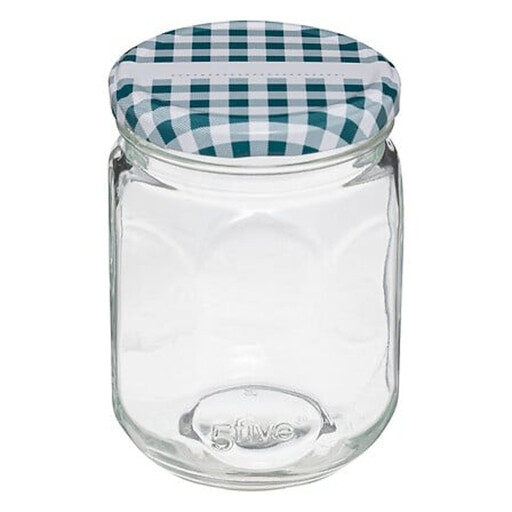
Why This Fits Their Persona: The six-piece set, with each jar holding 0.5 litres, is ideal for households that want to fill several small quantities of preserves or homemade spreads at the same time.
The capacity and number of jars are clearly specified, making it easier to assess your actual needs than with a single decorative jar.
Six transparent jars, each with a 0.5-litre capacity; approximately 9.3 cm in diameter and 12.4 cm high.
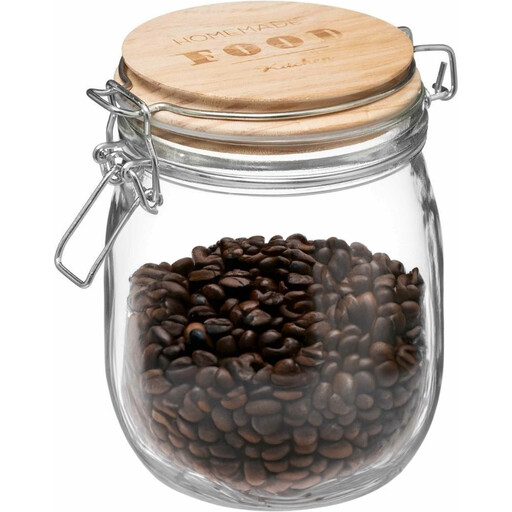
Why This Fits Their Persona: Designed for open shelving or a well-organised pantry, this jar combines a transparent glass body with a pine lid and is suitable for dry foods.
The product information explicitly states that it is not dishwasher-safe. Anyone willing to wash the lid by hand can factor this limitation in before buying.
0.75-litre capacity; glass container with silicone, stainless-steel and pine elements; intended for dry foods.
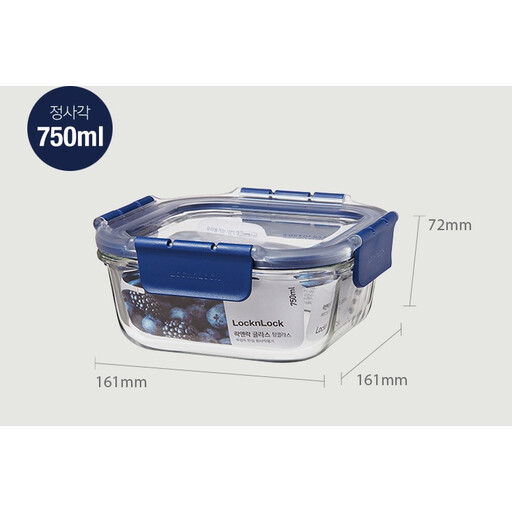
Why This Fits Their Persona: This container is well suited to users who want to store, transport, freeze and reheat meals without transferring them to another dish.
The usage guidance clearly distinguishes between the oven, microwave and air fryer: each must be used without the lid. It also warns against sudden temperature changes.
Borosilicate glass; 750 ml; four-sided locking closure with silicone seal; according to the product information, suitable for temperatures up to 400°C without the lid and for freezer use down to -20°C.
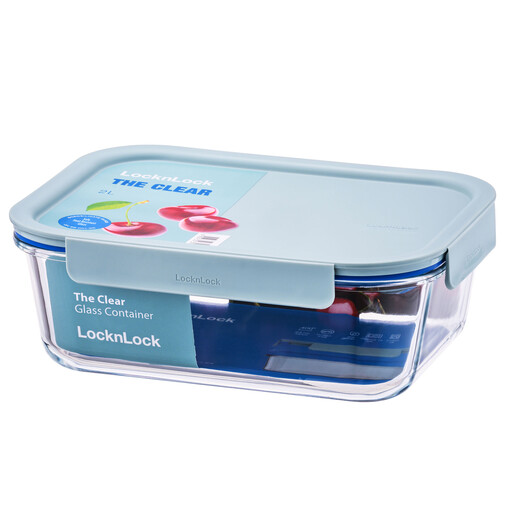
Why This Fits Their Persona: The 380 ml capacity is well suited to small lunch portions, side dishes or leftovers and takes up less space than large glass storage containers.
The compact size prevents you from buying unnecessarily large containers for small portions. According to the product information, the plastic lid must not be heated.
380 ml capacity; airtight silicone seal; according to the description, suitable for the oven, microwave, freezer and dishwasher, subject to the stated lid restrictions.
Our complete selection includes glass containers for pantries, refrigerators, meal prep and preserving. Compare capacity, closure type and cleaning requirements before buying.
Before first use, wash the glass, lid and seal with warm water and mild washing-up liquid. For airtight containers, it is advisable to remove the seal occasionally, allow it to dry completely and check it for cracks or deformation.
Also keep the following points in mind:
That depends on the specific model. According to the product description, some heat-resistant glass containers are microwave-safe, but only without their plastic lids. Before use, check the temperature rating, lid instructions and warnings regarding thermal shock.
With careful handling, glass containers can be used for many years. Their service life depends on impacts, scratches, temperature changes and the condition of the seal and lid. Glass with cracks or chips should be discarded for safety reasons.
Ongoing costs mainly involve cleaning and, where necessary, replacing seals or lids. Dishwasher-safe glass containers can reduce cleaning time. Models with wooden lids or delicate closures, on the other hand, may require hand-washing. The deciding factors are therefore not just the purchase price, but also how you intend to use and maintain the container.