
Lieferung heute & morgen

Qualitätsgarantie

Willkommens-Angebote freischalten: KOSTENLOSE Lieferung | Bis zu 80 % RABATT | Kostenlose 30-Tage-JoyPlus-Testphase
App herunterladen
An ice maker can chill drinks whenever you need it, without several ice cube trays permanently taking up space in your freezer. However, ice makers, ice cube bags and ice cube trays differ significantly in terms of capacity, operation, storage and cleaning requirements. If you only look for features such as “fast” or “self-cleaning”, it is easy to overlook important details.
With a portable ice maker, a stated daily output of, for example, 12 kg may initially sound substantial. However, this figure describes the potential output under specific conditions and does not automatically indicate how much ice can be stored in the ice basket at once. Many compact appliances have a basket with a considerably lower capacity. The finished ice cubes should therefore be removed regularly and, if necessary, stored in a separate container in the freezer.
For occasional drinks, an ice cube tray or ice cube bag is often sufficient. This saves space and requires no electricity, but it does mean allowing several hours for freezing.
A self-cleaning ice maker can rinse the interior using an automatic programme. However, residue in the water tank, around the drain opening or on accessible surfaces still needs to be checked. After use, any remaining water should be drained and the appliance dried in accordance with the instruction manual. Self-cleaning therefore does not replace regular manual care.
Small or spherical ice cubes are suitable for different purposes. Bullet-shaped cubes cool soft drinks, beer and cocktails quickly. Large whisky ice cubes or ice balls melt differently and are better suited to wide whisky glasses. Before buying, check whether the shape fits your existing glasses and whether the ice cubes will have enough room in your freezer.
If you want to make ice quickly, pay attention to the stated time for the first cycle. For the appliances listed here, the first cubes are said to take around 6 to 12 minutes, depending on the model. Water tank size, basket capacity and daily output are also relevant.
Daily output is not a guarantee of an uninterrupted supply. The water tank and ice compartment must be checked regularly.
An ice maker for home use will often sit on the kitchen worktop. Measure the available space and allow for the ventilation openings on the sides and rear. For offices, camping and motorhomes, weight and a carrying handle are important. A stated noise level below 45 or 50 dB may be relevant when operating the appliance indoors, but should always be considered in relation to its location and the room acoustics.
For trays and bags, food-safe materials and easy removal are important. According to the product description, the 5Five tray is made from TPE, TPR and ABS and is dishwasher-safe. The manufacturer of the BJ Ice Ball Mould Set states that it is made from silicone. For every product, follow the information on the packaging and in the instruction manual.
Electric ice makers should only be operated with clean drinking water. The EUHOMY machine specifically warns against filling it with liquids containing additives or contaminated water. The ventilation openings must not be blocked. Before first use, read the instructions on the power connection, cleaning and water drainage.
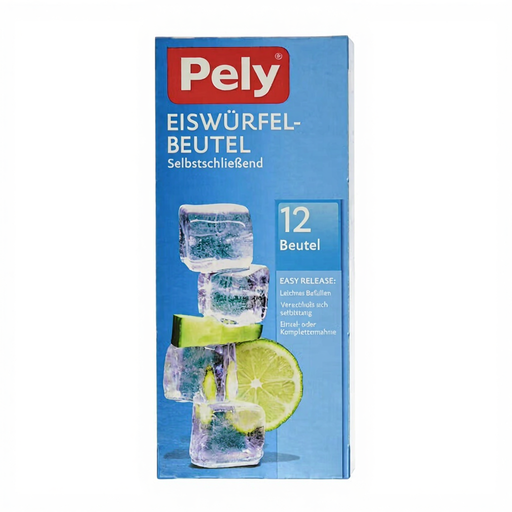
Why this product suits the profile: The 12 self-sealing PE bags are ideal for households that want to prepare ice cubes in the freezer without using an additional appliance. The extra-large filling funnel helps you fill the bags with less mess.
The compact rectangular shape, measuring 9 × 20 × 3 cm, can be stored flat. The bags are not marketed with an electrical production figure; they are designed for preparing portions in advance.
12 bags, a self-sealing mechanism and a large filling funnel. Do not overfill the bags, so that the sealing function continues to work properly.
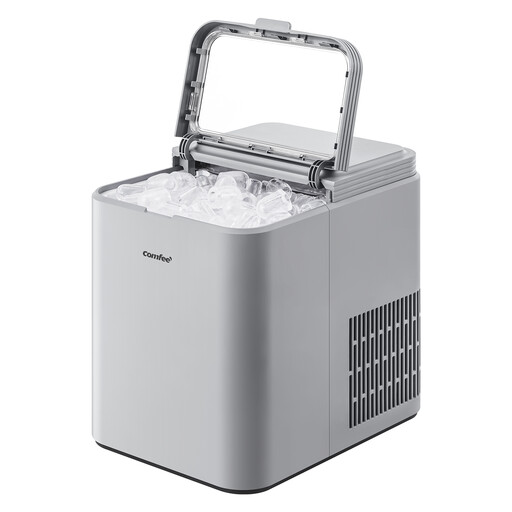
Why this product suits the profile: The machine offers two ice cube sizes, a 1.3-litre water tank and a stated output of up to 12 kg per 24 hours. It is designed for kitchens, offices and motorhomes.
The automatic cleaning function reduces some manual steps, but does not replace emptying and drying the machine. Its compact design is helpful where space is limited.
The first ice cubes are stated to be ready after around 6 minutes, with two sizes, a cleaning programme, removable ice basket and ice scoop.
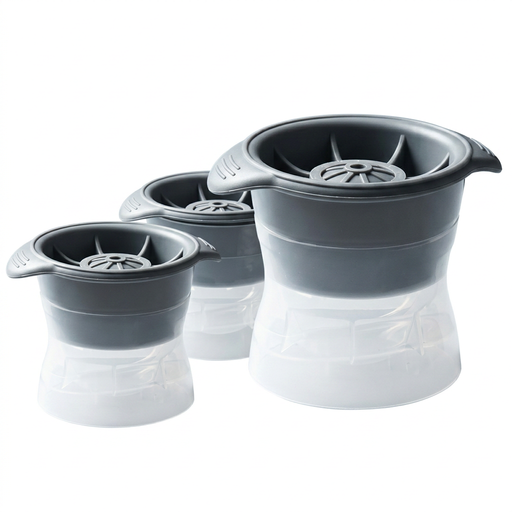
Why this product suits the profile: According to the product description, the two silicone moulds produce ice balls with a diameter of 6.5 cm. This shape is designed for wide glasses and spirits such as whisky, bourbon and Scotch.
The precise ball size makes it easier to judge whether this product is suitable. Before buying, check that your freezer and drinking glass can accommodate the 6.5-cm ice balls.
Flexible silicone material, two moulds and a large ball format for whisky drinks and cocktails.
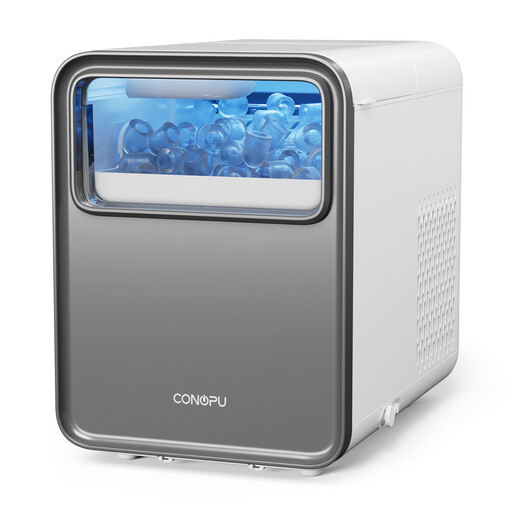
Why this product suits the profile: With a 1.5-litre water tank, two sizes and a stated daily output of up to 12 kg, this portable ice maker is designed for regular use, parties, camping and motorhomes.
The water tank, ice-full and low-water indicators help you keep an eye on the machine. The 30-minute cleaning programme and side drain opening address the maintenance requirements.
Nine spherical ice cubes per cycle according to the product information, two sizes, ice scoop, ice basket and a stated noise level below 50 dB.
We have put together a complete, regularly updated list of products that fully meet these strict selection criteria and the safety regulations applicable in the EU.
Regardless of the model, follow a few simple basic rules:
For larger events, combining different solutions can be useful: an ice maker can produce fresh cubes throughout the evening, while ice cube bags or trays can provide a reserve in the freezer. For individual drinks, a tray is usually sufficient and does not incur ongoing electricity costs.
According to the relevant product information, compact appliances often need around 6 to 12 minutes for the first cycle. The actual time may depend on the room temperature, water temperature, ventilation and selected ice cube size. An ice cube tray or ice cube bag, on the other hand, requires several hours in the freezer.
Its service life depends on how often it is used, cleaning, water quality and proper positioning. With electrical appliances, the ventilation openings should remain clear and any remaining water should be removed after use. Trays and bags should not be handled with sharp objects or overfilled. The care instructions from the respective manufacturer are the key reference.
The ongoing costs mainly consist of electricity and water consumption. An accurate estimate is only possible using the stated power consumption, the actual operating time and your electricity tariff. If you only occasionally need ice for drinks, an ice cube tray or ice cube bag may be a simpler option without the additional energy use of an appliance.