
Lieferung heute & morgen

Qualitätsgarantie

Willkommens-Angebote freischalten: KOSTENLOSE Lieferung | Bis zu 80 % RABATT | Kostenlose 30-Tage-JoyPlus-Testphase
App herunterladen
A kettle is part of the daily kitchen essentials in many British households. Whether you need it for tea, filter coffee, instant soup or hot water for cooking, models vary considerably in capacity, materials, controls and safety features.
Not every eye-catching feature is genuinely useful in everyday life. Three common buying misconceptions particularly often lead to the wrong choice:
For several people, a kettle with a capacity of 1.5 to 1.7 litres is ideal. It allows you to prepare several cups in one go. For one person, an office or a student flat, a mini kettle with a capacity of 0.4 to 0.6 litres may take up less space.
However, a large capacity only makes sense if you use it regularly. Filling the kettle with more water than you need increases the heating time and energy consumption per use. Therefore, look for:
A 2200-watt kettle is one of the more powerful domestic models. Many appliances with this rating operate at 220–240 volts, making them suitable for British households. The actual heating time also depends on the amount of water, its starting temperature and the design of the heating element.
An electric kettle with a concealed stainless-steel heating element is usually easier to descale than a model with an exposed heating coil. Stainless steel is robust and opaque, while a glass kettle lets you monitor the water level and boiling process directly.
Heat-resistant borosilicate glass is used in several of the models available. Nevertheless, glass is more susceptible to damage from impacts than stainless steel. You should therefore check the stability of the base, the handle and the cleaning instructions. The description BPA-free kettle should refer to the specific product details and should not be taken as a blanket statement about every component.
An automatic switch-off ends the heating process as soon as the water reaches boiling point. Boil-dry protection, also known as overheating protection, is designed to prevent the kettle from switching on without enough water inside. Both features are important for everyday use, but they do not replace safe operation.
Other practical features include:
With these appliances, “cordless kettle” generally means that the jug can be lifted from the base without a cable attached. The base itself remains connected to the mains.
The following selection groups the models according to specific uses and clearly identifiable product features.
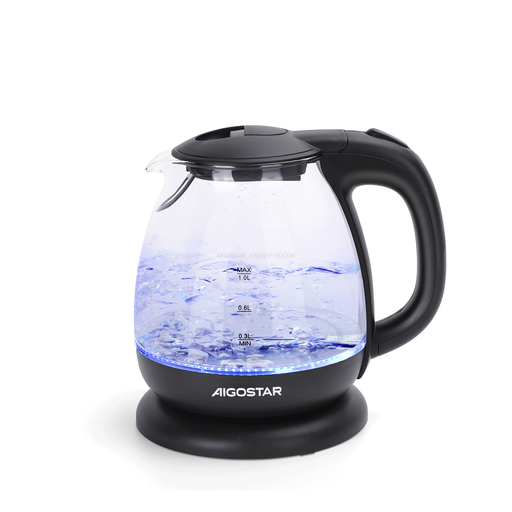
Why this product suits the profile: The 1.0-litre capacity is suitable for individuals, couples and smaller kitchens. The 2200-watt power rating supports quick heating, while the 360-degree base makes lifting the kettle off convenient.
The manageable capacity helps prevent unnecessary overfilling. According to the product details, automatic switch-off and boil-dry protection are built in.
Glass jug, blue LED lighting, BPA-free product specification and removable base.
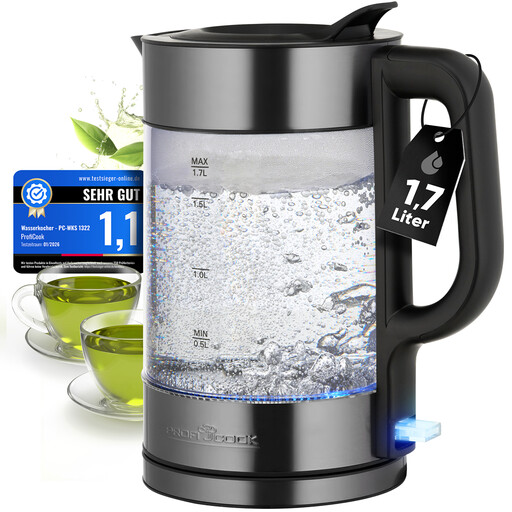
Why this product suits the profile: This model combines a 1.7-litre capacity with a glass and stainless-steel body, water-level indicator and one-handed operation. It is well suited to families and households that regularly drink tea.
Automatic and manual switch-off, along with boil-dry and overheating protection, address key everyday safety requirements.
2200 watts, 360-degree base, concealed stainless-steel heating element and illuminated glass jug.
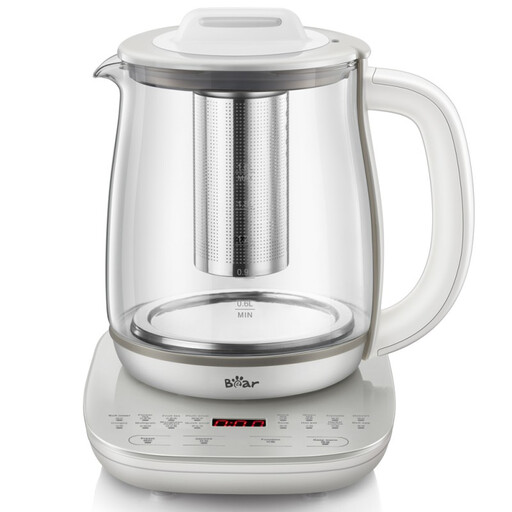
Why this product suits the profile: This tea and wellness kettle is aimed at users who want to prepare tea infusions, soups or other hot drinks as well as boiling water. Its 16 preset programmes are designed for versatile use.
The choice of defined programmes means you are not limited to the maximum boiling temperature. A filter and wide opening make it easier to use.
1.8 litres, 16 programmes, 360-degree base and, according to the product description, timed operation of up to 9.5 hours.
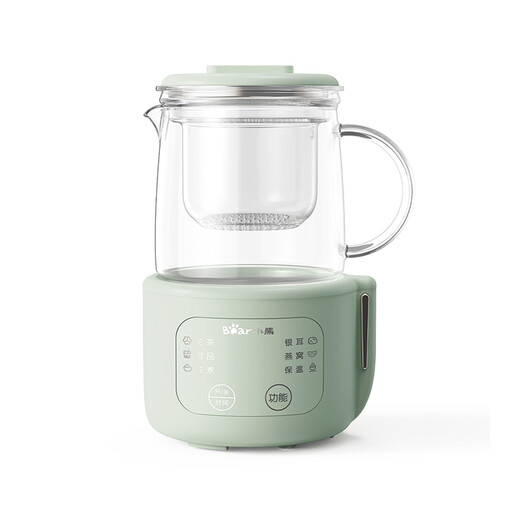
Why this product suits the profile: With a capacity of 0.4 litres, this mini kettle is designed for a single serving. Touch controls, a time display and six selectable functions make it suitable for office desks and compact living spaces.
The small capacity helps prevent heating substantially more water than needed for a single cup. The glass filter component is designed for a range of preparations.
0.4 litres, 360–430 watts, heat-resistant borosilicate glass and automatic keep-warm function according to the product details.
We have put together a complete, regularly updated list of products that fully meet these strict selection criteria and the safety regulations applicable in the EU.
Limescale deposits can affect heating performance. Descale the appliance regularly in accordance with the instruction manual. Do not use abrasive products, and never immerse the base, cable or plug in water.
If you have a glass kettle, protect the jug from impacts and stop using it if cracks or visible damage appear. Only fill the kettle up to the marking, close the lid before switching it on and pour slowly, as the jug and steam become hot.
For normal household use, models rated between around 1500 and 2200 watts are common. A 2200-watt kettle will generally heat larger quantities quickly. However, the amount of water, heating element and available power supply remain decisive factors.
The lifespan depends on how often it is used, water hardness, care and materials. Regular descaling, correct filling and avoiding dry heating can help maintain its usability. There is no standard lifespan that applies to all models.
Temperature control can be useful for tea lovers and anyone who does not always want to heat water to boiling point. A keep-warm function is worthwhile if you prepare several drinks one after another. For occasional boiling, however, a model with automatic switch-off and boil-dry protection is often sufficient.