
Lieferung heute & morgen

Qualitätsgarantie

Willkommens-Angebote freischalten: KOSTENLOSE Lieferung | Bis zu 80 % RABATT | Kostenlose 30-Tage-JoyPlus-Testphase
App herunterladen
A kitchen sieve can serve a range of purposes, depending on your household: sifting flour and icing sugar, draining pasta, washing fruit and vegetables, or keeping food scraps out of the drain. Many products look similar at first glance, but can differ considerably in their material, fit and ease of cleaning.
A compact sieve is easy to store, but that doesn’t mean it’s suitable for large portions. A small flour sieve or strainer fits neatly over bowls and pans. For pasta or larger quantities of fruit, however, a roomier pasta colander is a better choice.
The key is to check the actual dimensions and think about how you’ll use it. Product images can make it difficult to judge the size accurately. Before buying, check the diameter, height and, where relevant, maximum extension.
A stainless steel kitchen sieve is often chosen for its resistance to corrosion and ease of cleaning. Even so, check whether the product is actually made from stainless steel, or simply has a stainless-steel look or coating. Fine wire mesh can also be more delicate than a sturdy plastic body.
The design matters when it comes to cleaning, too. Fine mesh, folds and hard-to-reach joins can trap residue. It’s helpful if the product is specifically labelled as dishwasher-safe, but don’t assume this is the case.
An extendable sink strainer is handy when it rests securely on the edges of your sink. However, its span needs to suit the width and shape of the sink. A model that’s too short may slip, while one that’s too long might not sit securely.
Before buying, measure the inside width of your sink and check the product’s load capacity. A secure fit is particularly important when draining heavy pasta, full bowls or large quantities of vegetables.
Stainless steel is a practical choice for regular draining, rinsing and washing. It’s rust-resistant under normal kitchen conditions and can be cleaned with warm water and washing-up liquid. Still, check the manufacturer’s care instructions and dry your stainless steel kitchen sieve thoroughly after cleaning.
Plastic models can be lighter and easier to store in a small space. If you choose a plastic sieve, check that it’s suitable for food use and look out for any temperature limits. Not every model is suitable for very hot food or contact with a hob.
A fine-mesh strainer isn’t necessarily a good pasta colander. Conversely, a colander with large perforations won’t hold back flour or icing sugar evenly.
Look for smooth surfaces and as few hard-to-reach joins as possible. A dishwasher-safe sieve should be explicitly labelled as dishwasher-safe or suitable for the dishwasher. This shouldn’t be confused with the built-in filter in a dishwasher.
A separate kitchen sink strainer can be useful for catching food scraps and helping to prevent blockages. However, small strainers like these don’t replace regular drain cleaning.
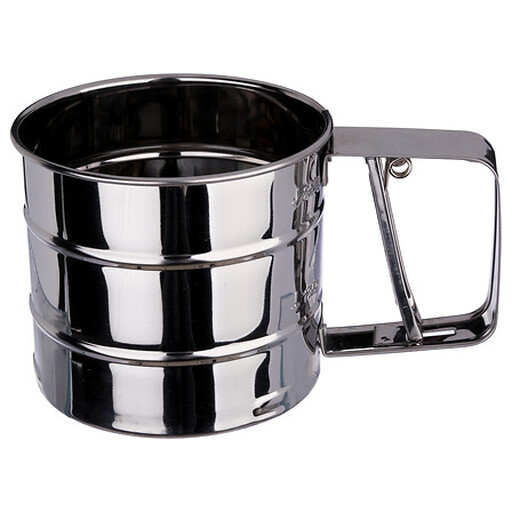
Why this product suits this profile: This compact stainless steel kitchen sieve measures 10,3 × 9,3 × 15,5 cm and is suitable for flour, icing sugar, liquids and small ingredients.
The exact measurements make it clear that this compact design shouldn’t be mistaken for a large colander. The manufacturer specifies stainless steel as the material and recommends drying it thoroughly after cleaning.
Stainless steel construction, a weight of 120 g and a handy shape that’s easy to store in smaller kitchens.
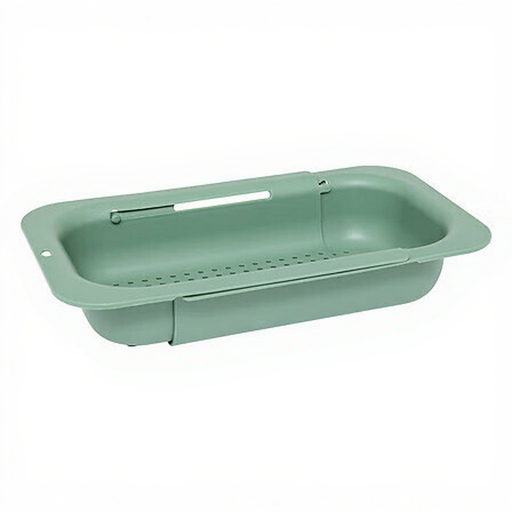
Why this product suits this profile: The extendable arms adjust to fit many standard sink sizes. This model is designed for fruit, vegetables and pasta, and for draining food directly over the sink.
Its extendable design helps address fit issues. Before use, though, check that the support arms rest securely on the edges of your sink.
Food-safe plastic, hands-free use over the sink, and suitability for hand-washing and the dishwasher according to the product description.
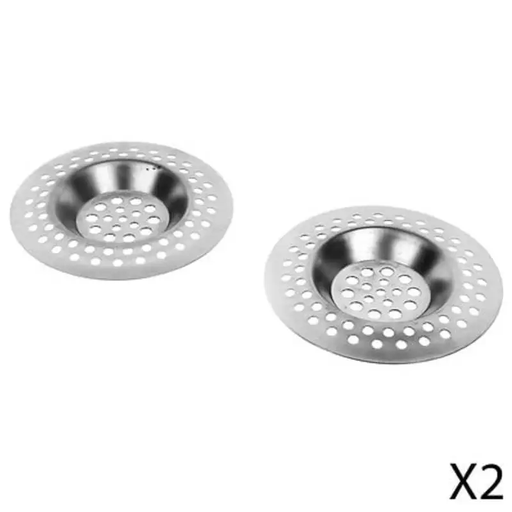
Why this product suits this profile: These two small sink strainers, each with a 7 cm diameter, are designed for drains, sinks and draining boards.
The stated diameter makes it easier to check whether the kitchen sink strainer will fit your existing drain. It isn’t designed to replace a large pasta colander.
Two strainers in the set, a compact diameter and steel with a stainless-steel finish to catch food scraps.
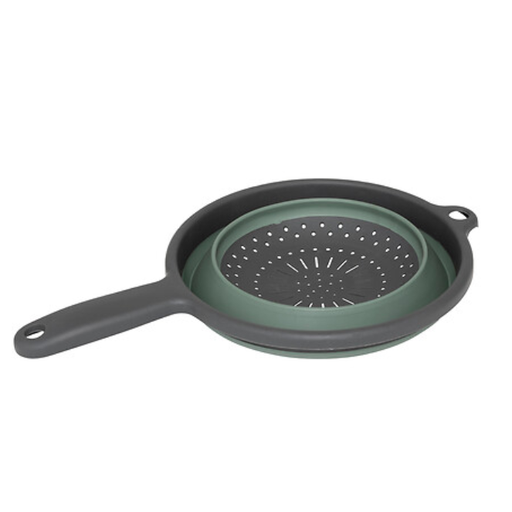
Why this product suits this profile: This folding mini colander is designed for fruit, vegetables and smaller portions, and takes up very little space when stored.
The product dimensions of 22,5 × 36,5 × 3,5 cm show how much space it takes up when in use. This makes it easier to judge whether it will suit a small sink and fit your available storage space.
Flexible TPE, TPR and PP materials, a light weight of 155 g and a foldable design.
Most households benefit from having both a finer sieve for baking and a larger colander for pasta and vegetables. In smaller kitchens, a space-saving sieve with a folding or extendable design can take the place of several individual products.
Restaurants, cafés, hotels and catering businesses should also look for a robust design that’s easy to clean, sufficient capacity and safe handling for frequent use. Small sink strainers in the right diameter can help keep the drain clear, but they’re no substitute for a full-size kitchen sieve.
We’ve put together a complete, regularly updated list of products that meet these strict selection criteria and fully comply with the safety regulations in force in the EU.
For pasta, a larger pasta colander with a stable base or handles is a good choice. Check the diameter, capacity and stability. A small flour sieve is generally too small for the job.
It depends on the product and the manufacturer’s instructions. Stainless steel is generally easy to care for, but not every model is labelled as suitable for the dishwasher. If there’s no guidance, wash the sieve by hand and dry it thoroughly afterwards.
Measure the diameter of the drain or the inside width of the sink. For an extendable sink strainer, you’ll also need to check that the support arms and maximum span suit your sink. This can help reduce the risk of the strainer slipping during use.