
Lieferung heute & morgen

Qualitätsgarantie

Willkommens-Angebote freischalten: KOSTENLOSE Lieferung | Bis zu 80 % RABATT | Kostenlose 30-Tage-JoyPlus-Testphase
App herunterladen
A kitchen sieve is a staple in many British households. It’s useful for rinsing berries and vegetables, draining rice or pasta, and straining stock, flour or tea. But not every model is right for every job. A sieve that’s too small can be awkward when preparing family-sized portions, while one with wide mesh may let small ingredients through. An unstable handle can even pose a safety risk when handling hot food.
A coarse pasta colander is suitable for pasta, potatoes and larger pieces of vegetables. For flour, icing sugar, tea or very small grains, a fine-mesh kitchen sieve is a better choice. If you only look at the diameter, it’s easy to overlook the mesh size.
A sieve with a handle can be handy for draining small amounts, but it won’t always replace a large colander. A skimmer or a slotted ladle lifts food out of water or oil, while a traditional kitchen sieve lets liquid drain away completely. So choose a design that suits the job you have in mind.
Fine mesh, hard-to-reach joints or a non-removable handle can make cleaning more difficult. Also check whether the sieve will fit in your sink, dishwasher or kitchen drawers. For extendable models, make sure the span suits the width of your sink.
A stainless steel sieve is a good option for regular rinsing and draining. The Strainer Stainless Steel 17x10 cm is listed as having a stainless steel construction, fine mesh and being dishwasher-safe. The product description also recommends hand-washing with a mild detergent to protect the surface. Dry the sieve thoroughly after washing.
PBT, or polybutylene terephthalate, is used in kitchen utensils such as skimmers. According to the product description, the material is heat-resistant. Even so, don’t leave this type of utensil in a hot pan for long periods, and keep it away from naked flames. For products with plastic parts, follow the information on the packaging and product page.
A compact model with a 0.5-litre capacity may be enough for individual portions or small amounts of vegetables. For pasta, salad or several portions, a larger colander is a better choice. According to the product details, an extendable sink strainer with a 3.6-litre capacity can be used with sinks of different widths. Before buying, compare its stated dimensions of 53.5 × 24.7 × 10.5 cm with your sink.
A long handle makes it easier to strain over a pan and keeps your hands away from hot water. A base lets you set the colander down on the worktop. For lifting dumplings, vegetables or fried food, a slotted skimmer is often a better choice than a traditional sieve.
When using utensils with hot liquids, check the manufacturer’s instructions carefully. Not every model is designed for direct heat, naked flames or being left in a pan for a long time.
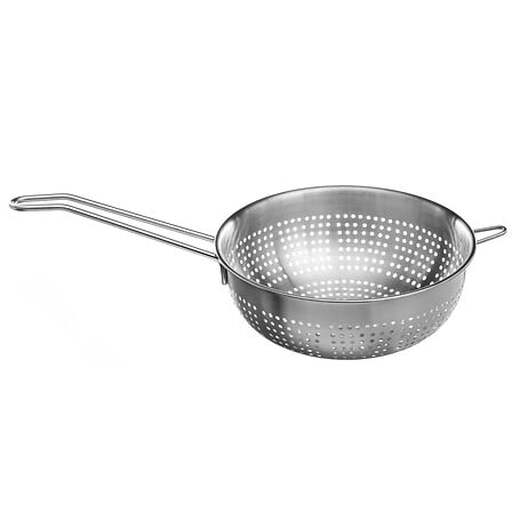
Why it suits this user: Its compact capacity is ideal for small portions, berries, individual servings of vegetables or a single portion of pasta.
The product description clearly states the material, capacity and long handle. This makes it easier to check whether it suits your needs before buying.
Stainless steel construction, a 0.5-litre capacity and a long handle for small draining jobs.
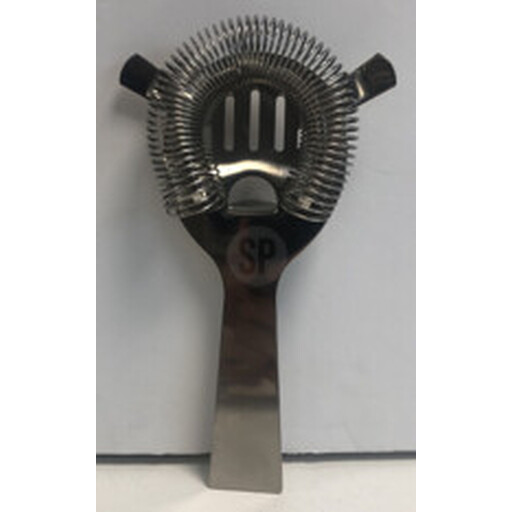
Why it suits this user: This compact stainless steel sieve has a fine mesh, making it suitable for everyday rinsing, straining and sifting dry ingredients.
The dimensions of 17 × 10 cm and fine mesh are clearly specified. This helps you avoid choosing a supposedly versatile model that’s too large or has mesh that’s too coarse.
Fine stainless steel mesh, a handle and, according to the product description, dishwasher-safe.

Why it suits this user: This extendable sink strainer is designed for larger quantities and sinks of different widths.
The extendable design and stated dimensions make it easier to check whether it will fit your sink before buying.
3.6-litre capacity, stainless steel mesh, an extendable design and an ergonomic handle.
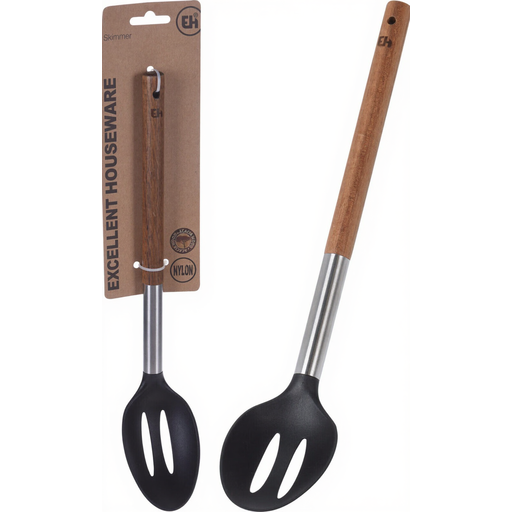
Why it suits this user: This skimmer is designed for lifting vegetables, pasta or dumplings out of hot water or oil.
The product description explains what it’s designed for and advises against leaving the utensil in a hot pan for long periods.
Heat-resistant PBT according to the product description, a secure-grip handle, and a design for lifting and draining food.
We’ve put together a complete, regularly updated list of products that meet these strict selection criteria and fully comply with the safety regulations in force in the EU.
For one or more portions of pasta, choose a colander with enough capacity and a stable base. A handled sieve may be sufficient for small quantities. For larger portions, make sure the capacity suits the amount of food and the size of your sink.
A kitchen sieve often has finer mesh and can also be used to strain flour, tea or small ingredients. A colander is usually larger and designed for draining pasta, potatoes or vegetables. However, the terms aren’t always used consistently in everyday conversation.
Its lifespan depends on the thickness of the material, the quality of construction, how it’s used and how well it’s cared for. Dry a stainless steel sieve after washing, and check it regularly for bent mesh, sharp edges or loose joints. If it’s visibly damaged, don’t use it for food.