
Lieferung heute & morgen

Qualitätsgarantie

Willkommens-Angebote freischalten: KOSTENLOSE Lieferung | Bis zu 80 % RABATT | Kostenlose 30-Tage-JoyPlus-Testphase
App herunterladen
A good kitchen strainer is an unsung hero of daily cooking. Whether it's for draining pasta, washing salad, or sifting sauces, its role is fundamental. Yet, this simple tool is full of pitfalls that often only become apparent after a few weeks: rust spots after the first dishwasher cycle, a handle that bends under the weight of potatoes, or a mesh that lets fine quinoa slip right through.
Many buyers focus on superficial features, overlooking the critical differences in quality. This guide will show you the three crucial points to look for to find a durable and functional kitchen strainer that reliably does its job without becoming another disposable item.
Before you make a purchase, you should examine three core aspects. These determine the longevity, hygiene, and functionality of your new kitchen helper.
The label "stainless steel" alone is not a reliable mark of quality. Inexpensive strainers are often made from low-grade alloys that are prone to rust and discolouration, especially when they come into contact with acidic foods like tomatoes or citrus fruits.
A strainer's functionality is defined by the type and size of its openings. A one-size-fits-all strainer rarely exists.
Even the best material is of little use if the construction has weak points. Pay close attention to the connection between the handle and the strainer basket. Poorly welded or merely clamped-on handles are the most common cause of defects.
Here are some recommendations tailored to different needs and use cases, all of which meet the quality criteria mentioned above.
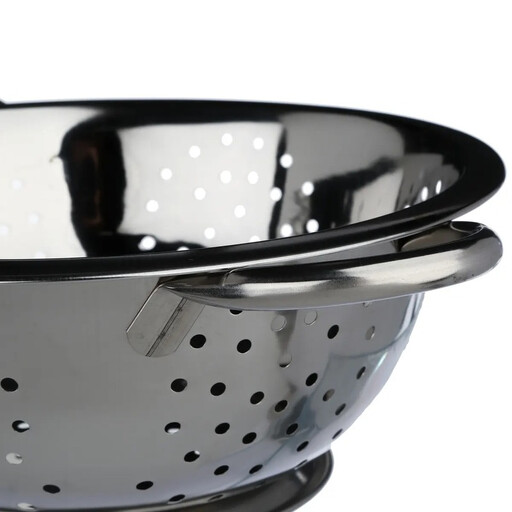
Why This Fits Their Persona: Ideal for daily use in family kitchens. With a 24 cm diameter and 2.2-litre capacity, this colander is large enough for a family-sized portion of pasta or for washing salad, without being unwieldy.
Unlike flimsy, low-cost models, this strainer is made from a robust steel alloy. This prevents the frame or handles from bending, even when it's fully loaded.
Offers a large capacity and a solid, durable construction at an accessible price. Its classic shape is versatile enough for most draining and washing tasks.
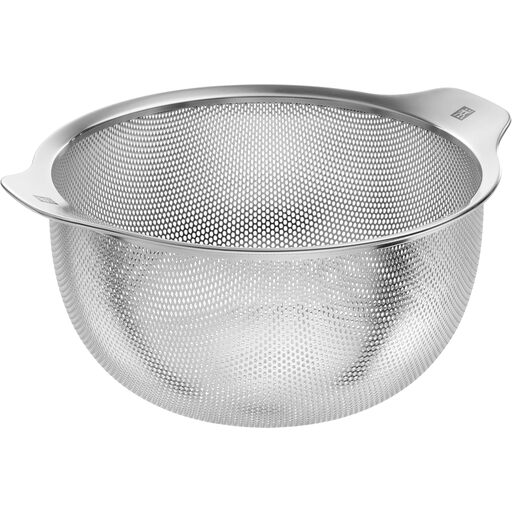
Why This Fits Their Persona: For cooks who value superior material quality, flawless craftsmanship, and an elegant design. This strainer is not just a tool but also a stylish serving bowl for fruit or salad.
Crafted from 18/10 stainless steel, it offers high resistance to rust and acids. The seamless interior finish prevents food particles from getting trapped—a common hygiene issue with cheaper models.
Extremely stable thanks to its elevated base and integrated handles. The perforation ensures rapid water drainage and prevents soggy pasta. It is also fully dishwasher-safe.
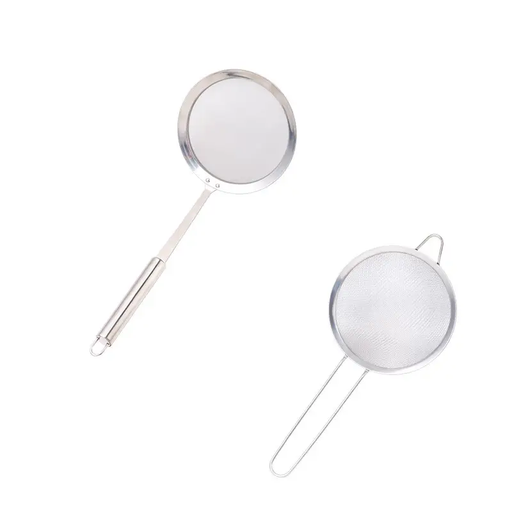
Why This Fits Their Persona: Perfect for anyone who makes their own nut milk, soy milk, or juices, sifts flour finely, or prepares clear broths. This set is designed for tasks where a standard strainer would fail.
The fine-mesh sieve made of 304 stainless steel retains even the smallest particles where coarse-mesh colanders fail. The robust construction ensures the mesh remains stable even when straining thicker liquids.
Specialised for ultra-fine filtering. The set also includes a skimming spoon and is made from food-grade stainless steel, making it a versatile tool for demanding kitchen tasks.
We have compiled a complete, up-to-date list of products that fully meet these strict selection criteria and safety regulations.
1. How can I identify a rust-proof stainless steel kitchen strainer? Check the manufacturer's material specifications. Designations like 18/10 stainless steel (equivalent to material number 1.4301) or 304 Stainless Steel are reliable indicators of high corrosion resistance. A high-quality strainer also feels sturdy and has no sharp edges or messy weld seams.
2. What size strainer is suitable for a 4-person household? For draining pasta or washing salad for four people, a colander with a diameter of about 24 cm (approx. 9.5 inches) and a capacity of 2 to 3 litres is a good choice. In addition, a smaller fine-mesh strainer with a diameter of about 16 cm (approx. 6.3 inches) is very practical for sifting powdered sugar, straining sauces, or washing small quantities of berries.
3. What is the most effective way to clean a fine-mesh strainer? Rinse the strainer immediately after use under running water, ideally from the outside (the convex side) inwards. This pushes particles out of the mesh instead of pressing them in. For stubborn residue, a soft dish brush can help. Many stainless steel strainers are dishwasher-safe, but a quick hand rinse is often the most effective way to clean the mesh completely.