
Lieferung heute & morgen

Qualitätsgarantie

Willkommens-Angebote freischalten: KOSTENLOSE Lieferung | Bis zu 80 % RABATT | Kostenlose 30-Tage-JoyPlus-Testphase
App herunterladen
A kitchen sieve is one of those kitchen essentials you may use every day: for draining pasta, washing fruit and vegetables, sifting flour, or filtering tea and coffee. Even so, unclear product specifications and unsuitable dimensions often lead to disappointing purchases.
If you want to buy a household sieve, you should therefore look beyond descriptions such as “multifunctional” or “high quality”. What really matters is clear information about material, mesh or hole size, capacity, handle and cleaning.
“Stainless steel” does not automatically mean that a product has every feature you are looking for. For everyday kitchen use, factors such as workmanship, shape stability and suitability for food contact are also important. With a stainless steel sieve, you should also check whether every component is actually made of metal, or whether the frame and handle are made of plastic.
A plastic frame can reduce weight, but may be less heat-resistant. For example, the Stainless Steel and Plastic Mesh Sieve product explicitly states that its plastic frame is not designed for temperatures above 70 °C. Boiling-hot liquids should not be poured directly into it.
A colander with large holes lets water drain quickly, but may not reliably retain very small ingredients. For flour, icing sugar or cocoa, a fine-mesh kitchen sieve with a tighter mesh is more suitable. A finer-mesh draining sieve can also be useful for washing berries.
The mesh size should match the intended use:
A sieve may be technically suitable and still be awkward to use if it does not fit over your sink or bowl. Check the diameter, height and support points carefully. A sieve with a handle is suitable for small portions and quick tasks. For larger quantities, side handles and a sturdy base are usually more practical.
Stainless steel is an appealing choice for many households because it is easy to care for and durable. Higher-quality versions may specify alloys such as 304 stainless steel or 18/10 stainless steel. These terms describe the material composition, but are not, on their own, proof of the product’s overall quality.
Also look for:
A dishwasher-safe sieve makes cleaning easier. With combinations of stainless steel and plastic, frequent cleaning at high temperatures may put strain on the plastic parts over time. Washing by hand can extend the product’s service life.
For a sieve used to strain stock, juice or pulp, a fine-mesh model is a sensible choice. A stainless steel coffee filter needs a much finer filter structure than a traditional colander. With tea, it depends on whether you use loose leaves or tea bags. A tea strainer should provide enough room for the leaves so that water can flow through them.
The right size depends on your usual portion sizes:
An expandable model can adapt to different sink sizes. However, it requires more storage space than a compact household sieve and should be allowed to dry completely after use.
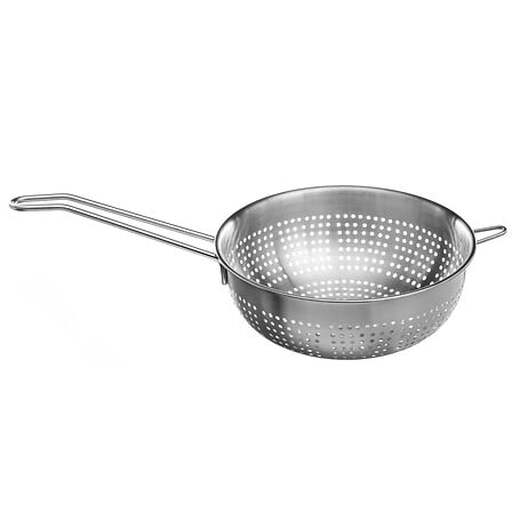
Why this product suits this profile: With a capacity of 0.5 litres, it is designed for individual portions, berries or small quantities of vegetables. The long handle makes it easier to hold over a bowl or sink.
Its compact size reduces the risk of buying an oversized sieve for small quantities. The product description specifies stainless steel and fine drainage openings.
0.5-litre capacity, stainless steel construction and a long handle for smaller kitchen tasks.
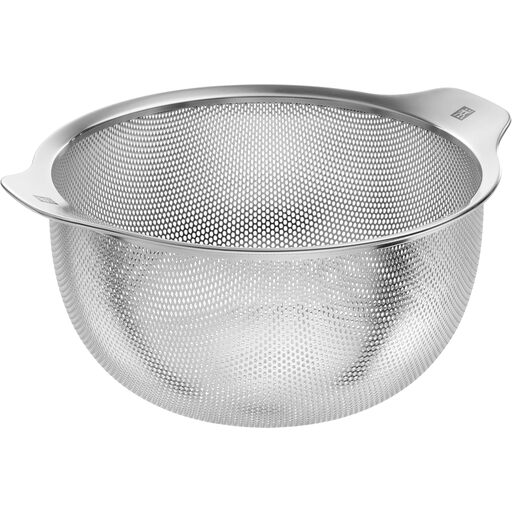
Why this product suits this profile: Its 24 cm diameter, side handles and raised base are designed for larger portions of pasta and vegetables.
The specific size and sturdy base help you avoid choosing a solution that is too small or unstable for family portions.
18/10 stainless steel according to the product information, a 24 cm diameter, side handles and dishwasher suitability according to the description.

Why this product suits this profile: This expandable draining sieve is designed for larger quantities and, according to the product information, can be used over sinks of different widths.
The expandable design addresses the common problem of finding a sieve that fits your sink. Before buying, compare the dimensions of 53,5 × 24,7 × 10,5 cm with your own sink.
3.6-litre capacity, stainless steel mesh and expandable supports for different sink widths.
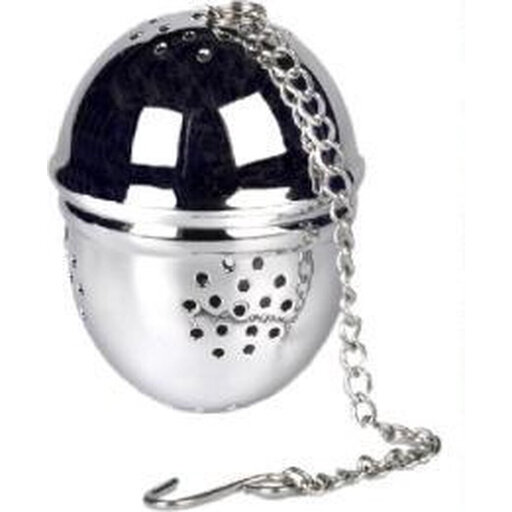
Why this product suits this profile: With a diameter of 4 cm, this round tea strainer is designed for loose-leaf tea and use in cups or teapots.
The specified fine stainless steel mesh is intended for loose tea leaves. Its compact diameter makes its purpose clearer than that of a universal large sieve.
Rust-resistant stainless steel according to the product description, compact design and use as a tea filter for loose leaves.
We have put together a complete, regularly updated list of products that fully meet these strict selection criteria and the safety regulations applicable in the EU.
After straining, food residue should not be left to dry on the mesh. Rinse the sieve with warm water as soon as possible. A soft brush can be useful for fine mesh. Scouring products, wire wool and harsh cleaners can damage surfaces or plastic parts.
Dry a stainless steel kitchen sieve completely before storing it in a drawer. Models with hanging loops or hooks can be stored in a well-ventilated place. Check the mesh regularly for deformation, tears and loose handles. A damaged sieve should no longer be used with food.
For flour, icing sugar and cocoa, a fine-mesh household sieve with a handle is practical. One example is the Leifheit ProLine kitchen sieve Ø 16 cm, with a stated mesh opening of 1,5 mm. It is less suitable for pasta or coarse vegetables than a larger colander.
This depends on the manufacturer’s instructions and the materials used. For a model made entirely from stainless steel, dishwasher cleaning is often explicitly stated as suitable. If the sieve has a plastic frame or plastic handles, follow the care instructions, as high temperatures can affect these parts over time.
Its service life depends on the material, use, cleaning and storage. A sieve can remain usable for a long time if it is not overloaded, damaged with sharp objects, and dried after washing. Regularly checking the mesh, frame, base and handles is more important than relying on a marketing claim.