
Lieferung heute & morgen

Qualitätsgarantie

Willkommens-Angebote freischalten: KOSTENLOSE Lieferung | Bis zu 80 % RABATT | Kostenlose 30-Tage-JoyPlus-Testphase
App herunterladen
A high-quality stainless steel colander is an indispensable tool in any kitchen. Whether for draining pasta, washing fruits and vegetables, or straining sauces, its uses are incredibly versatile. However, the sheer number of models available can be overwhelming. The differences often lie in the details: size, material quality, shape, and functionality.
This article serves as a guide to help you navigate the options. We will introduce various models and explain the key features to consider, ensuring you find a durable and practical strainer that meets your specific needs.
Before making a decision, there are several objective criteria to consider. These will help you identify the perfect model for your cooking habits and the available space in your kitchen.
Size is a crucial factor. A small kitchen strainer with a capacity of less than one litre is excellent for washing small amounts of fruit like berries or for straining single servings. For families or when preparing larger meals, a large kitchen colander with a volume of four litres or more is the more practical choice. Such models are ideal as a pasta strainer or salad colander for the whole family. Pay attention to the dimensions to ensure the colander fits in your sink and cabinets.
Not all stainless steel is created equal. A common and high-quality alloy for kitchen utensils is 18/10 stainless steel. This designation indicates that the steel contains 18% chromium and 10% nickel. Chromium provides the rust-proof property, while nickel increases resistance to acids (e.g., from fruit) and adds a fine lustre. Another common variant is 304 stainless steel (also known as 18/8), which also boasts high corrosion resistance. Clean workmanship without sharp edges and a sturdy construction are hallmarks of a long-lasting product.
A good stainless steel colander should be practical to use. Models with a pedestal base or a flat bottom offer stability in the sink or on the countertop. A colander with handles makes it easier to safely drain hot liquids. Long handles are practical for smaller strainers, while two side handles provide better balance on larger ones. Also, check if the colander is dishwasher-safe to simplify cleaning.
Here is a selection of models that stand out for their specific features and applications.
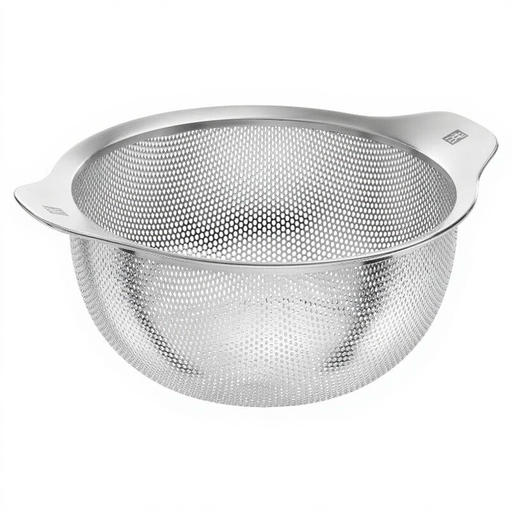
Why it stands out: This strainer from Zwilling combines functionality with a thoughtful design by Matteo Thun and Antonio Rodriguez. Made from satin-finished 18/10 stainless steel, it's not just a practical kitchen tool but can also be used as a serving bowl thanks to its appealing look.
Pros:
Who it's for: For quality-conscious households looking for a multifunctional and aesthetically pleasing strainer for washing fruits and vegetables that can also be used for serving.
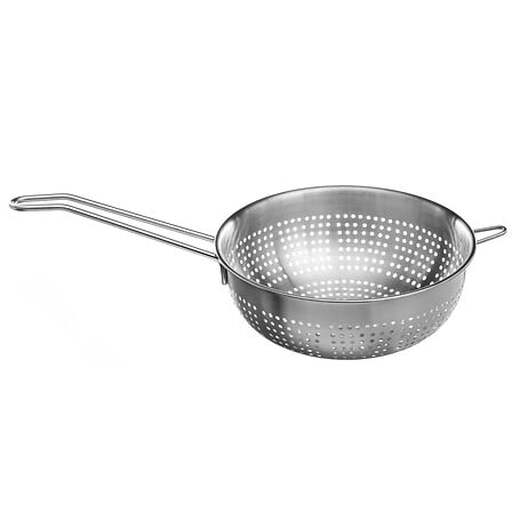
Why it stands out: This compact model is the ideal solution for quick, everyday kitchen tasks. With a 0.5-litre capacity and a long handle, it is extremely handy and safe to use.
Pros:
Who it's for: Perfect for individuals, couples, or as a supplementary tool in any kitchen for those quick, small tasks where a large colander would be impractical.
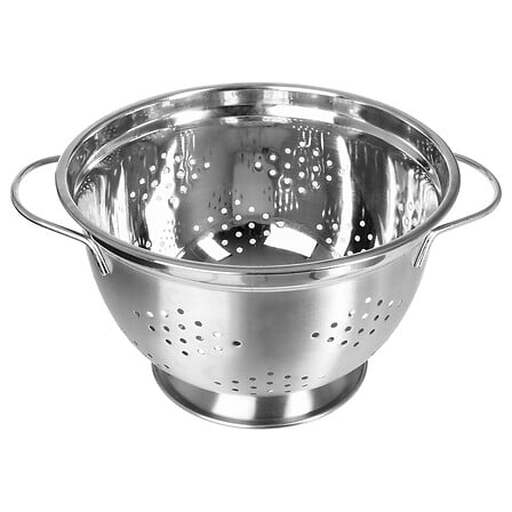
Why it stands out: With a generous capacity of 4.75 litres, this stainless steel colander is designed for preparing family-sized meals. The two side handles and pedestal base make it a robust and practical tool.
Pros:
Who it's for: For families and home cooks who regularly prepare large quantities and need a reliable, large kitchen colander.
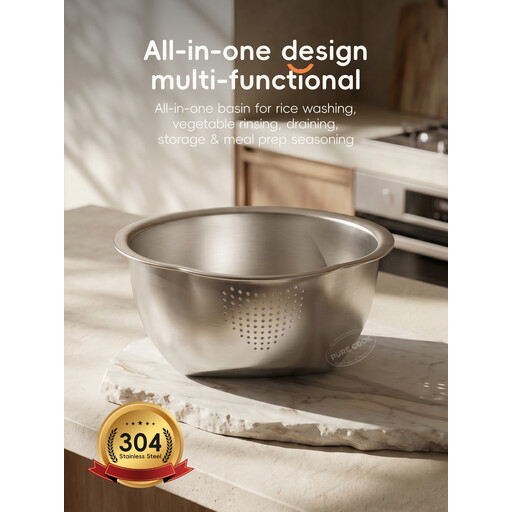
Why it stands out: This model from PURECOOK is crafted from food-grade 304 stainless steel (18/8) and features an electro-polished, coating-free surface. The dense and evenly spaced holes allow for exceptionally rapid drainage.
Pros:
Who it's for: For users who prioritise maximum hygiene and efficiency. It is especially suitable for tasks like rinsing rice or fine vegetables, where fast drainage is essential.
The models presented here already cover a wide range of needs. However, if you are looking for a different size, shape, or a specific design, you can find more alternatives in our comprehensive category.
? Discover the entire selection of stainless steel colanders here
1. Is a stainless steel colander dishwasher-safe? Most high-quality stainless steel colanders are declared dishwasher-safe. However, it is recommended to remove the colander from the machine promptly after the cycle and dry it completely to prevent water spots and preserve the material's shine long-term. Always follow the manufacturer's care instructions.
2. What is the best way to clean a stainless steel colander? Besides using the dishwasher, you can easily hand-wash the colander with warm water, a mild dish soap, and a soft sponge. Avoid steel wool or abrasive scourers, as they can scratch the surface. For stubborn residues, soaking it in warm, soapy water can help.
3. What do the numbers 18/10 or 304 mean for stainless steel? These numbers describe the composition of the steel alloy. 18/10 stainless steel contains 18% chromium and 10% nickel. 304 stainless steel (also known as 18/8) contains 18% chromium and 8% nickel. Both variants are rust-proof, durable, and food-safe. The higher nickel content in 18/10 steel offers slightly increased resistance to acids and provides a somewhat warmer sheen. For everyday kitchen use, both materials are an excellent choice.