
Lieferung heute & morgen

Qualitätsgarantie

Willkommens-Angebote freischalten: KOSTENLOSE Lieferung | Bis zu 80 % RABATT | Kostenlose 30-Tage-JoyPlus-Testphase
App herunterladen
A high-quality stainless steel colander is an indispensable tool in any kitchen. But the buying process has hidden pitfalls that often only surface after a few weeks: unexpected rust spots, an unstable design that tips over in the sink, or a tedious cleaning process. What seems like a good deal can quickly turn into a poor investment.
This guide will show you the crucial features to look for to find a durable, hygienic, and functional model. We'll explain which material standards truly matter and how to spot design flaws before you spend your money.
Many buyers focus on appearance or a low price, overlooking critical quality features. These three problems are the most common sources of disappointment:
To avoid these problems, you should carefully check three technical aspects before buying. These factors define the durability, safety, and functionality of your new kitchen tool.
Not all stainless steel is created equal. The designation 18/10 stainless steel (also known as material number 1.4301 or AISI 304) signifies an alloy containing 18% chromium and 10% nickel.
A colander made from this material is flavor-neutral, extremely durable, and maintains its flawless appearance for years. It's the foundation for a dishwasher-safe colander that stays hygienically clean.
For draining pasta, potatoes, or large quantities of vegetables, a freestanding colander is the safest choice. Look for a wide, continuous base ring instead of small, attached feet. This ring distributes weight evenly and prevents the colander from tipping in the sink, even when you pour hot water vigorously. Models with integrated, solid handles offer extra grip and safety during transport.
The type of holes is crucial for functionality. Uniform perforation (stamped holes) allows water to drain quickly without letting fine pasta like spaghetti or angel hair slip through. Unlike wire mesh, perforated colanders are much easier to clean because no particles can get trapped in the weave.
A diameter of around 24 cm is a great all-rounder for most households. It offers enough volume for a family-sized portion of pasta and also works perfectly as a salad colander for washing fresh greens.
Instead of making a one-size-fits-all recommendation, we've selected products tailored to specific needs and kitchen profiles.
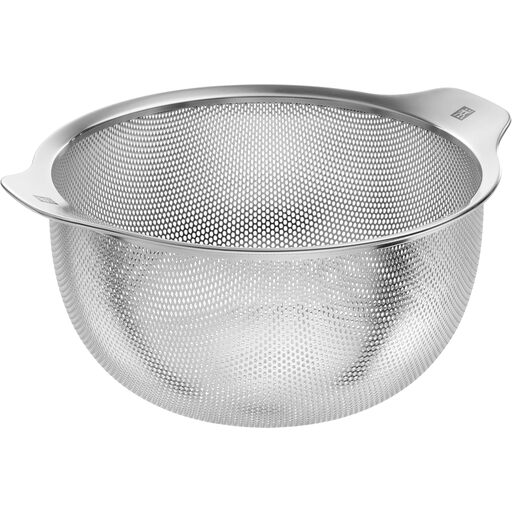
Why This Fits Their Persona: For those who value brand quality, flawless craftsmanship, and a timeless design. This colander is not just a tool but an aesthetic statement in the kitchen, and can even double as a serving bowl for fruit.
Made from 18/10 stainless steel, it offers maximum corrosion and acid resistance, according to the manufacturer. The wide, stable base reliably prevents it from tipping over.
Excellent stability and durability. The seamless construction and high-gloss polished surface make cleaning easy and ensure maximum hygiene.
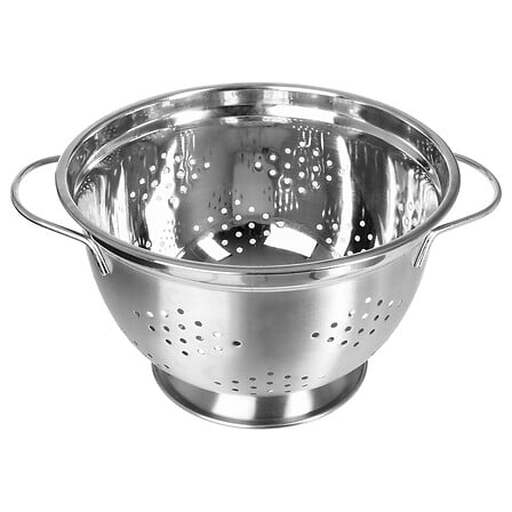
Why This Fits Their Persona: Ideal for daily use in a family kitchen where large quantities are prepared. The focus here is on functionality and a large capacity.
The elevated base provides stability and keeps the colander off the bottom of the sink, preventing drained water from flowing back. The robust stainless steel construction is designed for continuous use.
Very large 4.75-liter capacity, perfect for pasta, potatoes, or large salads. Practical side handles make it easy to carry and shake.
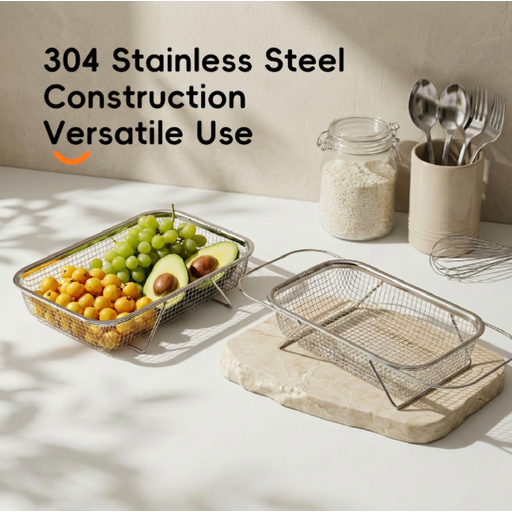
Why This Fits Their Persona: Perfect for kitchens with limited counter or cabinet space. This model is placed directly over the sink and can be collapsed for space-saving storage after use.
Because it rests on the edges of the sink, tipping over is impossible. Its construction from 304 stainless steel (18/8) ensures it is rust-proof and food-safe.
The extendable design adapts to various sink sizes. It's not just for draining but also for washing vegetables or as a dish drying rack.
We have compiled a complete, up-to-date list of products that fully meet these strict selection criteria and safety standards.
The designation 18/10 stainless steel indicates the alloy's composition: 18% chromium and 10% nickel. Chromium provides rust resistance, while nickel increases its resilience to food acids and gives the material its shine. This quality is especially durable, food-safe, and hygienic.
For draining large amounts of hot liquids, like from pasta or potatoes, a freestanding colander with a wide base is the safer option. It can be placed securely in the sink, leaving both your hands free to hold the heavy pot. A handled sieve is better suited for smaller quantities, straining sauces, or dusting pastries with powdered sugar.
Most high-quality stainless steel colanders are dishwasher-safe. For manual cleaning, warm water, a little dish soap, and a soft brush are usually sufficient. On perforated colanders without sharp edges or folds, food particles have few places to get stuck. Avoid steel wool or harsh abrasive cleaners, as they can scratch the protective surface of the stainless steel.