
Lieferung heute & morgen

Qualitätsgarantie

Willkommens-Angebote freischalten: KOSTENLOSE Lieferung | Bis zu 80 % RABATT | Kostenlose 30-Tage-JoyPlus-Testphase
App herunterladen
An LED night light with a motion sensor should provide orientation at night without permanently illuminating the entire room. In practice, however, models differ considerably: some respond only to darkness, while others detect movement. Rechargeable versions require regular charging, whereas plug-in models have no battery but do require an available power outlet.
The Joybuy Product Recommendation Officer’s selection therefore focuses on clearly verifiable details such as sensor type, light output, colour temperature, power supply, dimensions and intended use.
A night light with a sensor is not automatically a night light with a motion sensor. A twilight or light sensor measures the ambient brightness and switches the light on, for example, when it gets dark. A PIR sensor, by contrast, responds to movement within a defined detection area.
A motion sensor can be particularly practical in a hallway because the light activates only when someone walks past. In a bedroom or children’s room, a constant low-level light controlled by a twilight sensor may be more suitable.
More lumens are not necessarily beneficial in every room. Very bright light can cause glare at night or disturb others in the bedroom. Depending on the position, just a few to several dozen lumens are often sufficient for orientation. Light distribution, mounting height and colour temperature are also important factors.
With a rechargeable night light, operating time depends on brightness, sensor activity and charge level. A model with a USB-C port offers flexibility but needs to be recharged. A plug-in night light operates without a battery or charging interruptions, but remains tied to its installation location.
First check whether the model you are considering has a PIR motion sensor, a twilight sensor or both functions. Specifications such as a 3.5-metre detection range, 7-metre range or a 120-degree detection angle help you assess suitability.
In a hallway, the sensor should detect the area across the direction of travel. Inside a cupboard, the light should be positioned so that opening the door or moving a hand triggers the sensor. Also check whether automatic switch-off is specified. Without this function, a motion-activated light may remain on unnecessarily long.
Light output is measured in lumens (lm). Warm white light between approximately 2,800 and 3,200 kelvins generally feels more discreet in living rooms and bedrooms than cool white light at around 6,500 kelvins. A more neutral or cooler light colour can be useful in a utility room or cupboard.
A dimmable night light offers greater flexibility. Some models allow the brightness to be reduced continuously, while others provide fixed brightness levels. An RGB night light adds coloured lighting modes, but is not automatically necessary for nighttime orientation.
Plug-in models do not require a battery. This reduces maintenance but occupies a power outlet. A rechargeable night light, on the other hand, can be used on a bedside table, mounted on a wall or installed inside a cupboard. Check whether it uses a USB-C port or another USB charging format.
For a cordless night lamp, battery capacity, charging time and stated operating duration are relevant. Flat lights with magnetic or adhesive mounting are practical for cupboards and under-cabinet areas. Ensure the mounting surface is clean and strong enough to support the light, and make sure the sensor and LED are not covered.
For Germany, another point is important: according to the product specification, models with IP20 are intended only for dry indoor areas. They should not be used in damp locations or near water. Information such as CE, RoHS, rated voltage and safety instructions should be clearly verifiable on the product page.
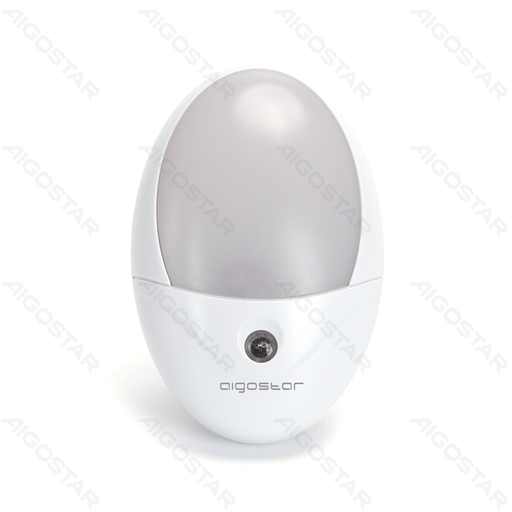
Why This Fits Their Persona: This plug-in model is ideal for shoppers seeking a straightforward LED night lamp for a hallway, bedroom or stairwell—without a battery or charger.
The PIR sensor is specified with a 7-metre range and a 120-degree detection angle. This makes the sensor type clearer than with twilight-only models.
20 lm, 3,000 K warm white light, 1 W power consumption, flame-retardant PC housing and IP20 for indoor use.
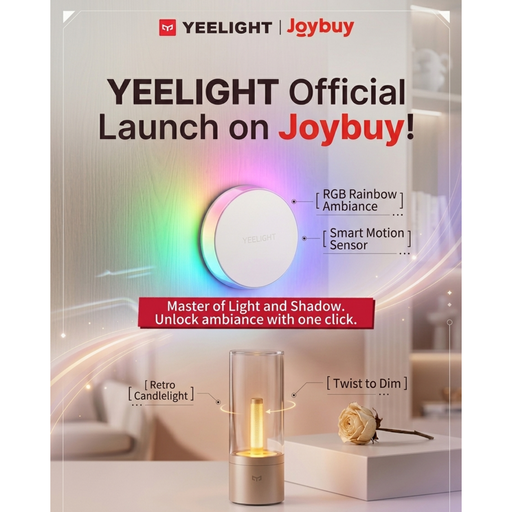
Why This Fits Their Persona: Designed for living rooms, bedrooms or gaming spaces where motion detection is complemented by versatile ambient lighting.
The product name explicitly mentions motion sensors and USB-C charging, making key functions identifiable before purchase.
RGB lighting, 11 preset effects, magnetic mounting and USB-C port according to the product specification.

Why This Fits Their Persona: These lights are designed for cupboards, shelving, kitchen areas and dark recesses where a longer illuminated surface is needed.
This version combines PIR detection with a specified range of 3 to 5 metres and a slim 300 × 38 × 10 mm design.
Two lights per set, 41 LEDs per light, three colour temperatures and an integrated 1,100 mAh battery with USB charging.
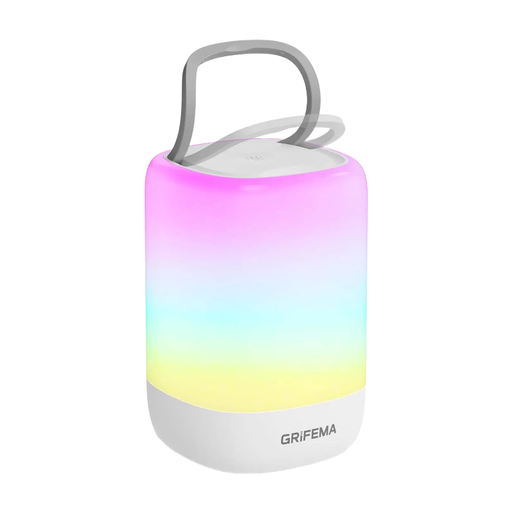
Why This Fits Their Persona: As a portable LED night lamp for children’s rooms, bedside tables or travel, it is suitable when a motion sensor is not required.
Touch controls allow the brightness to be reduced from 100 to 5 per cent, so the light does not have to operate exclusively at maximum output.
USB-C charging, a stated battery life of up to 15 hours, seven RGB colours, a 30-minute timer and dimming function.
Running costs depend on power consumption and operating time. A 1-watt night light uses approximately 1 kWh over 1,000 operating hours. A 0.4-watt model consumes around 0.4 kWh under the same conditions. For an individual estimate, use the following formula:
Power in watts × operating hours ÷ 1,000 = kilowatt-hours
With a motion sensor, actual operating time is often lower than with a light that remains switched on continuously. A twilight sensor, by contrast, may remain active for many hours. Therefore, compare not only the wattage but also the expected daily usage time.
The complete category features a regularly updated selection of energy-efficient night lights for different rooms and usage scenarios.
Mount or place it so that the sensor faces the path of movement and is not obstructed by furniture, curtains or covers. In a hallway, a low to medium mounting height is generally sensible. For cupboard lights, the sensor should face the opening. Take note of the specified range and detection angle for the model in question.
This depends on battery capacity, brightness level and usage. Specifications vary depending on the product and operating mode. For example, the VIVREAL Sloth is stated to provide up to 6 hours of runtime at maximum brightness. When the brightness begins to fade, the battery should be recharged. Use only suitable USB or USB-C power sources.
For LED models consuming between 0.3 and 1 watt, calculated consumption remains low for the same operating period. A 0.3-watt model uses approximately 0.3 kWh over 1,000 hours. Actual costs are calculated by multiplying this consumption by your electricity tariff. Continuous operation, sensor shut-off and charging losses can affect the result.