
Lieferung heute & morgen

Qualitätsgarantie

Willkommens-Angebote freischalten: KOSTENLOSE Lieferung | Bis zu 80 % RABATT | Kostenlose 30-Tage-JoyPlus-Testphase
App herunterladen
An LED night light with a twilight sensor is designed to provide orientation at night without staying brightly lit or using unnecessary electricity. Automatic activation is practical for families, older people and anyone with dark hallways or staircases. However, models vary considerably in terms of sensor type, light colour, brightness and safety.
It is therefore worth taking a close look at the technical specifications before buying. A decorative design or low price alone says little about whether a plug-in night light is actually suitable for your intended location.
A twilight sensor responds to the brightness in the room. The night light switches on when it gets dark and, depending on the model, remains active throughout the dark period. A motion-sensor night light works differently: it only lights up when movement is detected, then switches off again afterwards.
For a hallway that should remain subtly illuminated throughout the night, a twilight sensor is suitable. For short trips to the kitchen or as a night light for stairs, a motion sensor can reduce electricity consumption.
Light colour is measured in Kelvin. 6500 K appears cool and rather white, while 2700 to 3000 K is perceived as warm white. For a children’s room, bedroom or night-time trip to the toilet, many users prefer a warm-white night light. Cool orientation lighting can be useful, however, when contours and floor areas need to be as clearly visible as possible.
The amount of light also matters: lumens (lm) describe luminous flux. 8 lm is considerably more subtle than 40 lm. High brightness is not an advantage in every room, as it may feel disruptive when waking up or in a baby’s room.
A night light with a USB charging function can also turn a socket into a charging point. However, you should check whether the USB ports are suitable for the devices you intend to use and what output power is specified.
Extra care is required in damp areas. The models featured are predominantly intended for indoor use and dry areas. A night light should not be used in the immediate vicinity of a sink, shower or bath unless the product specifications expressly permit it. The ingress protection rating, such as IP20 or IP25, is not a general authorisation for use in damp environments.
With an LED plug-in light with a twilight sensor, the sensor should be unobstructed and not covered by furniture, curtains or decorations. Some models specify a switch-on value of 20 lux. This makes it easier to assess when the automatic night light will respond.
A PIR sensor, on the other hand, detects movement. Pay attention to the detection angle and range. A model with a 7 m range and a 120° detection angle may be suitable for a longer hallway, while shorter ranges are sufficient for a small area beside the bed.
A high colour rendering index such as Ra ≥ 80 describes colour rendering, not brightness. For a night light, it is also important to consider whether the brightness can be dimmed.
A 1-watt night light uses 1 kWh over 1,000 operating hours in theory. At 0.4 watts, it uses 0.4 kWh, while at 0.5 watts it uses 0.5 kWh accordingly. The actual running costs depend on your electricity tariff and how long the light is used.
Plug-in models do not require batteries or charging. USB or rechargeable-battery models, on the other hand, offer greater flexibility for cupboards, shelves or areas without a spare socket. Before use, check the mains voltage, plug type and cleaning instructions. Electrical appliances should always be cleaned with a dry, soft cloth only when unplugged.
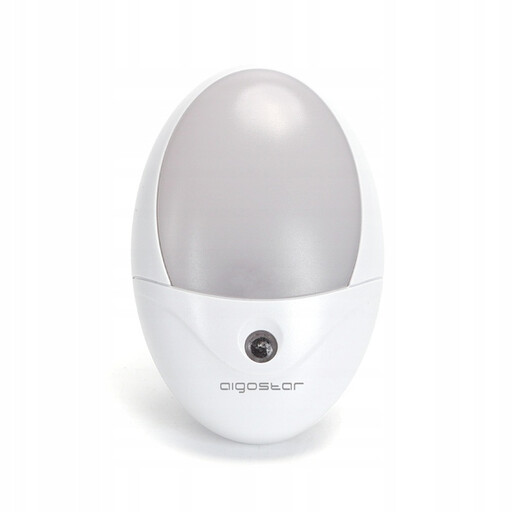
Why this product suits the profile: This plug-in night light offers automatic switching on and off, 20 lm of luminous flux and a warm-white light colour for hallways, bedrooms or children’s rooms.
The technical specifications clearly state a twilight sensor, 3000 K, 20 lm and 1 W. This makes it easier to assess its suitability than a purely promotional claim about ‘gentle light’.
120° beam angle, 220–240 V operating voltage, Ra ≥ 80 and no battery changes required.
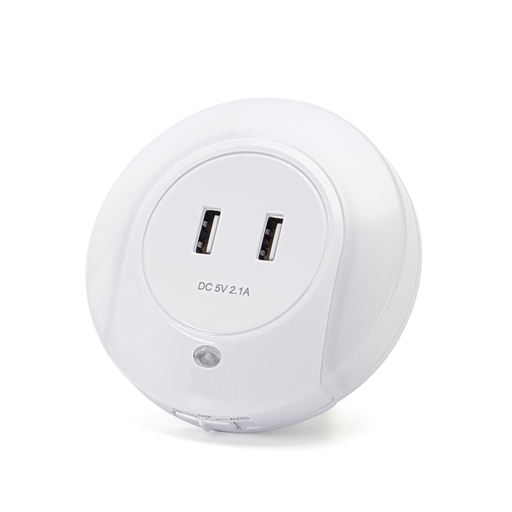
Why this product suits the profile: This warm-white night light combines 8 lm at 3000 K with two USB ports, making it suitable for bedrooms, hallways or children’s rooms where additional charging is needed.
The low power consumption of 0.4 W and the specified light output help you avoid solutions that are excessively bright or use more electricity than necessary.
Two USB ports, 0.4 W power consumption, 3000 K and double insulation according to the product specifications.
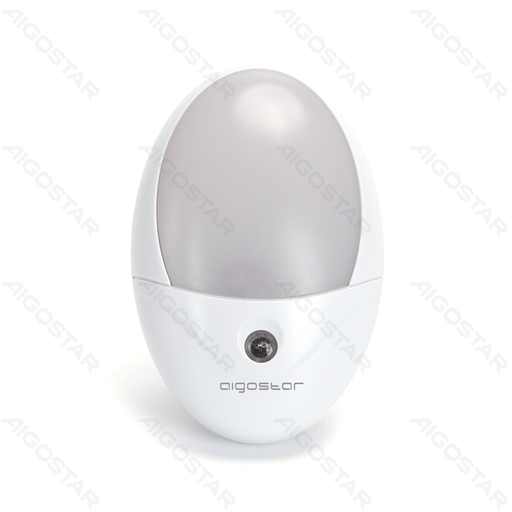
Why this product suits the profile: Motion detection is suitable for stairs, hallways, bathrooms outside areas of direct exposure to moisture, or night-time trips where light is only needed briefly.
The PIR sensor is clearly distinguished from a twilight sensor. With a 7 m range and 120° detection angle, its operating limits are specified transparently.
3000 K warm white, 20 lm, 1 W power consumption and automatic switch-off after movement is detected.
We have put together a complete, regularly updated list of products that fully meet these strict selection criteria and the safety regulations applicable in the EU.
Plug the device directly into a suitable wall socket. The sensor should remain unobstructed and should not be aimed at an additional light source, curtain or piece of furniture. Once installed, the night light switches on and off automatically according to the ambient brightness.
The stated lifespan varies by model, for example between 10,000 and 25,000 hours. This is a manufacturer’s specification under particular operating conditions. Heat, frequent switching, dust and an unsuitable environment can affect the actual service life.
The calculation is simple: power in kilowatts multiplied by the operating hours and your electricity price. A 1-watt model uses around 1 kWh over 1,000 hours. A 0.4-watt model uses around 0.4 kWh over the same period. The exact cost in euros depends on your tariff.