
Lieferung heute & morgen

Qualitätsgarantie

Willkommens-Angebote freischalten: KOSTENLOSE Lieferung | Bis zu 80 % RABATT | Kostenlose 30-Tage-JoyPlus-Testphase
App herunterladen
Matcha powder is not all the same. There are clear differences between pure Tencha powder, flavoured drink powder and ready-made matcha sweets when it comes to ingredients, preparation and intended use. Anyone who focuses only on an intense green colour or terms such as “Ceremonial Grade” can easily pay more without getting the product they actually want.
Three typical buying problems are particularly common:
Traditional matcha powder is made from shaded Tencha tea leaves which are finely ground. Buyers should check whether the ingredients list actually states 100% matcha or 100% green tea. Pure matcha powder contains no sugar, flavourings or fillers.
Not every green drink powder is suitable for traditional preparation:
Checking the ingredients, allergens, nutritional information, net quantity, best-before date and responsible person in the EU helps put advertising claims into context. For organic products, you should also look for the relevant organic logo and inspection body details.
Japanese matcha, such as Uji Matcha, is often sought after because of its regional tradition. The HISHIWAEN Uji Matcha 30 g lists Japan as its country of origin; according to the product description, it consists of 100% green tea and is recommended for drinks and sweet dishes. Uji is therefore a credible indication of origin, but not proof of quality on its own.
Organic matcha from Japan can also be a suitable choice if certified organic farming is important to you. JP Seiki Nakayama Premium Organic Matcha from Japan 30 g lists 100% organic green tea as its ingredient. However, claims about flavour or colour should still be checked against the specific product details and your intended use.
For classic matcha tea or an unsweetened matcha latte, a product without added sugar is recommended. Tencha Matcha Powder 30 g is described as 100% matcha made from Tencha, with 0 g sugar and 0 g salt per 100 g. The recommended preparation uses 1–2 g of powder and water heated to around 80 °C.
A contrasting example is CHATTRAMUE 3 in 1 Green Tea Powder 500 g. It contains sugar, milk ingredients and plant-based coffee whitener. This makes it more of a ready-mixed drink powder for Thai-style milk tea than a pure matcha powder. If you want to reduce sugar or control the dosage yourself, you should not confuse this type of product with single-ingredient powder.
Matcha is sensitive to light, oxygen, heat and moisture. Good airtight, light-protected packaging is therefore more important than buying an especially large quantity. Once opened, the powder should be stored somewhere dry and as cool as possible. With larger packs, such as 100 g, portioning the powder into small, airtight containers may be sensible.
For preparation, beginners will generally need:
The water should not be boiling. Depending on the product instructions, around 70–80 °C is a practical range. Move the Chasen rapidly across the surface in a “W” or “M” shape. Bamboo components should be cleaned by hand and dried completely; they should not be placed in the microwave or dishwasher.
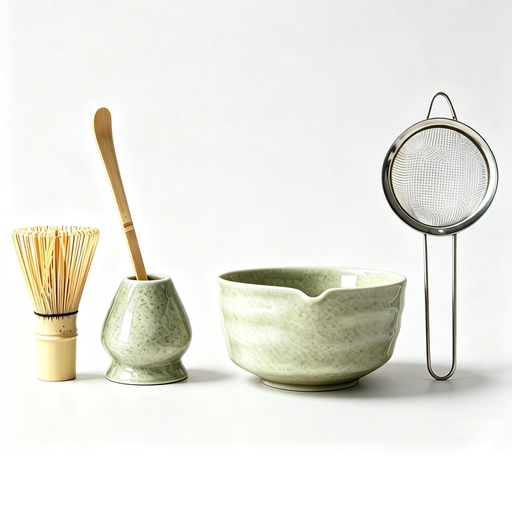
Why this product suits this profile: The set combines a bowl, matcha whisk, sieve and holder, reducing the need to buy individual items when you are starting out.
The included tools make it clear which components are actually needed for sieving and whisking.
Ceramic bowl, bamboo whisk and stainless-steel sieve; suitable for preparing matcha at home.
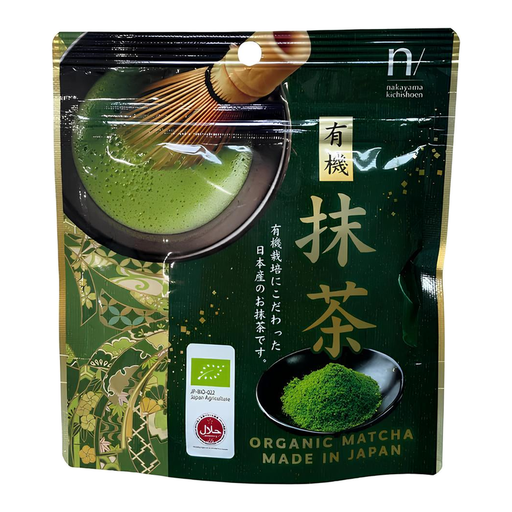
Why this product suits this profile: The pack combines the claims organic, Japan and 100% organic green tea for buyers who want to check origin and ingredients carefully.
The stated ingredients distinguish this powder from blends containing sugar or milk ingredients.
30-g pack; according to the product information, suitable for tea, lattes, smoothies and baking recipes.

Why this product suits this profile: The 100-g quantity is aimed at frequent users and keen home bakers who regularly use matcha as an ingredient.
The product information indicates that it is intended for use as an ingredient, so it is not mistakenly classified as a ready-made latte mix.
100 g contents; individually sealed portions according to the product description, and suitable for baking and desserts.

Why this product suits this profile: The 560-ml bowl with pouring spout and seven components are designed for preparing and serving matcha together.
The sieve, holder and cloth are already included, so you can check the equipment against the component list before buying.
7-piece set with ceramic bowl, bamboo tools, stainless-steel sieve and pouring spout; according to the product information, the ceramic parts are dishwasher-safe.
We have put together a complete, regularly updated list of products that fully meet these strict selection criteria and the safety regulations applicable in the EU.
Once opened, the packaging should be sealed tightly again straight away. A dark, dry storage place protects the powder from moisture and unwanted odours. For products with refrigeration instructions, the manufacturer’s guidance should be followed. Before use, the powder can be passed through a fine sieve.
For a matcha latte, first stir a small amount of powder with warm water until smooth. Then add milk or a plant-based alternative. When baking, dissolve the matcha in a small amount of liquid first, then mix it into the dough or batter. This helps the flavour and colour distribute more evenly.
As a practical guide, allow around 1–2 g per serving. The exact amount depends on the powder, quantity of water and desired strength. Always follow the instructions on the relevant packaging.
The best-before date is shown on the packaging. Once opened, light, heat, air and moisture affect the product’s quality. Small packs can be useful for occasional users, while frequent users should only buy larger quantities if they can store them properly and use them up in full.
For a simple calculation, divide the pack price by the number of grams it contains, then multiply the result by the amount used. With 30 g and 1 g per cup, this works out at around 30 servings. Accessories such as a Chasen, sieve or matcha set add to the initial cost, but regular preparation can help you avoid buying individual items separately.