
Lieferung heute & morgen

Qualitätsgarantie

Willkommens-Angebote freischalten: KOSTENLOSE Lieferung | Bis zu 80 % RABATT | Kostenlose 30-Tage-JoyPlus-Testphase
App herunterladen
A non-permanent marker might seem like a simple product, but choosing the wrong one can quickly lead to frustration. Many people know the problem: a marker whose ink "beads up" into illegible droplets on smooth surfaces like plastic sleeves or overhead transparencies. Another common annoyance is ink that, despite being advertised as wipeable, is difficult to remove and leaves behind unsightly shadows ("ghosting"). A third typical bad buy is a pen that dries out after just a few uses or leaks in your bag during pressure changes, like on a flight. These problems are avoidable if you know which technical features truly matter.
To ensure your next marker performs exactly as it should, you need to check three core parameters: the ink, the tip, and other design features.
The defining feature of a good non-permanent marker is its water-soluble ink. This special formulation ensures the pen adheres to non-porous, smooth surfaces without running. Such a universal pen for smooth surfaces is ideal for overhead transparencies (as a water-soluble OHP pen), laminated documents, glass, plastic, or metal.
Unlike conventional whiteboard markers, which are dry-erasable, the ink of a non-permanent marker is removed with a damp cloth. This makes the marker wipe-clean without leaving residue. This quality is especially important when surfaces need to be relabelled frequently, such as on reusable flashcards or project plans.
The choice of tip depends directly on your use case. Manufacturers like STAEDTLER Lumocolor offer a clear classification:
Certain features indicate higher product quality and longevity. A refillable non-permanent pen is not only a more environmentally friendly choice but often a more economical one as well. Brands like STAEDTLER offer special refill stations for this purpose.
Also, pay attention to the housing material. Pens with a barrel and cap made of polypropylene (PP) offer high resistance to the ink drying out. Another useful feature for travellers is "airplane-safe" technology. An automatic pressure equalization system inside the pen prevents ink from leaking due to changes in cabin pressure during a flight.
Based on these criteria, we have put together some product recommendations for specific user profiles.
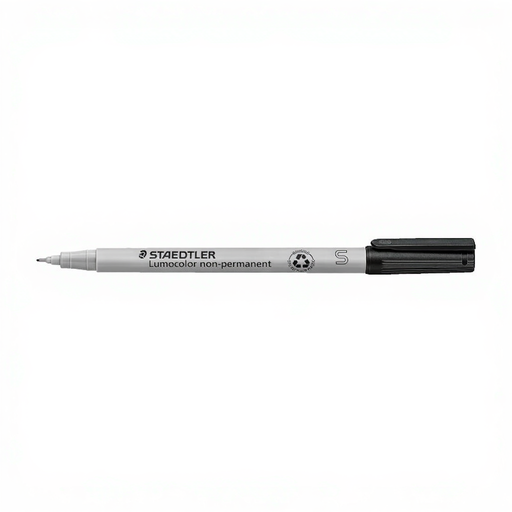
Why This Fits Their Persona: Ideal for users in labs, workshops, or design studios who need to make fine, clear, and temporary marks on components, films, or plans. Precision is the deciding factor here.
The superfine tip prevents ink from "beading up," even with thin lines. The ink is formulated for clean, residue-free removal, thus preventing "ghosting."
Line width of just 0.4 mm for maximum detail; quick-drying and refillable.
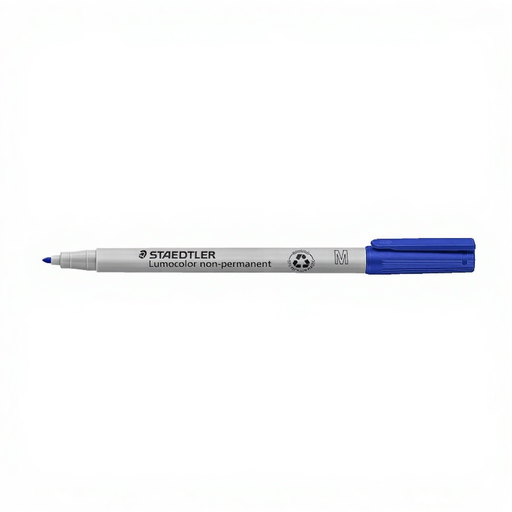
Why This Fits Their Persona: Perfect for teachers creating laminated materials, project managers organising whiteboards, or for general office use where information needs to be updated regularly.
The PP barrel prevents the pen from drying out prematurely. The "airplane-safe" feature eliminates the risk of leaks during travel, ensuring the pen's reliability.
Universal 1.0 mm line width for good readability; refillable with the 487 17 refill station.
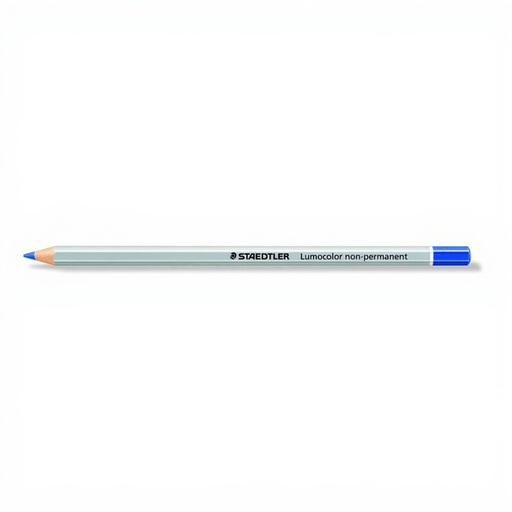
Why This Fits Their Persona: This pencil-style glass marker is designed for professionals in trades or industry who need to mark on difficult surfaces like metal, stone, porcelain, or glass, where a standard marker would fail.
The wax-based lead of the Lumocolor Omnichrom adheres to very smooth or even slightly oily surfaces without beading and is easy to wipe off. This prevents permanent marks being made by unsuitable pens.
Water-soluble special lead for high opacity, even on dark and transparent materials; does not bleed through or dissolve the surface.
We have compiled a complete, up-to-date list of products that fully meet these strict selection criteria and relevant safety regulations.
A soft, damp cloth is all you need for residue-free removal on most smooth, non-porous surfaces. Plain water is usually sufficient. Avoid dry wiping, as this can smear the ink instead of removing it.
Although a non-permanent film marker will write on a whiteboard, it must be wiped off with a damp cloth. A standard whiteboard marker, on the other hand, is dry-erasable. For frequent use on whiteboards, a dedicated dry-erase marker is therefore more practical.
Manufacturers like STAEDTLER often recommend storing them horizontally. This ensures the ink remains evenly distributed within the pen, preventing the tip from either drying out or becoming oversaturated. It is also crucial to replace the cap firmly after each use.