
Lieferung heute & morgen

Qualitätsgarantie

Willkommens-Angebote freischalten: KOSTENLOSE Lieferung | Bis zu 80 % RABATT | Kostenlose 30-Tage-JoyPlus-Testphase
App herunterladen
An outdoor wall light with a motion sensor is designed to automatically illuminate your entrance area, patio, garage or garden path. In practice, however, poor purchases often arise not from the light itself, but from misjudged specifications regarding brightness, protection rating and power supply.
A high lumen figure may sound impressive at first. But for a small front entrance, a very bright LED wall spotlight can be uncomfortably dazzling. Conversely, a compact light with 300 lumens might not be enough to illuminate a wide driveway.
What really matters is the relationship between luminous flux, beam angle and mounting height. Two separately adjustable light heads, for example, can cover a larger area than a single, fixed light output with a similar lumen value.
The designation IP65 outdoor light is appealing for many outdoor areas. The first digit indicates protection against dust, and the second indicates protection against water from various directions. IP65 does not mean the light can be permanently submerged in water or exposed to a pressure washer.
A waterproof outdoor lamp should therefore also be installed in such a way that water cannot collect on the housing, cable connection or wall bracket. For sheltered areas, IP44 may be sufficient, provided the manufacturer's specifications confirm the intended use.
A solar outdoor light with a motion sensor needs sufficient direct daylight. Under a balcony, in the shade of a tree or on a north-facing wall, the charging performance can be reduced. In winter and during several overcast days, less stored energy is available.
Check before buying whether the solar panel can be freely positioned. According to the product description, the VIVREAL Solar Wall Light is intended for installation in a location with direct sunlight. The panel should be cleaned regularly with a soft, dry cloth.
Pay attention to the detection angle and the stated range. A sensor with 120° covers an entrance area differently from a model with an especially wide detection field. The mounting height, direction of movement and obstacles such as walls or hedges all affect actual detection.
Equally important is the hold-on time. An automatic switch-off after 15 or 45 seconds may be sufficient for a short walkway. For longer tasks around the garage or yard, a permanently adjustable operating mode can be more practical. With solar lights, several operating modes are useful, such as motion-activated light, continuous light at reduced brightness, or a combination of both.
Light colour is measured in Kelvin:
An LED outdoor wall light at 3,000 Kelvin can blend in better visually with a cosy outdoor lighting scheme for your patio and entrance. For a functional security light outdoors, on the other hand, neutral white or cool white variants are often chosen.
Mains-powered lights require a suitable electrical connection. Electrical work must only be carried out by appropriately qualified persons. With solar and battery-powered models, there is no fixed wiring, but you must consider the charge level, sun orientation and regular maintenance.
Also check the mounting materials, the wall surface and the direction of the light beam. A heavier metal light needs a sturdy fixing. For portable models, USB charging, magnetic attachment and an integrated switch can make it easier to use in different locations.
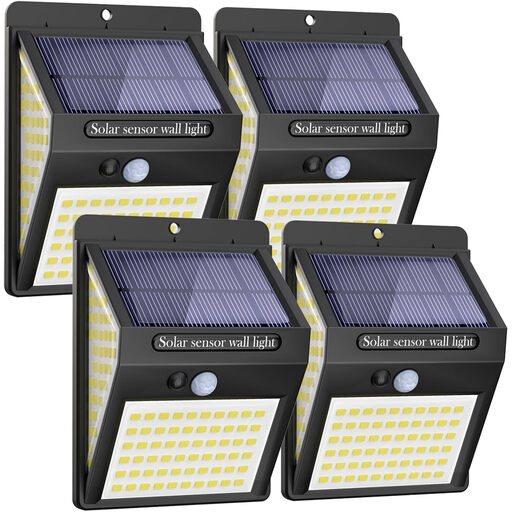
Why this product fits the profile: Four solar lights allow you to illuminate several spots without a fixed mains connection, such as garden paths, entrances or sheds.
The product description states IP65, a 270° lighting angle and three operating modes. This allows the light to be better adapted to different lighting requirements.
140 LED light sources, 270° angle, IP65 and solar power without fixed wiring.
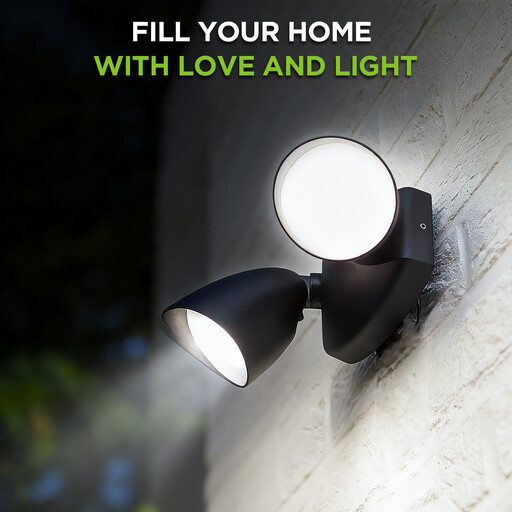
Why this product fits the profile: The design with two light heads and 4,000 Kelvin is aimed at functional illumination of a yard, garden or patio.
The key technical data states 1,800 lumens, 20 watts and 4,000 Kelvin. This allows buyers to match the light output more precisely to the installation location.
Dual-head design, metal housing according to the product name, 1,800 lumens and neutral white 4,000 Kelvin lighting.
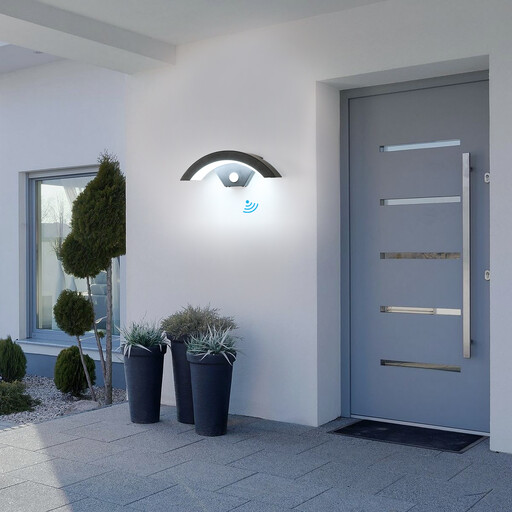
Why this product fits the profile: For larger outdoor areas such as a yard, driveway or garage, this model offers a high rated power and a defined detection range according to the product description.
The stated detection angle of 120° and range of 2 to 5 metres help with planning. The IP65 rating should still not be confused with being submersible.
24 watts, 2,700 lumens, 6,500 Kelvin, 120° detection angle and IP65 according to the product specifications.
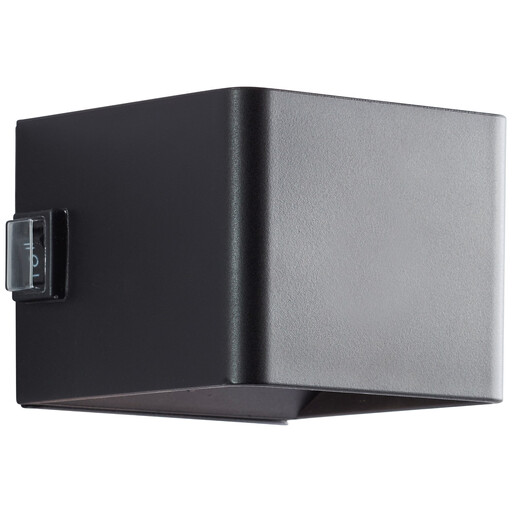
Why this product fits the profile: The compact battery-powered light is ideal for places without a socket, such as a sheltered patio area or a small access point.
The IP44 protection rating is clearly stated. This means the model is designed for splashing water, but should not be installed in completely exposed locations with direct heavy rain.
300 lumens, 3,000 Kelvin, integrated battery, USB charging, magnetic attachment and motion sensor.
We have put together a complete, regularly updated list of products that fully meet these strict selection criteria and the safety regulations in force in the EU.
A mounting height of around 1.8 to 2.5 metres is a practical starting point for many front entrances and patios. The manufacturer's instructions and the sensor's detection angle remain the decisive factors. If the light is mounted too high, the sensor may struggle to detect movements near the ground. Mounting it too low, on the other hand, makes it easier to accidentally knock or damage it.
For a partially sheltered front entrance, IP44 may be sufficient if the light is protected from direct rain. For more exposed areas such as garden walls, garage driveways or open yards, a higher protection rating such as IP65 is often chosen. The light must still not be submerged in water or cleaned with a pressure washer.
The consumption depends on the wattage, daily lighting duration and operating mode. A motion sensor can limit the switch-on time, so the light is not permanently active. Solar wall lights do not require mains power, but they are dependent on daylight, battery capacity and weather conditions. Before buying, you should therefore consider lumens, watts, sensor hold-on time and the desired duration of use together.