
Lieferung heute & morgen

Qualitätsgarantie

Willkommens-Angebote freischalten: KOSTENLOSE Lieferung | Bis zu 80 % RABATT | Kostenlose 30-Tage-JoyPlus-Testphase
App herunterladen
Choosing the right PLA filament is crucial for the success of any 3D printing project. However, the market is flooded with options whose marketing promises often don't align with reality. This leads to frustration, wasted material, and failed prints. Instead of relying on exaggerated advertising, it's more effective to focus on objective product characteristics. This guide will show you the most common pitfalls of buying filament and explain the technical parameters that truly matter.
Many users invest significant time and effort into calibrating their printers, only to be let down by subpar material. Three problems are particularly common:
To avoid these issues, you should base your purchasing decision on verifiable technical specifications. The following three criteria are central to print quality and reliability.
A high-quality 3D printer PLA filament is distinguished by its high dimensional accuracy. The standard diameter for most common desktop 3D printers is 1.75 mm. However, the crucial factor is the diameter tolerance specified by the manufacturer. A value of ±0.02 mm or ±0.03 mm signals a precise manufacturing process. This minimal deviation ensures that the extruder can feed a consistent amount of material, resulting in clean layers and reliable operation without clogs.
Not all PLA (Polylactic Acid) is created equal. Depending on the application, there are different variants with distinct properties:
Two often-underestimated but critical factors are the winding and the packaging. Look for product images that show clean, even winding without any crossovers. A machine-wound, precise spool prevents the filament from tangling during the print.
Furthermore, PLA is hygroscopic, meaning it absorbs moisture from the air. Damp filament leads to bubbling during printing (you might hear a faint crackling or hissing at the hot nozzle), poor layer adhesion, and a rough surface. A high-quality filament will therefore always be delivered vacuum-sealed in a bag with a desiccant (silica gel).
Based on the quality criteria mentioned, we have compiled a few products for typical user profiles. If you're looking to buy PLA filament, this can serve as a guide.
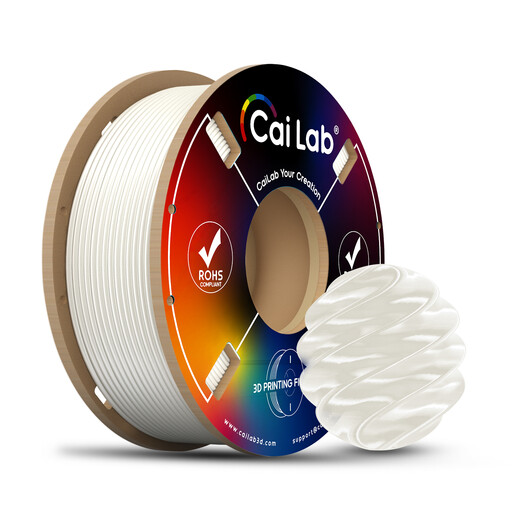
Why This Fits Their Persona: Ideal for designers and makers who want to create models with a premium, smooth, and consistently glossy finish. The pearl white colour enhances fine details and gives objects a high-quality look.
The special material blend ensures a consistent silk sheen that isn't patchy or matte. The neat winding minimises the risk of filament jams.
Creates a very smooth, shimmering surface that hides layer lines. Easy to print with standard PLA settings.
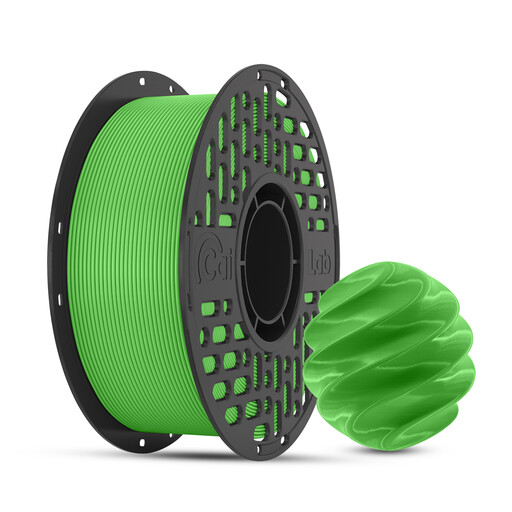
Why This Fits Their Persona: Perfect for hobbyists and engineers printing spare parts, brackets, or mechanical prototypes. This PLA+ offers greater toughness and resilience than standard PLA.
The PLA+ formulation provides improved impact resistance and avoids the brittleness of low-quality PLA. Precise diameter control prevents extrusion issues during long prints.
Increased mechanical strength and better layer adhesion. Lower risk of cracks or breaks in functional parts.
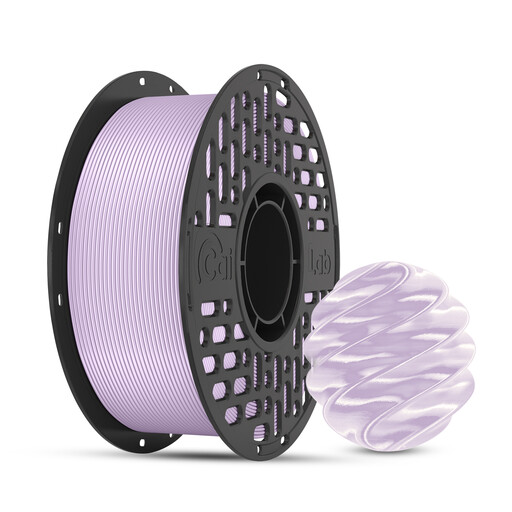
Why This Fits Their Persona: For creative minds who want their prints to stand out with vibrant and unique colours. The intense hue combined with the silk gloss makes any object an eye-catcher.
The high quality of pigments and additives ensures a rich, uniform colour and a consistent shine. The neat spool winding is especially important for large, colourful objects.
Striking, rich hue with a strong gloss effect. Ideal for cosplay accessories, decorations, and artistic projects.
We have compiled a complete, real-time list of products that fully satisfy these strict selection criteria and UK safety regulations.
PLA+ filament is an enhanced version of standard PLA. By adding specific additives, the material structure is modified to improve its mechanical properties. As a result, PLA+ is typically less brittle, has higher impact resistance, and stronger adhesion between individual print layers. This makes it a great choice for parts that are subject to some mechanical stress, such as enclosures, brackets, or simple gear parts.
Since PLA absorbs moisture from the ambient air, dry storage is essential. After opening the vacuum-sealed packaging, you should store the spool in a resealable bag or an airtight box when not in use. Add the originally included desiccant (silica gel) or a new packet to absorb any residual moisture. This preserves print quality and prevents issues like stringing or brittle material.
In most cases, PLA silk filament can be printed with settings very similar to standard PLA. However, due to the additives that create the gloss, it can be beneficial to slightly increase the printing temperature (about 5–10°C above the temperature used for standard PLA). This can improve layer adhesion and maximise the gloss effect. It is advisable to use a small test object, like a temperature tower, to determine the optimal settings for your specific printer and the particular filament.