
Lieferung heute & morgen

Qualitätsgarantie

Willkommens-Angebote freischalten: KOSTENLOSE Lieferung | Bis zu 80 % RABATT | Kostenlose 30-Tage-JoyPlus-Testphase
App herunterladen
When reading fine print becomes increasingly strenuous, reading glasses are a practical and straightforward solution. However, the market for off-the-shelf reading glasses is vast, and the selection can be overwhelming. Many buyers choose the wrong model and end up with headaches or impractical frames. This guide will help you navigate the common pitfalls and buy a functional reading aid that is perfectly tailored to your needs.
Before you make a decision, you should be aware of the most common issues that can lead to a poor purchase.
To avoid these mistakes, focus on the following three objective criteria. These will determine whether a pair of reading glasses will work for you in your daily life.
The strength of reading glasses is measured in diopters (dpt). Common values for off-the-shelf reading glasses range from +1.0 to +4.0 dpt in 0.5 increments. As a rule, the required strength increases with age. The following table serves as a rough guide but does not replace a professional eye exam:
For an exact determination, a visit to an optician or ophthalmologist is advisable.
The frame is more than just a fashion statement; it is a functional component.
Good men's reading glasses or women's reading glasses should be designed for daily use. Look for sturdy hinges and a durable frame material like metal alloys or high-quality plastic. This ensures the glasses retain their shape and function even with frequent putting on and taking off.
Here are some recommendations tailored to specific use cases and requirements.
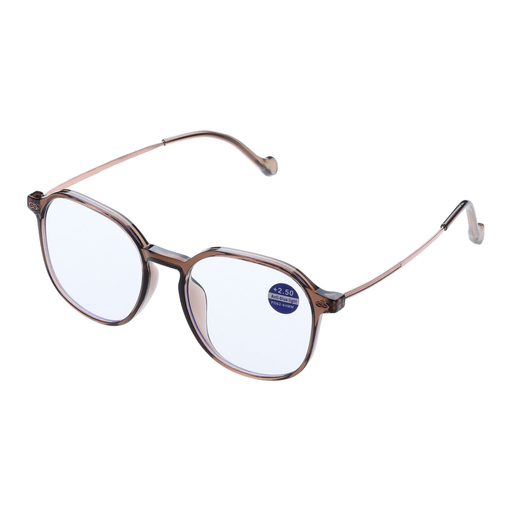
Why this model is a good fit: Ideal for beginners or individuals who only need a reading aid occasionally, e.g., for menus in a restaurant or reading product labels. The classic design is suitable for both men and women.
The sturdy full-frame design prevents the issue of poor material quality and offers high stability for a long service life.
The +1.5 dpt strength is a common starting point for people around 45 years old. The transparent frame has a subtle and modern look.
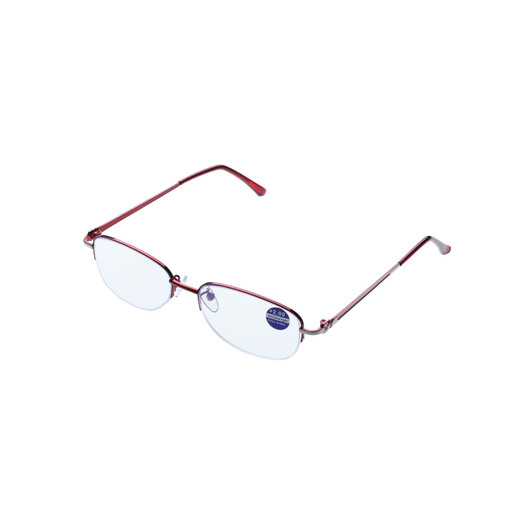
Why this model is a good fit: Perfect as reading glasses for computer work and for multitasking in the office. The wearer can read documents and then see the screen or colleagues clearly by simply looking up over the lenses.
This model solves the problem of an unsuitable frame design. Instead of constantly putting the glasses on and taking them off, the half-rim design allows for a seamless transition between viewing distances.
The half-rim reading glasses increase efficiency during the workday. The +2.0 dpt strength is suitable for many users around the age of 50.
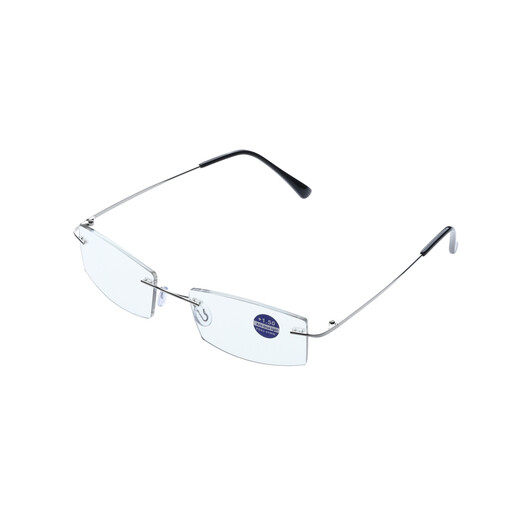
Why this model is a good fit: For wearers who prefer glasses that are as discreet and lightweight as possible. The rimless design offers a maximum field of vision without distracting edges and is barely noticeable.
Contrary to the common belief that rimless glasses are fragile, the sturdy lens mounting on this model ensures the necessary durability for daily use.
Maximum comfort thanks to minimal weight. The +2.5 dpt strength is a frequently needed correction for people over 50.
We have compiled a complete, up-to-date list of products that fully meet these strict selection criteria and German safety regulations.
As a rule of thumb, you can use the age chart mentioned above as a guide. Start with the lowest strength that allows you to see clearly at a normal reading distance (approx. 40 cm). For a precise strength individually tailored to each eye, an eye exam with an optician or ophthalmologist is the most reliable method.
Neither is universally "better"—it depends on your use case. Half-rim reading glasses are functionally superior if you frequently switch between near and distance vision. Rimless reading glasses excel with their low weight and discreet design, making them more comfortable for prolonged wear.
Yes, but with one caveat. Standard reading glasses are optimised for a reading distance of about 40 cm. A computer screen is often positioned further away (60–80 cm). Therefore, it may be more comfortable to use glasses with a slightly lower strength (approx. -0.5 dpt less than your reading strength) for screen work. Some models are specifically available as reading glasses for computer work with a blue light filter.