
Lieferung heute & morgen

Qualitätsgarantie

Willkommens-Angebote freischalten: KOSTENLOSE Lieferung | Bis zu 80 % RABATT | Kostenlose 30-Tage-JoyPlus-Testphase
App herunterladen
The right reading glasses should make small print easier to see, feel comfortable and suit the way you use them. Yet product descriptions and eye-catching claims can often lead to the wrong purchase. It’s important to look beyond colour and price and compare the magnification strength, frame style and intended use.
Higher magnification can help with very small print, but it isn’t necessarily the right choice for longer reading sessions. If you choose a strength that’s unnecessarily high, switching between text and your surroundings may feel disorientating. Choose a strength based on what you’ve used successfully before and the distance at which you actually read.
Ready-made reading glasses with prescription strength from a retailer are generally standard reading glasses with the same magnification for both eyes. They aren’t a substitute for individually prescribed glasses with different strengths for each eye, cylinder correction or a specialist screen prescription. If you have persistent eye strain, headaches or a marked difference in vision between your eyes, it’s worth seeking advice from an optician or eye specialist.
Rimless reading glasses look lightweight, but offer less protection around the lenses. Full-rim reading glasses encircle the lenses completely, which can make them more practical for everyday storage. Half-frame reading glasses sit in the lower part of your field of vision. This makes it easier to look over the frames when glancing at a screen or around the room. The best style for you therefore depends more on how you’ll use them than on current trends.
The strengths of the models mentioned here are labelled 150D, 200D, 250D, 300D, 350D and 400D, among others. These labels usually correspond to around 1.5 to 4.0 dioptres. Check the product page before buying to make sure you’re matching the figures correctly.
As a general guide:
This is a general guide, not an assessment of your individual prescription. Ready-made reading glasses aren’t the same as individually measured prescription glasses.
Half-frame reading glasses can be practical if you regularly look up from your reading to stand up, check a monitor or glance around the room. This is often useful when working with documents and a screen.
Full-rim reading glasses encircle the lenses for a classic, enclosed look. They’re a good choice if you prefer a sturdy frame around the lenses. Rimless reading glasses have fewer visible frame parts and a more understated appearance. However, store them carefully in a case to avoid putting unnecessary strain on the exposed fittings and lenses.
For reading glasses for the office and home, a comfortable fit and easy cleaning matter more than decorative extras. Clean the lenses with a soft microfibre cloth and keep the glasses in their case when you’re not wearing them.
These products are intended as reading aids. Don’t use them as safety glasses, while driving or when operating heavy machinery. Keep them out of direct sunlight and away from extreme heat. Details of the responsible person in the EU, warranty and durability are provided on each product page or label.
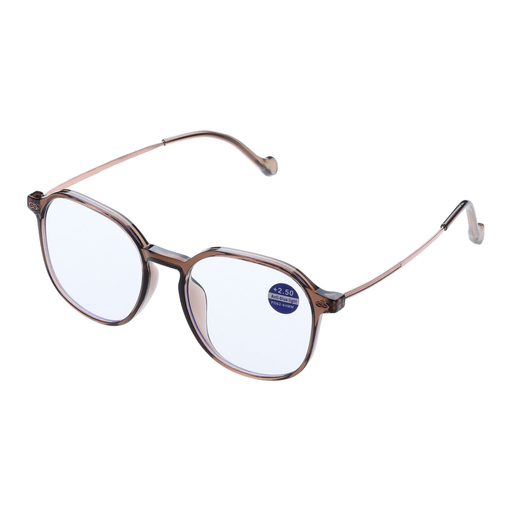
Why this product suits this profile: The 150D version has a low magnification strength, while the full-rim design offers a classic look for occasional reading at home or in the office.
The stated strength makes it easier to compare with other models and helps you avoid choosing unnecessarily high magnification.
Full-rim construction, transparent tea colour and unisex design, according to the product description.
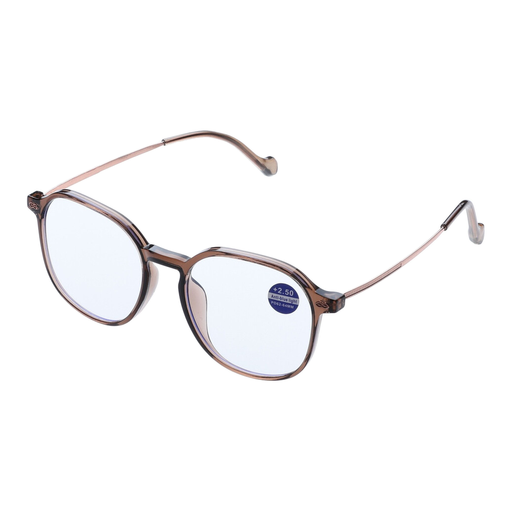
Why this product suits this profile: The high stated strength is intended for people reading very small print at close range who prefer lenses fully surrounded by a frame.
The product details state both the 400D strength and the full-rim design, so you can assess the magnification and frame style separately.
400D version, fully framed lenses and a neutral transparent tea-coloured design.
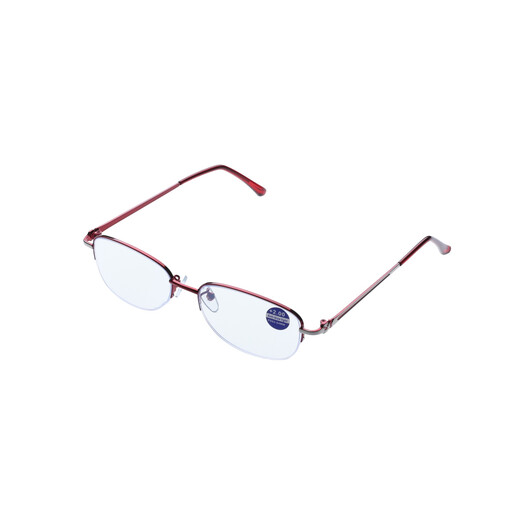
Why this product suits this profile: These half-frame glasses suit readers who switch between text, a monitor and their surroundings. The 300D strength is specified for smaller print at home or in the office.
The design is clearly described as half-frame, so it won’t be mistaken for safety glasses or driving glasses.
Half-rim design, 300D magnification, red frames and a protective case included, according to the product description.
We’ve put together a complete, regularly updated list of products that meet these strict selection criteria and comply with the safety regulations in force in the EU.
Reading glasses will last longer if you don’t leave them loose in a bag or drawer. For everyday use, we recommend:
How long they last depends on the materials, how often you use them, how you store them and how well they fit. If the arms become loose, the lenses are scratched or the frames are damaged, stop using the glasses if this affects your vision or means they no longer fit securely.
A medium magnification is often chosen for books and documents. However, you may sit further away from a screen, so the right choice depends on your viewing distance. Half-frame glasses can be practical if you regularly switch your focus between text and your surroundings. If you spend long periods working at a screen or experience discomfort, seek individual advice.
Start with a strength you’ve used comfortably before. For these product descriptions, 150D to 400D corresponds to around 1.5 to 4.0 dioptres. A higher number isn’t automatically a better fit. If you experience headaches, eye strain or blurred vision, stop using the glasses and seek professional advice to find out what’s causing the problem.
There’s no single answer. Careful cleaning, storing them in a case and keeping them away from heat can help them last longer. Check the product label or product page for details of the warranty and durability. Replace ready-made reading glasses if the lenses or frames are damaged, or if the magnification no longer seems right.