
Lieferung heute & morgen

Qualitätsgarantie

Willkommens-Angebote freischalten: KOSTENLOSE Lieferung | Bis zu 80 % RABATT | Kostenlose 30-Tage-JoyPlus-Testphase
App herunterladen
Reading glasses should magnify small print in books, documents and on screens while remaining easy to use in everyday life. However, unclear dioptre ratings, poorly fitting frames and exaggerated advertising claims often lead to disappointing purchases. The term “classic reading glasses” alone says little about comfort, suitability or durability.
The following points will help you choose the right reading glasses for the office and home.
Many shoppers choose stronger reading glasses because the text initially appears larger. However, a strength that is too high may be impractical for your usual reading distance. Headaches or eye strain may indicate that the glasses are unsuitable. If discomfort persists, stop using them and seek advice from an optician or ophthalmologist.
The following ratings, used in the range, provide a simple guide:
Before buying, compare the product description with the stated rating “150D”, “200D”, “250D” or “400D”. Ready-made reading glasses are not individually prescribed reading glasses with a prescription and do not replace personalised corrective glasses.
Frameless reading glasses can look lightweight and discreet. However, the lenses have less protection from a surrounding frame. Full-frame reading glasses completely enclose the lenses and may offer a more robust construction when storing them or putting them on and taking them off frequently. Half-frame reading glasses sit on the lower part of the face and make it easier to look over the frame, for example when switching between a document and a screen.
None of these shapes is equally suitable for every purpose. The key factors are how much upward vision you need, how you handle the glasses and how well they fit you personally.
Reading glasses are primarily designed for close-up use. The distance to a computer screen is often greater than the distance when reading a book. The strength should therefore not be selected based solely on the screen size. The screen height, text size and working distance also play a role.
Important: According to the product descriptions, the products listed are reading glasses or visual aids, not safety glasses. They must not be used when driving, operating heavy machinery or as personal protective equipment.
First, measure the usual distance between your eyes and the reading material. If you often read at around 30 to 40 centimetres, a lower strength may be sufficient than for very small text viewed at a short distance. When choosing 1.5 dpt reading glasses, 2.0 dpt reading glasses, 2.5 dpt reading glasses, 3.0 dpt reading glasses, 3.5 dpt reading glasses or 4.0 dpt reading glasses, base your decision on the text size you actually need to read comfortably.
If your eyes require different strengths or you also have astigmatism, simple ready-made reading glasses may not be sufficient. In this case, it is advisable to have your prescription measured individually.
Pay attention to the following practical points:
Models described as unisex reading glasses are intended for women and men. However, face width and nose shape vary from person to person. Product images therefore do not replace checking the stated measurements, where these are provided in the listing.
Simple, durable materials may be suitable for everyday use, but they are not indestructible. Clean the lenses with a soft microfibre cloth and store the glasses in a case. Avoid extreme heat and prolonged exposure to direct sunlight. Children should not have unsupervised access to the glasses, as the lenses or frame could break.
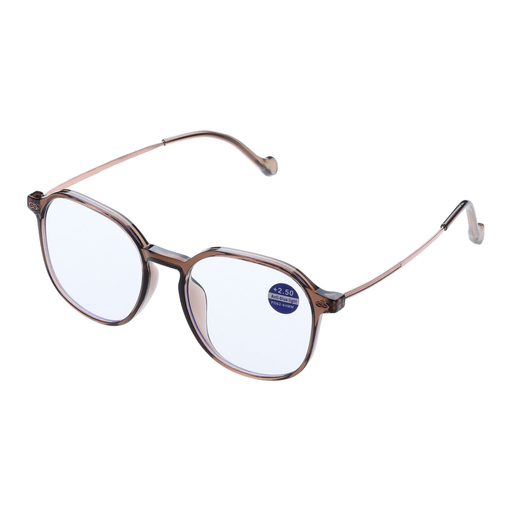
Why this product suits the profile: These full-frame reading glasses with 150D magnification are designed for users looking for light magnification for books, letters and everyday text.
The strength is clearly stated as 150D, while the full frame reduces exposed lens edges.
Full-frame construction and transparent tea colouring; described as a unisex model for the office and home.
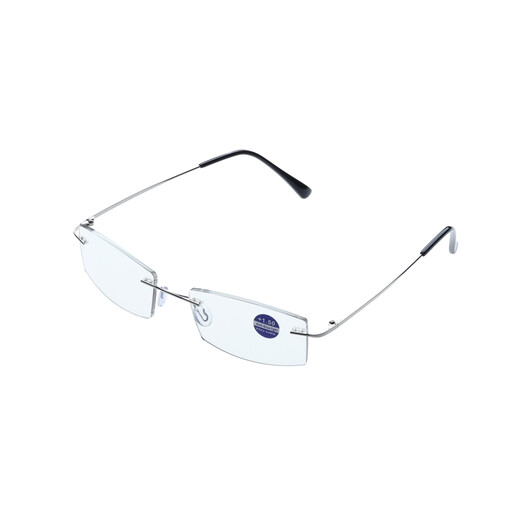
Why this product suits the profile: These frameless reading glasses with 350D magnification are aimed at users who prefer stronger magnification and a discreet look.
The strength is stated directly in the product name; before buying, consider whether the frameless design suits how you handle your glasses.
Frameless design and silver finish; intended for use in the office and at home.
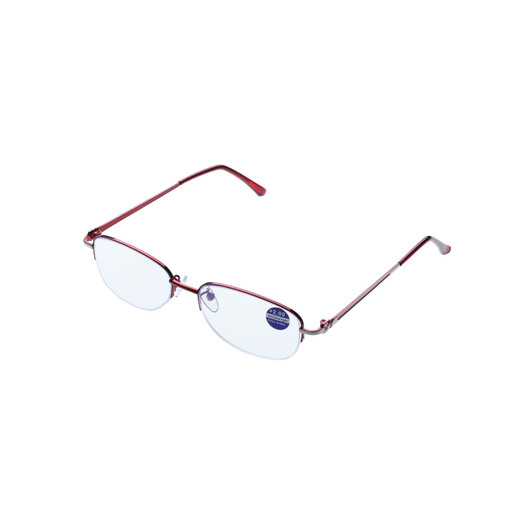
Why this product suits the profile: These half-frame reading glasses are designed for people who regularly look over the frame at a screen or across the room while reading.
The half-frame design is explicitly described as suitable for switching between close-up vision and looking upwards; it is not intended to be used as safety eyewear.
200D strength, half-frame construction and supplied protective case, according to the product description.
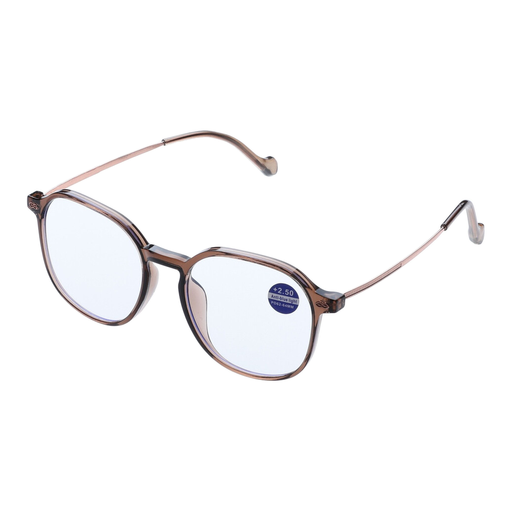
Why this product suits the profile: The 400D version is intended for users who need high magnification when reading very small print.
The high strength is clearly stated. Because of the strong magnification, consider your actual reading distance before buying.
Full-frame design, transparent tea colouring and clearly stated 400D magnification.
We have put together a complete, regularly updated list of products that fully meet these strict selection criteria and the safety regulations applicable in the EU.
This depends on the distance from the screen and the text size. Reading glasses designed for books are not automatically suitable for every monitor distance. Check that you can read comfortably with the strength selected, without having to tilt your head noticeably forwards. If you experience discomfort, stop using the glasses.
Their lifespan depends on the materials, daily wear and storage. Reading glasses can last longer when kept in their case, cleaned with a microfibre cloth and protected from heat and direct sunlight. They should be replaced if the lenses are scratched, the arms become loose or the lenses are damaged.
The price depends, among other things, on the frame shape, materials, stated dioptre strength and what is included. Before buying, do not just compare the price. Also check whether a case and product information are included, and whether the strength you want is clearly stated.