
Lieferung heute & morgen

Qualitätsgarantie

Willkommens-Angebote freischalten: KOSTENLOSE Lieferung | Bis zu 80 % RABATT | Kostenlose 30-Tage-JoyPlus-Testphase
App herunterladen
The search for the right vacuum mop can quickly become overwhelming. Manufacturers advertise ever-newer functions and technical specs, but not every innovation is genuinely useful in daily life. Often, the most heavily promoted features lead to disappointment, rendering an expensive device useless after a short time. As your Joybuy Product Recommendation Officer, I'll help you cut through the noise and make an informed decision. We will focus on the objective facts that truly matter.
Before we dive into the technical details, let's look at the three most common problems that many devices only reveal in daily use after the purchase.
To avoid the problems mentioned above, you should carefully examine three core areas before buying. These objective criteria determine the actual performance and convenience in everyday life.
The first decision concerns the basic form factor. Both variants have specific advantages and disadvantages:
For robot vacuums, the station is the heart of automation. Look for the following features, which significantly reduce maintenance effort:
The design of the brush determines its effectiveness in picking up dirt and hair, as well as cleaning along edges.
Based on the objective criteria above, we have compiled a few models for different user profiles.
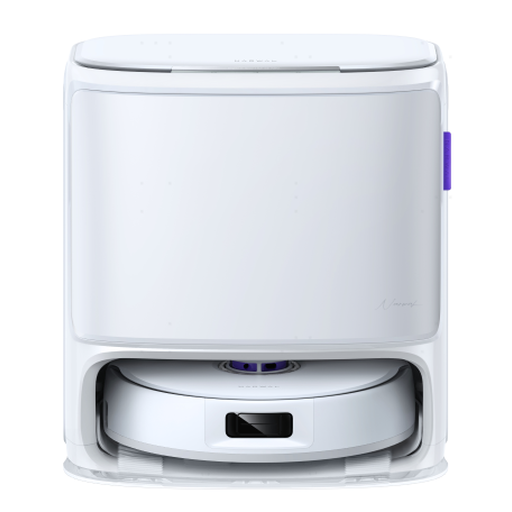
Why This Fits Their Persona: This model is designed to handle the challenges of pet hair. Its anti-tangle system and high suction power ensure reliable hair pickup without the need for constant manual brush cleaning. The fully automatic station handles all maintenance.
According to the manufacturer, the DualFlow Tangle-Free System was specifically developed to prevent hair from tangling in the brushes. The station cleans the mops with hot water and dries them, which prevents odour buildup.
Suction power of 15,000 Pa for deep cleaning. The station stores dust for up to 120 days and cleans the mops with adaptive hot water.
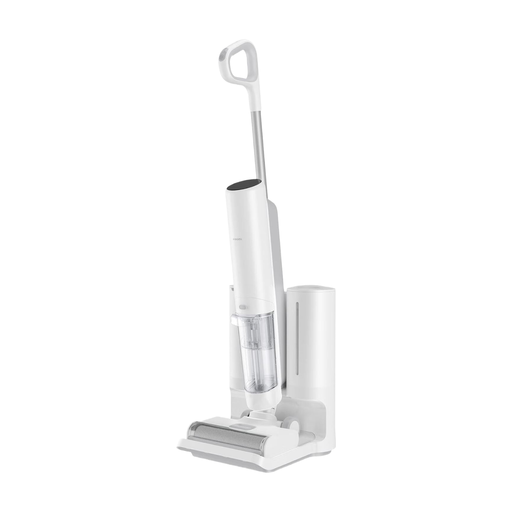
Why This Fits Their Persona: This manual cordless vacuum mop is designed for users who value intensive, hygienic cleaning. The high-temperature function enables effective stain removal and sanitisation of hard floors, ideal for kitchens, bathrooms, and households with small children.
The cleaning station is not just for charging but also for drying. It dries the brush at 55°C after self-cleaning to actively prevent odour formation and maintain hygiene.
Cleans with up to 75°C hot water to remove stubborn stains. The station features a large 3-litre water tank for extended cleaning sessions.
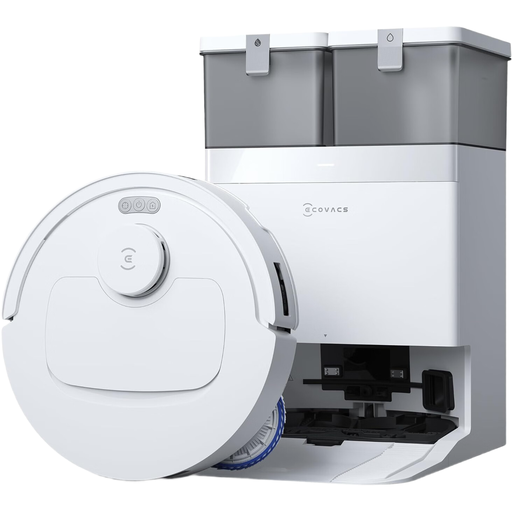
Why This Fits Their Persona: For users seeking a comprehensive, technologically advanced solution. This model combines very high suction power with intelligent systems for edge cleaning and hair avoidance. The all-in-one station maximises convenience and minimises manual effort.
The ZeroTangle 3.0 technology with its special brush structure counteracts hair tangling. The TruEdge 2.0 edge cleaning ensures cleanliness right to the edges. The station washes the mop with 75°C hot water.
Very high suction power of 20,000 Pa. Comprehensive OMNI station with automatic emptying, hot water mop washing, and hot air drying.
We have compiled a complete, up-to-date list of products that fully meet these strict selection criteria and German safety regulations.
The maintenance effort depends heavily on the model and usage. For stations with dust collection, the dust bag typically needs to be changed every 60 to 120 days. The fresh and dirty water tanks should be emptied or refilled every few days, depending on the cleaning frequency. It is recommended to clean the station's washing tray and the robot's sensors about once a month according to the manufacturer's instructions to ensure optimal performance.
That depends on the device type. Cordless vacuum mops are generally designed for hard floors only. Modern robot vacuums with a mopping function often feature carpet detection. They automatically lift their mop pads when they drive onto a carpet to only vacuum it and not get it wet. Check the product specifications for the maximum lifting height of the mops to ensure it is suitable for your carpet height.
Suction power, measured in Pascals (Pa), is a measure of the negative pressure the device can generate. Higher suction power is particularly important for deep cleaning carpets, where dust and dirt sit deep within the fibres. For hard floors, extremely high suction power is less critical, as the brush design and mopping function play a larger role. A value between 5,000 and 10,000 Pa is a good benchmark for most mixed households, while models with over 10,000 Pa offer particularly strong performance on pet hair and carpets.