
Lieferung heute & morgen

Qualitätsgarantie

Willkommens-Angebote freischalten: KOSTENLOSE Lieferung | Bis zu 80 % RABATT | Kostenlose 30-Tage-JoyPlus-Testphase
App herunterladen
A well-chosen sink strainer can do several jobs in the kitchen: it keeps food scraps out of the drain, makes washing fruit and vegetables easier, and lets you drain pasta or salad directly over the sink. However, kitchen strainers differ significantly in design, material, cleaning requirements and fit.
The following advice will help households, home cooks, families and those with small kitchens avoid common buying mistakes and choose a suitable draining colander for the sink.
A sink strainer with extendable arms can seem flexible. What really matters, though, is whether the stated minimum and maximum width matches your own sink. The shape of the basin also plays a part: with very narrow, deep or unusually shaped sinks, a model may sit unevenly.
Before you buy, you should therefore measure the resting width, the sink rims and the available space above the drain. An extendable sink strainer should sit securely without slipping or blocking the tap.
A very fine-mesh kitchen drain strainer catches small food particles, but it can clog up more quickly. For pasta, rice or larger amounts of vegetables, a slightly larger hole or mesh structure is often easier to clean.
For drain protection, a separate fine-mesh strainer for food scraps is a good choice. A draining basket for the sink, on the other hand, should let water drain away properly and offer enough internal space for the amount of food you’re handling.
Plastic is lightweight and can be suitable for daily washing up or small kitchens. Stainless steel holds its shape and is often chosen as a long-lasting option. Even so, you should pay attention to the specific care instructions. Not every plastic strainer is suitable for hot food, microwaves or open flames.
With metal models, solid construction, rust-resistant material specifications and an easy-to-clean surface are important. Even a high-quality material won’t protect against damage if the strainer is used beyond its recommended load.
First, measure the internal or external width of your sink. With an extendable model, the adjustment range should cover the measurements comfortably, not just barely. A little extra room can make handling easier, while overhangs that are too large can affect stability.
For fruit, vegetables and smaller portions, a compact kitchen strainer is often enough. Families or people who regularly drain pasta need more internal space. If a basket also serves as a draining or storage area, its load capacity must be taken into account.
Look for clear material information and any guidance on use with food. The Maxcook model, for example, states food-grade 304 stainless steel. This information describes the material, but it doesn’t represent a general statement about every product or every use.
For plastic models, details such as PP, TPE or TPR are helpful because they give you a starting point for comparison. The specific temperature resistance should still be checked in the product description. The 5Five strainer in our selection is, according to the product details, suitable for hand washing and the dishwasher; very hot items, microwaves and open flames should be avoided.
A strainer should be fully rinseable after use. Fine-mesh models need extra attention, as small particles can collect in the gaps. Removable filters or replaceable filter bags make disposing of food scraps easier.
For hygienic use, it’s a good idea to let the strainer dry after cleaning. With a drain strainer, the contents should be emptied regularly before a thick layer of fat, starch or food scraps builds up.
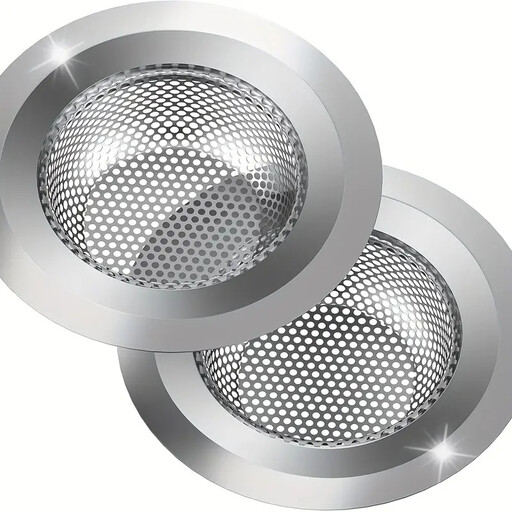
Why it fits: Two filters mean you have a spare while one is being cleaned. This set is aimed at households that mainly want to keep solid food scraps out of the kitchen drain.
The product description mentions easy removal, emptying and reuse. Even so, check the diameter of your existing drain before buying.
Two pieces in a set, designed for daily use, removable and rinseable.
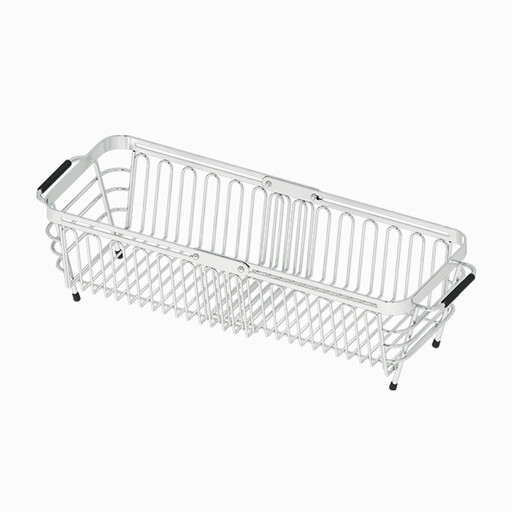
Why it fits: According to the product details, this model extends from 29 to 44 cm and can be used over the sink for washing, draining or as a resting surface.
The stated adjustment range makes the fit verifiable. Before use, the frame must sit securely; the recommended load must not be exceeded.
304 stainless steel according to the product description, extendable length of 29–44 cm, can be used as a strainer and draining tray.
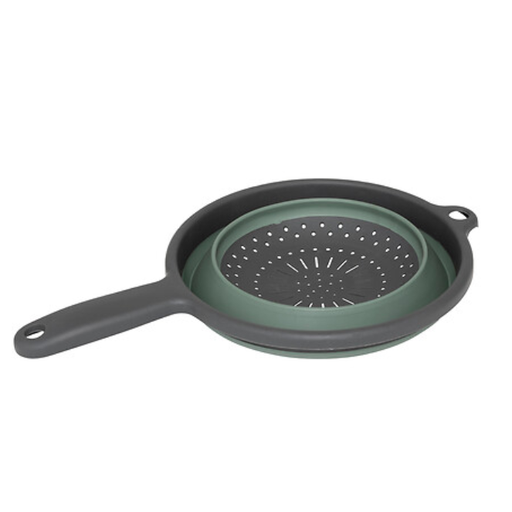
Why it fits: This compact model is made from TPE, TPR and PP according to the details, and can be folded away for storage. Its dimensions are approximately 22.5 × 36.5 × 3.5 cm.
The folding or extendable function reduces storage space needed. Since the product details describe a lightweight design, the strainer should not be used for heavy containers.
Collapsible, low product weight of approximately 0.155 kg, suitable for rinsing fruit, vegetables or draining pasta.
In the full category you’ll find various products for drain protection, food scraps and draining over the sink. Always check the dimensions, material and care instructions before buying.
For particularly fine residue, a filter bag can be useful. The Maxcook Kitchen Sink Filter Mesh Bags are sold as a pack of 100; according to the product name, the frame is not included. Before ordering, you must therefore check whether you already have a suitable frame.
For pasta and larger amounts of vegetables, a sufficiently large draining basket with free water flow is recommended. An extendable model that sits over the sink can be practical when you need both hands for draining. Check the length, width and stability beforehand.
The strainer catches solid components such as vegetable fibres, rice or food scraps before they reach the drain. It does not replace regular cleaning and should not be overfilled. Liquid fat also does not belong in the kitchen drain.
The lifespan depends on the material, load, cleaning and fit. Stainless steel models can remain stable with proper care; plastic and TPE models should be protected from excessive heat and sharp objects. Visible cracks, rust spots or unstable resting surfaces are reasons for replacement.