
Lieferung heute & morgen

Qualitätsgarantie

Willkommens-Angebote freischalten: KOSTENLOSE Lieferung | Bis zu 80 % RABATT | Kostenlose 30-Tage-JoyPlus-Testphase
App herunterladen
Shaky videos can ruin even the most beautiful moments. A smartphone gimbal promises to solve this, enabling you to capture cinema-quality footage. But the market is flooded with devices whose marketing promises often suggest more than the technology can deliver. As your Joybuy Product Recommendation Officer, I'll help you identify the crucial features and avoid common purchasing pitfalls, ensuring you find a smartphone stabiliser that truly fits your needs.
Many buyers are disappointed with their new gimbal after a short time. This is often due to overlooked flaws that go unmentioned in advertisements. Pay special attention to these three points:
To avoid a bad purchase, you should focus on objective technical data. These three parameters are crucial for the performance of a smartphone gimbal.
The core function of a gimbal is stabilisation. Here, the number of axes is the most important factor.
Modern smartphones are getting bigger and heavier. Therefore, you must check the manufacturer's specifications for the maximum payload and the clamp width of the mount. A gimbal for an iPhone Pro Max or a similarly large Android device requires a robust construction and a wide clamp (e.g., up to 9.5 cm) to hold the device securely and in balance.
Many gimbals today are multifunctional devices. An integrated selfie stick with a tripod enormously increases flexibility and makes additional vlogging accessories redundant. The battery life should be sufficient for your typical use cases—for a full day of shooting, models with 10 hours or more are a good choice. An integrated fill light can be useful in low-light conditions, but it's no substitute for professional lighting.
Based on these objective criteria, we have identified several models that offer a suitable solution for different user groups.
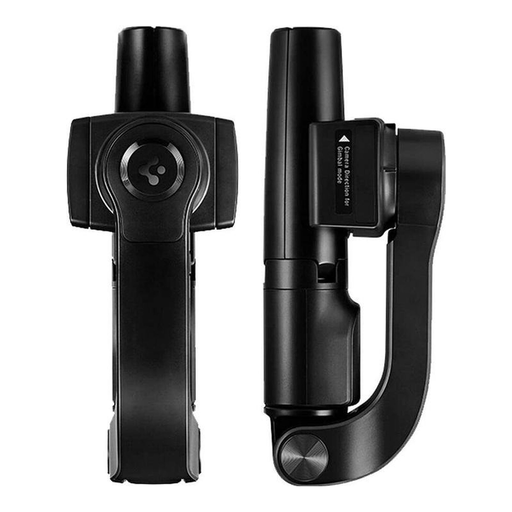
Why This Fits Their Persona: Ideal for users who want to explore the world of video stabilisation without a major investment. The device combines the basic functions of a gimbal, selfie stick, and tripod in a lightweight and compact body. Perfect for occasional vlogs, family gatherings, or travel footage.
This model focuses on core functions and avoids overloaded, unreliable features. Its low weight of 220g and compact design bypass the trap of a cumbersome device you don't want to carry.
Multifunctional 3-in-1 design (gimbal, selfie stick, tripod). Very lightweight and portable. Simple operation via Bluetooth.
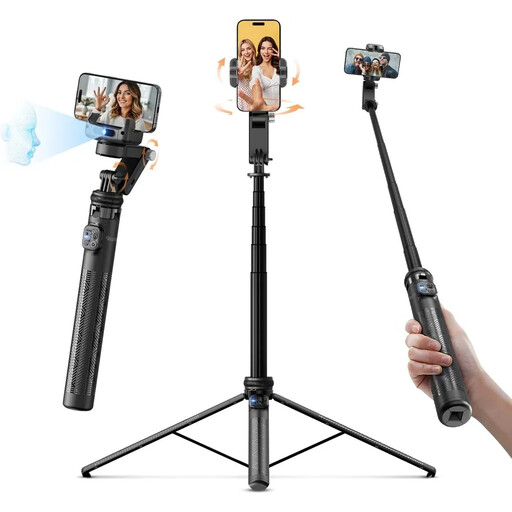
Why This Fits Their Persona: For vloggers and social media users who need a versatile tool for various shooting situations. The 4-in-1 design with an extendable height of up to 1.57m, AI tracking, and an integrated fill light covers a wide spectrum of creative needs.
The AI tracking is a core feature here with a specified range (0.5–5m), indicating a well-thought-out implementation. The integrated design avoids the need to carry multiple accessories, solving the problem of cumbersome gear.
AI face recognition with gesture control. Integrated fill light with adjustable colour temperature. Exceptional height of up to 1.57m in tripod mode.
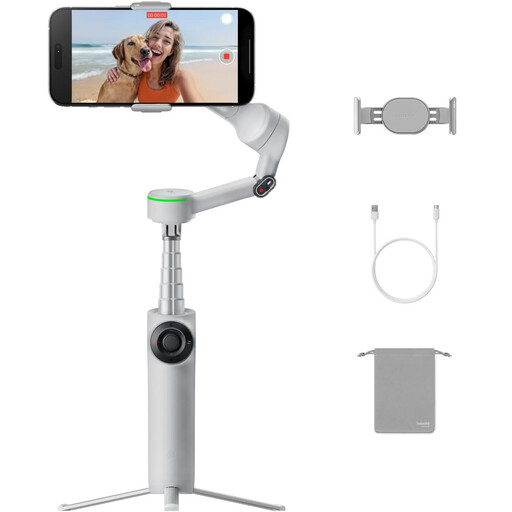
Why This Fits Their Persona: For users who value advanced technology, reliable performance, and an established ecosystem. The advanced tracking features like zoom and multi-person tracking are ideal for complex shooting situations, from sporting events to group shots.
Insta360 is known for its mature tracking algorithms. This model offers reliable and precise AI tracking that works even in demanding scenarios, thus avoiding the unreliable tracking trap. The foldable design ensures high portability.
Advanced AI tracking (zoom, multi-person, animals). Seamless app integration with AI-powered editing tools. All-in-one design with tripod, selfie stick, and power bank function.
We've compiled a complete, up-to-date list of products that fully meet these strict selection criteria and all relevant safety regulations.
Battery life varies greatly depending on the model and usage intensity. Basic devices often provide only 2 to 4 hours, while more advanced models can last 10, 13, or even up to 18 hours according to manufacturer specifications. Consider how long your typical shooting sessions are. For all-day vlogs or trips, a model with long battery life or a power bank function to charge your smartphone is recommended.
For truly smooth and professional-looking videos, the answer is yes. A 3-axis gimbal is the key factor in eliminating shakes when walking, running, or during fast pans. It corrects movements on the tilt, roll, and pan axes. 2-axis models are a cheaper alternative, but they are primarily suitable for static shots and cannot fully compensate for the typical jitters in dynamic scenes.
No, compatibility is a critical point. Before buying, always check the manufacturer's specified maximum payload (in grams) and clamp width (in cm). Large and heavy smartphones like the iPhone Pro Max or the Samsung Galaxy Ultra series, especially with a protective case, require a gimbal designed for that weight and size. An inadequate fit can lead to overloaded motors and unstable footage.