
Lieferung heute & morgen

Qualitätsgarantie

Willkommens-Angebote freischalten: KOSTENLOSE Lieferung | Bis zu 80 % RABATT | Kostenlose 30-Tage-JoyPlus-Testphase
App herunterladen
Shaky videos can ruin even the most interesting moments. A gimbal is the technical solution, enabling professional-quality footage by mechanically compensating for movement. However, the market offers a bewildering array of models, from simple smartphone gimbals to integrated gimbal cameras. Many marketing claims prove to be misleading in practice, leading to frustration and unnecessary expenses.
As your Joybuy Product Recommendation Officer, I'm here to help you separate the wheat from the chaff. Instead of relying on marketing hype, we'll focus on the facts. This guide will show you the most common pitfalls and the crucial technical parameters to help you find a camera stabiliser that truly meets your needs.
Before you make a purchasing decision, you should be aware of these three common problems that often lead to disappointment:
To avoid a bad purchase, you should base your selection on objective technical features. The following three points are central to a gimbal's performance and longevity.
A gimbal's core function is to stabilise movement. This is done via motors that compensate for motion along different axes.
The payload, specified in grams, is one of the most important specifications. It defines the maximum weight that the gimbal's motors can balance.
Exceeding the payload not only results in jittery videos but also puts permanent strain on the motors, significantly shortening the device's lifespan.
A gimbal is only as useful as its runtime. Pay attention to the manufacturer's stated battery life in hours. For travel vloggers or long shooting days, models with 10 hours or more are a good choice. Some gimbals also offer a reverse charging function, allowing you to charge your smartphone from the gimbal's battery—a handy feature for when you're on the go. Other useful features can include an integrated tripod or an extendable telescopic rod, expanding your content creator accessories.
Instead of making a one-size-fits-all recommendation, we have selected models tailored to specific user profiles and their needs.
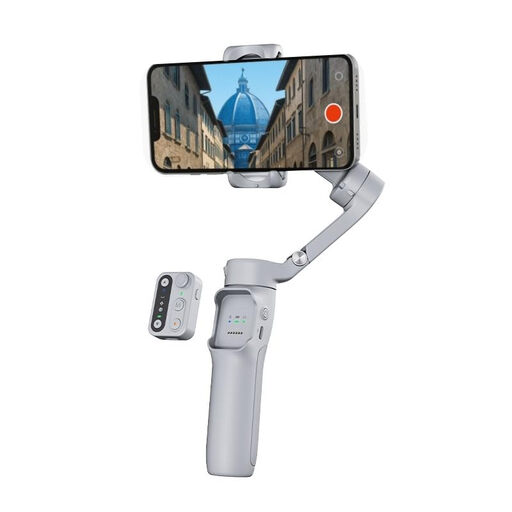
Why This Fits Their Persona: Ideal for users who want to enter the world of stabilised video without a large investment. This model focuses on core functions and provides a solid foundation for initial vlogging or travel projects.
This model avoids the pitfall of overhyped AI tracking by focusing on reliable, fundamental 3-axis stabilisation (iSteady 8.0). The payload is clearly defined, which prevents motor overload.
Its foldable design makes it highly portable. The detachable remote control allows for shooting from up to 10 metres away, which is especially practical for solo creators.
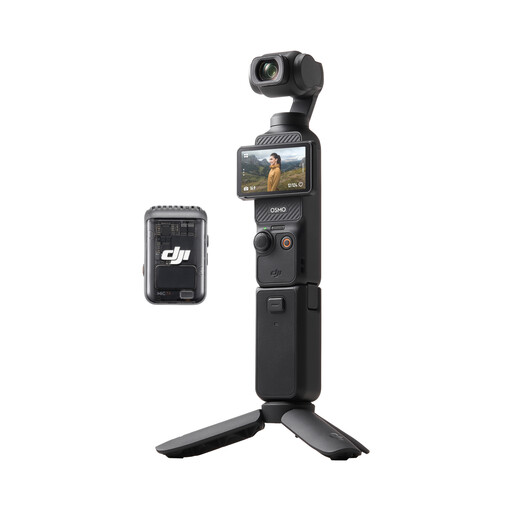
Why This Fits Their Persona: Perfect for travel vloggers and content creators looking for a compact, all-in-one solution with high image quality. The device is ready to use out of the box and makes the user independent of their own smartphone.
As an integrated gimbal camera, the Pocket 3 completely bypasses the pitfalls of payload and smartphone compatibility. The system is perfectly tuned, and its ActiveTrack 6.0 offers reliable subject tracking.
The large 1-inch CMOS sensor enables detailed footage in 4K at up to 120 fps, even in low-light conditions. The Creator Kit includes useful accessories like an external microphone and a battery grip.
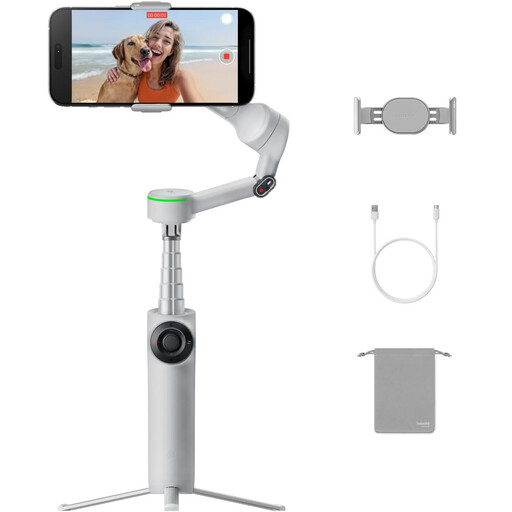
Why This Fits Their Persona: For content creators who use their smartphone as their primary camera and need advanced features for creative shots. The Insta360 Flow is more than just a stabiliser; it's a multifunctional tool.
This model delivers AI tracking that actually works. Features like multi-person tracking and zoom tracking are precise and offer real value, rather than just being empty marketing promises.
The all-in-one design integrates a selfie stick, a tripod, and a power bank. Gesture control and the ability to use a second smartphone's view as a remote significantly expand creative possibilities.
We have compiled a complete, real-time list of products that fully satisfy these strict selection criteria and UK safety regulations.
Modern gimbals generally do not require a full recalibration before each use. However, correctly balancing the smartphone in the clamp is crucial. Before turning it on, take a moment to position the phone so that it remains nearly balanced even when the gimbal is off. This relieves stress on the motors and ensures optimal stabilisation performance and battery life.
The lifespan of a gimbal heavily depends on its build quality and how it's cared for. With proper handling—especially by avoiding drops and consistently adhering to the maximum payload—the brushless motors and mechanics can function reliably for several years. Store the device in its included case to protect it from dust and impacts.
That depends on your use case. A gimbal camera like the DJI Osmo Pocket 3 offers an optimised, compact system with high image quality without draining your phone's battery or tying it up from other tasks. A smartphone gimbal is more budget-friendly and flexible, as you benefit from the camera upgrades of your next smartphone. If you're looking for maximum convenience and a dedicated video solution, a gimbal camera is often the more practical choice. If you want to fully leverage your smartphone's camera, a high-quality smartphone gimbal is the right addition.