
Lieferung heute & morgen

Qualitätsgarantie

Willkommens-Angebote freischalten: KOSTENLOSE Lieferung | Bis zu 80 % RABATT | Kostenlose 30-Tage-JoyPlus-Testphase
App herunterladen
Shaky and jittery videos can ruin even the most beautiful moments. A smartphone gimbal promises a solution, aiming to deliver cinema-quality footage. However, the market is flooded with devices making bold marketing claims that often fail to deliver in practice. Many buyers invest in a device that ends up unused in a drawer after just a short time.
As your Joybuy Product Recommendation Officer, I'm here to help you identify the common pitfalls and make an informed decision. We'll focus on the objective features that define a good smartphone gimbal, ensuring your videos from travels, vlogs, or family events get the quality they deserve.
Before we dive into the important technical details, let's uncover two common marketing traps that often lead to disappointment.
To avoid a bad purchase, you should focus on three objective criteria that determine a gimbal's performance and usability.
A true smartphone stabiliser works with three motors that compensate for movement on three axes:
Only a 3-axis gimbal can reliably compensate for complex movements like walking, running, or driving, ensuring buttery-smooth shots. Look explicitly for this specification in the product details.
For vloggers and travellers, usability is key. A foldable gimbal can be stored compactly and is ready to use in seconds. Pay attention to the weight and dimensions when folded. A model that easily fits into a jacket pocket or a small backpack will be used much more frequently in daily life. An integrated gimbal with a tripod is an added advantage. This feature allows for stable time-lapses or hands-free vlogs without needing to carry extra accessories.
Not every gimbal is suitable for every smartphone. Check the manufacturer's maximum payload for the gimbal. This specifies how heavy the smartphone can be. This is especially important if you use a large model like a gimbal for iPhone Pro Max or want to attach additional accessories like external microphones or clip-on lenses. Exceeding the payload leads to overheated motors and unstable performance.
Based on these objective criteria, we have identified a few models that represent a considered choice for different user groups.
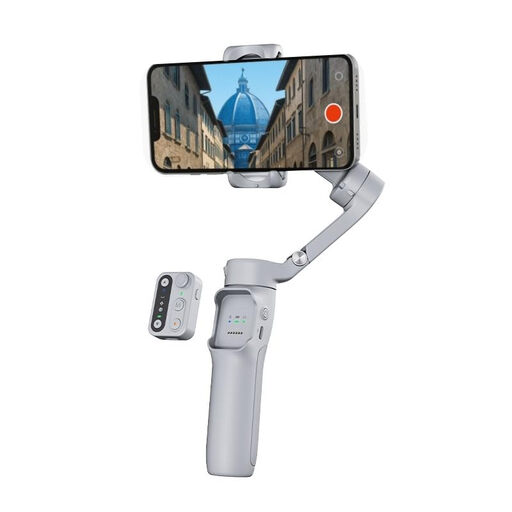
Why This Fits Their Persona: This model offers full 3-axis stabilisation and a foldable design, making it a solid choice for users who want to enter the world of stabilised video without a high initial investment.
This is a true 3-axis gimbal that reliably compensates for movement and should not be confused with a simple 1-axis stabiliser.
The detachable remote control allows for remote shooting, and the battery life of up to 11 hours is sufficient for long shooting days.
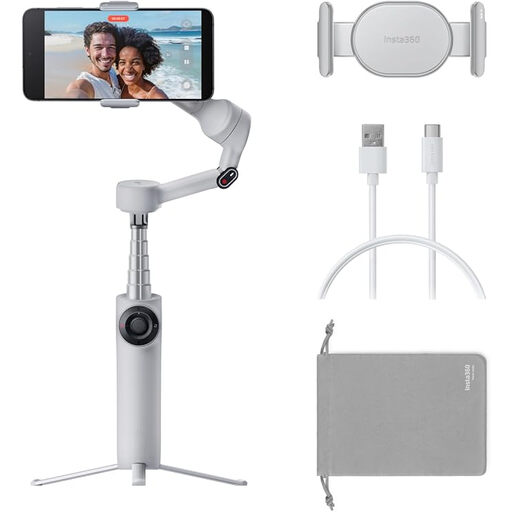
Why This Fits Their Persona: The all-in-one concept with an integrated tripod and selfie stick makes this model ideal for travellers who want to pack light. The compact, foldable design fits into any bag.
The AI tracking features are mature and work reliably without excessive dependency on complicated app controls for basic functions.
The integrated design reduces the need for extra accessories. The battery life of up to 10 hours is designed for a full day of exploring.
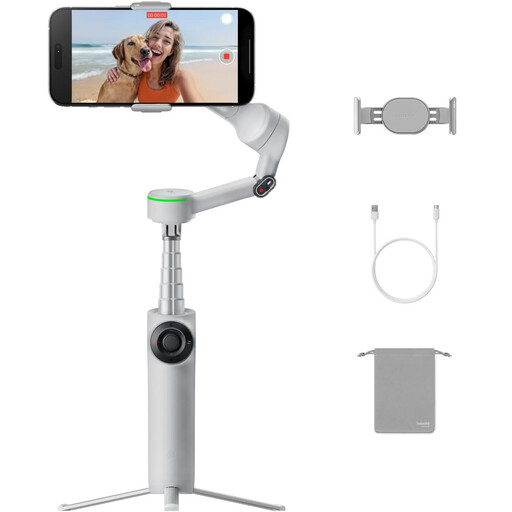
Why This Fits Their Persona: This bundle is aimed at users looking for a professional vlogging gimbal. Advanced features like Active Zoom Tracking and multi-person tracking enable creative and technically sophisticated shots for social media platforms.
The advanced tracking functions are a core part of the product, not just an app gimmick. Integration with Apple DockKit also allows for cross-app use.
The ability to precisely track subjects even while zooming sets this model apart. Gesture control also allows for hands-free operation.
We've compiled a complete, up-to-date list of products that fully meet these strict selection criteria.
1. How long does a smartphone gimbal's battery last with normal use? Battery life varies by model and usage intensity. Most devices offer a runtime between 6 and 12 hours. Note that intensive use of features like AI tracking or balancing heavy smartphones can drain the battery faster. Some models also offer a reverse-charging feature, allowing you to charge your smartphone from the gimbal's battery.
2. Does every gimbal work with every smartphone? No, not necessarily. Be sure to check the manufacturer's compatibility list before purchasing. The weight and dimensions of your smartphone are the most critical factors. Most modern gimbals are compatible with both iOS and Android devices, but the full functionality of the companion app may differ between operating systems.
3. Is a 3-axis gimbal really necessary for good videos? For static shots from a tripod, a gimbal is not required. However, as soon as you start moving—whether walking, filming from a vehicle, or following a subject—a 3-axis gimbal is essential for achieving professional-looking, smooth footage. 1- or 2-axis systems can only compensate for a fraction of the shake and often lead to unsatisfactory results.