
Lieferung heute & morgen

Qualitätsgarantie

Willkommens-Angebote freischalten: KOSTENLOSE Lieferung | Bis zu 80 % RABATT | Kostenlose 30-Tage-JoyPlus-Testphase
App herunterladen
A good dish rack is the cornerstone of an organized kitchen. However, the search for the right model can quickly become overwhelming. Many products promise durability but turn out to be a bad investment after just a few months. Before you make a decision, it's important to know the most common flaws, which often only become apparent with daily use.
The 3 Most Common Problems with Dish Racks:
space-saving dish rack turns out to be too small for a family's daily needs.These flaws are avoidable if you know which technical features truly matter.
To make an informed decision, you shouldn't be guided by marketing promises but rather focus on verifiable facts. Two parameters are crucial for the longevity and functionality of a stainless steel dish rack.
Not all stainless steel is created equal. The material composition determines its corrosion resistance and, therefore, the lifespan of your dish rack.
A high-quality in-sink dish basket should therefore be explicitly made from 304 stainless steel to ensure long-term, rust-free use.
A thoughtful design ensures efficiency and hygiene. A dish drainer with a drainboard is only practical if the board actively directs water into the sink. Look for a slightly sloped design or a dedicated spout.
Capacity is also a key factor. The rack should offer enough space for plates, bowls, cups, and cutlery without cluttering the countertop. Modular or two-tier systems can be a great solution for larger households, while a compact kitchen sink organizer is sufficient for smaller kitchens or for organizing dishwashing accessories.
Instead of making a one-size-fits-all recommendation, we have identified products tailored to specific needs and household sizes.
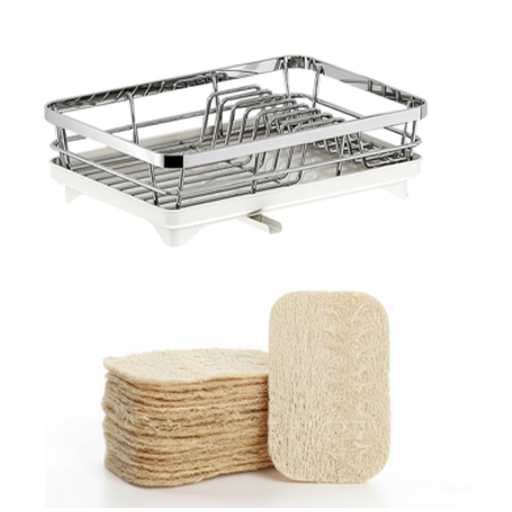
Why This Fits Their Persona: This set combines a functional dish rack with a supply of sustainable dishwashing accessories. It's ideal for those seeking a durable and eco-friendly all-in-one solution for their sink area.
The rust-resistant stainless steel rack and integrated PP drainboard address the problems of corrosion and standing water. Its large capacity of 42x29x12.7 cm provides ample space, avoiding the trap of a rack that's too small.
The combination of a durable dish rack and a 30-pack of 100% biodegradable loofah sponges creates a complete, sustainable system for washing dishes.
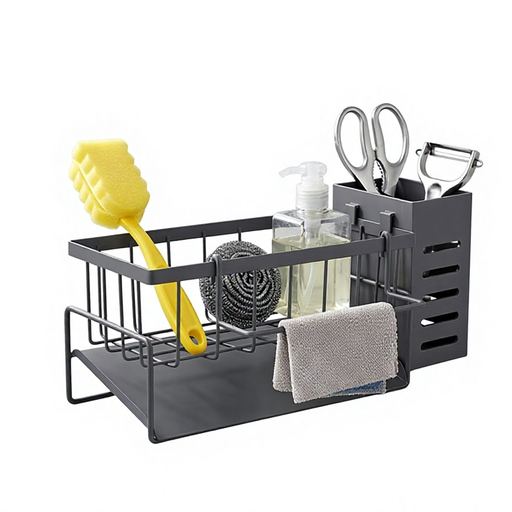
Why This Fits Their Persona: Ideal for small kitchens or for those who already own a dishwasher and just need a compact solution for their brush, sponge, and cloth. This organizer creates order right at the sink.
It solves the problem of wet sponges lying around, which cause clutter and bacterial growth. The hollow drainage base ensures that all utensils dry quickly and no water is left standing.
This compact kitchen organizer consolidates holders for a sponge, brush, and dishcloth in one place. The rust-proof carbon steel material is designed for durability.
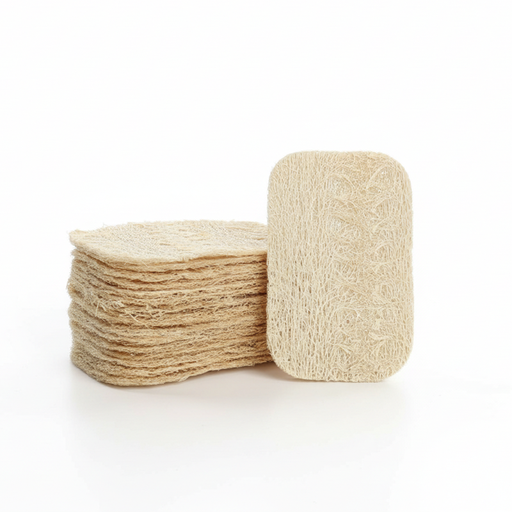
Why This Fits Their Persona: For anyone looking to transform their dishwashing routine and actively reduce plastic waste. This loofah sponge set is the ideal addition for any household that already has a dish rack but wants to make its cleaning accessories more sustainable.
This product avoids the trap of short-lived plastic sponges that release microplastics and end up in landfills. It offers a transparent, purely plant-based alternative with no hidden plastics.
Made from 100% natural loofah plant fiber, these sponges are fully biodegradable and compostable. They clean effectively without scratching delicate surfaces.
We've compiled a comprehensive list of dishwashing accessories that meet our criteria for durability, functionality, and sustainable cleaning.
To prevent limescale and water spots, the dish rack should be cleaned regularly. Wipe the rack and drainboard dry with a soft cloth weekly. For stubborn limescale stains, a mild solution of water and vinegar can help. Afterwards, rinse thoroughly with clean water and dry all surfaces to prevent new spots from forming.
The main difference lies in the chemical composition and the resulting corrosion resistance. 304 stainless steel contains a high percentage of nickel, which makes it highly resistant to rust and qualifies it for use in damp environments like the kitchen. 201 stainless steel is a less expensive alloy with a lower nickel content, which begins to rust more quickly.
Yes, with proper care, loofah sponges are a hygienic option. Since they are made of natural plant fibers, they are very breathable. It is important to rinse the sponge well after each use, squeeze it out firmly, and hang it in a well-ventilated area to dry completely. This prevents the growth of bacteria. It is recommended to replace the sponge regularly, just like with conventional dish sponges.