
Lieferung heute & morgen

Qualitätsgarantie

Willkommens-Angebote freischalten: KOSTENLOSE Lieferung | Bis zu 80 % RABATT | Kostenlose 30-Tage-JoyPlus-Testphase
App herunterladen
A TV wall mount can free up space and give your television a neat, unobtrusive look in the room. However, choosing one is not simply a question of screen size or price. If the mount is not compatible with the TV’s VESA measurement, the wall or the television’s weight, installation may be ineffective or pose a safety risk.
As a Joybuy Product Recommendation Officer, I therefore filter the key details using clear, verifiable criteria. Three common purchasing misconceptions are particularly likely to lead to the wrong choice.
The specification “for 32 to 65 inches” describes only part of a mount’s suitability. You also need to consider:
A universal TV wall mount is only suitable if the hole spacing falls within its stated range. For example, a 43-inch television may use VESA 200 × 200 or 300 × 300 mm. Screen size alone is therefore not enough to make the right choice.
The maximum load capacity must exceed the television’s weight. If a TV wall mount is rated for up to 75 kg, a 75 kg television should not simply be installed without further checks. Swivelling models also exert leverage on the wall plate, joints and fixing points.
You should therefore check:
An ultra-slim TV wall mount with a small distance from the wall is ideal for a front-facing seating position and a discreet appearance. If the screen needs to be turned to one side regularly, a swivelling TV wall mount is more practical. For a higher installation position, a tilting TV wall mount can better accommodate reflections and viewing angle.
VESA refers to the horizontal and vertical distance between the mounting holes on the television, measured in millimetres. Common formats include 75 × 75, 100 × 100, 200 × 200, 400 × 400 and 600 × 400 mm.
Measure the distances from the centre of one hole to the centre of the other. If the measurements do not match the mount’s stated range, the model should not be installed. A mount covering VESA 100 × 100 to 600 × 400 mm supports a wider range, but it is not automatically suitable for every device.
The stated screen size is intended as a guide. The combination of screen size, VESA measurement and weight remains important. Available models range from compact mounts for 19- to 43-inch televisions to versions for large screens measuring 40 to 100 inches.
For larger devices, models with a load capacity of 55 or 75 kg may be suitable. However, a higher load capacity does not replace suitable wall fixings. The wall must be able to support the combined weight of the television and mount.
Suitable wall plugs and screws are required for concrete and brick walls. With timber stud walls, the fixing points must be secured into load-bearing studs. Plasterboard, drywalls and hollow bricks must not be loaded directly without suitable reinforcement.
The distance from the wall affects how the mount can be used:
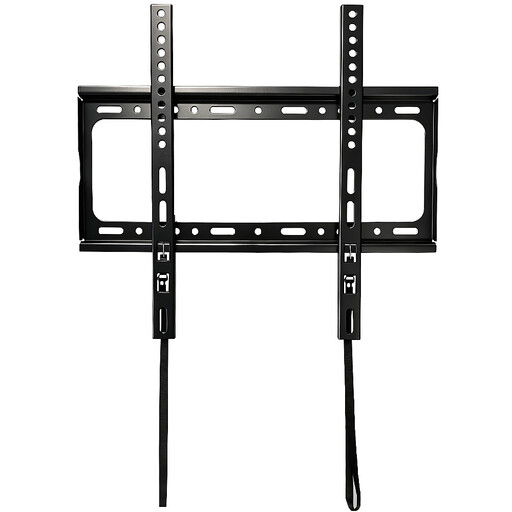
Why this product suits the profile: The fixed design is aimed at buyers looking for a simple, space-saving TV wall mount without a swivelling mechanism. It supports televisions from 32 to 65 inches and weighing up to 45 kg.
The relevant limits are clearly specified: 32–65 inches, a maximum of 45 kg and VESA support up to 400 × 400 mm. This makes it easier to check compatibility before buying.
Fixed design, compact dimensions of 49.5 × 22.7 × 2.9 cm and suitability for concrete, brick and timber studs.
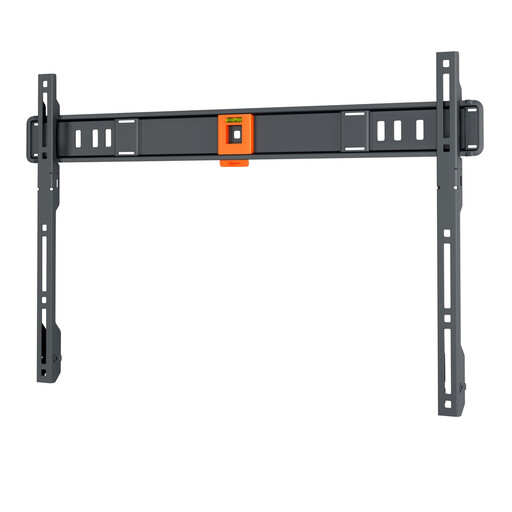
Why this product suits the profile: For large televisions measuring 40 to 100 inches, it offers a maximum load capacity of 75 kg and VESA compatibility from 100 × 100 to 600 × 400 mm.
The broad VESA range and stated load capacity make it easier to check the technical requirements for large screens. The mount remains fixed and does not require a vulnerable swivel arm.
Reinforced steel, support for up to 75 kg and a ClickLoc safety system with audible locking confirmation, according to the product specifications.
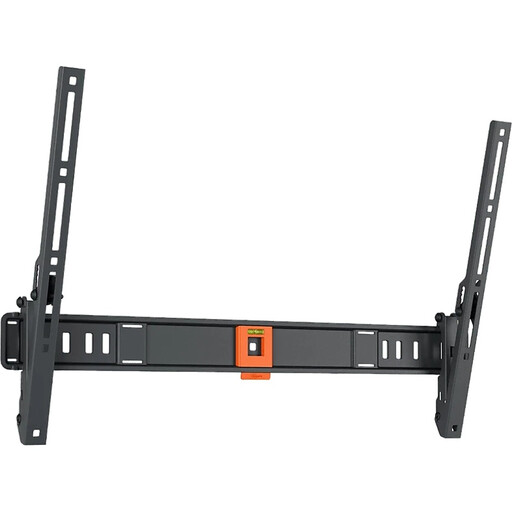
Why this product suits the profile: The tilting design is intended for large screens measuring 40 to 100 inches and allows downward tilting by up to 15 degrees.
The tilt is not merely mentioned as a convenience feature; it is described with a specific range of up to 15 degrees. Load capacity and VESA measurements can still be checked separately.
Maximum load capacity of 75 kg, VESA 100 × 100 to 600 × 400 mm and ClickLoc locking system, according to the product description.
We have put together a complete, regularly updated list of products that fully meet these strict selection criteria and the safety regulations applicable in the EU.
Before ordering and installing, you should tick off the following points:
Determine the screen size, weight and VESA measurement. These three values must then fall within the mount manufacturer’s stated specifications. If you are unsure, the television’s technical data sheet is the deciding factor, not just the screen size in inches.
A fixed TV wall mount is suitable for a straight-on seating position and the smallest possible distance from the wall. A swivelling version is useful when the television is viewed from several seating positions. When extended, it requires more space and places greater demands on the wall fixings.
There is no standard service life that can be stated across the board. It depends on the materials, installation, condition of the wall, load and regular inspections. If screws become loose, joints become unusually stiff or cracks appear in the wall, the television should no longer be subjected to load and the fixings should be checked.