
Lieferung heute & morgen

Qualitätsgarantie

Willkommens-Angebote freischalten: KOSTENLOSE Lieferung | Bis zu 80 % RABATT | Kostenlose 30-Tage-JoyPlus-Testphase
App herunterladen
A TV wall mount is more than just a bracket—it's a functional solution for saving space, increasing safety, and optimising the viewing experience in your home. Mounting a television on the wall creates a clean, modern aesthetic and allows you to perfectly align the screen with your seating position.
This guide will help you understand the technical requirements and make an informed decision. We'll introduce different types of wall mounts and explain the key criteria for selecting the right model for your TV and your living space.
Choosing the right mount depends on three key factors: your TV's specifications, the desired functionality, and the composition of your wall.
Before making a choice, three of your TV's technical specifications are essential:
Different types of mounts are suitable depending on your room layout and viewing habits:
The stability of the entire installation depends on the wall. Solid walls made of concrete or brick offer the highest load-bearing capacity. For wood stud walls, the mount must be securely screwed into the wood studs. Drywall alone is generally not suitable for mounting heavy TVs unless special hollow-wall anchors are used and the load is distributed to the underlying support structure. Always check if the included mounting hardware is suitable for your wall, or purchase appropriate anchors and screws from a hardware store.
Here is a selection of wall mounts that cover various needs for flexibility, weight capacity, and design.
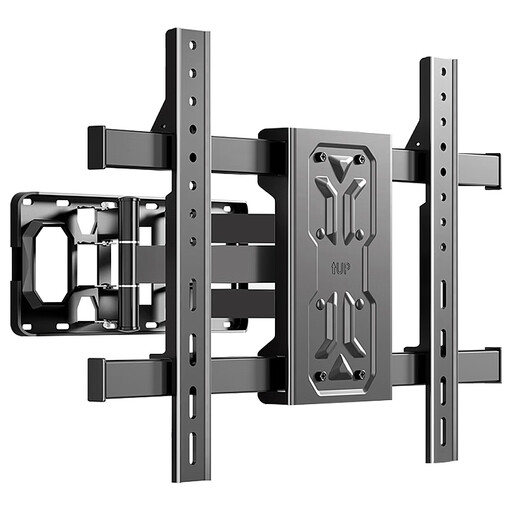
What makes it stand out: This model combines a slim profile with high flexibility. When retracted, the wall clearance is just 42 mm, ensuring a tidy appearance. At the same time, the mount can extend up to 340 mm to flexibly adjust the viewing angle. Its broad compatibility with concrete, brick, and wood stud walls makes it a versatile solution.
Advantages:
Who is it for? For users looking for a flexible and space-saving solution for mid-sized TVs. Ideal for living rooms where the viewing angle needs to be adjusted depending on the situation.
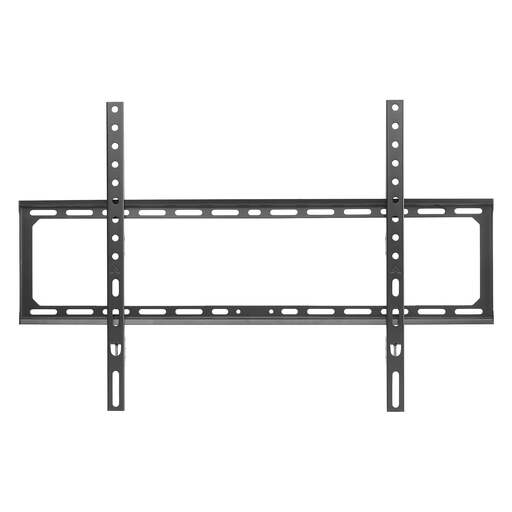
What makes it stand out: The Total Control WM1612 is an extremely low-profile, fixed mount designed for stability and a minimalist aesthetic. With a wall clearance of only approx. 22 mm, the TV appears to almost float on the wall. Its high-strength steel construction provides reliable support for a wide range of TVs, including large models.
Advantages:
Who is it for? For users seeking a wall mount for large TVs who value maximum stability and a discreet, picture-like appearance. Perfect for dedicated home cinema areas or living rooms with a fixed seating arrangement.
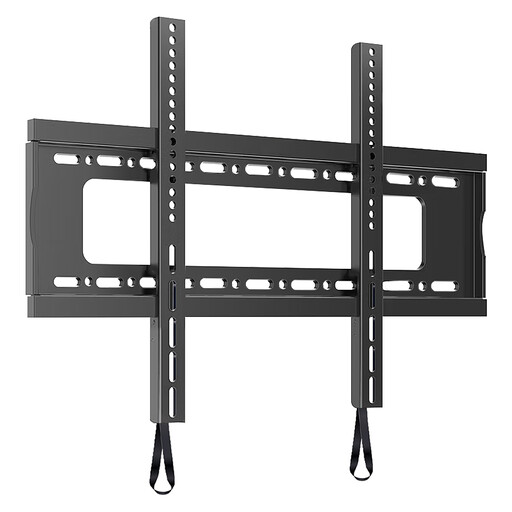
What makes it stand out: This model is specifically designed for the secure mounting of very large and heavy TVs. With an impressive load capacity of up to 100 kg and compatibility with large VESA standards, this mount offers a high degree of security. The fixed design ensures a firm and stable position without any wobble, while the low-profile design keeps the TV elegantly on the wall.
Advantages:
Who is it for? For owners of very large and heavy televisions (over 65 inches) for whom safety and stability are the top priority. It is the right choice for mounting on solid concrete or brick walls.
Once you've found the optimal position for your TV, you might want to redesign other areas of your home as well. Thoughtful interior design significantly contributes to a sense of well-being.
If you're looking for more inspiration for your home, discover our selection of unique metal bar stools to add a modern touch to your kitchen or bar area.
The VESA standard is listed in your TV's technical specifications sheet or manual. Alternatively, you can measure the horizontal and vertical distance between the four mounting holes on the back of your TV in millimetres. The result (e.g., 400 mm width x 200 mm height) corresponds to the 400x200 VESA standard.
The three main types are:
Mounting directly onto a plasterboard sheet is not recommended, as it cannot safely support the weight of a TV. The mount should always be fastened to the underlying support structure (e.g., wood or metal studs). If this is not possible, special heavy-duty hollow-wall anchors (e.g., toggle bolts or spring-loaded toggle bolts) must be used. When in doubt, consult a professional.