
Lieferung heute & morgen

Qualitätsgarantie

Willkommens-Angebote freischalten: KOSTENLOSE Lieferung | Bis zu 80 % RABATT | Kostenlose 30-Tage-JoyPlus-Testphase
App herunterladen
A TV wall mount saves floor space, can improve the viewing angle and creates a neat, tidy media wall. At the same time, the choice depends on more than just screen size. Depending on the model, one 65-Zoll television can be significantly lighter or heavier than another TV of the same size.
Many unsuitable purchases result from three common marketing traps:
Before buying, compare the television’s technical specifications with those of the mount.
The VESA measurement describes the distance between the four mounting holes on the back of the television. It is measured horizontally and vertically in millimetres, for example VESA 200 × 200 or VESA 600 × 400.
A VESA TV mount is only suitable if the television’s hole pattern falls within the stated range. Screen size alone is not enough to replace this check. The VESA measurement can usually be found in the instruction manual, technical data sheet or on the manufacturer’s website.
A TV wall mount up to 45 kg is not automatically sufficient for a 44 kg television. The weight of the mount, the type of fixing and any dynamic loads should also be taken into account. With a swivel design, the extended position creates greater leverage than a flat installation.
For larger models, mounts with a stated load capacity of up to 75 kg, for example, may be suitable. The wall must also be able to support this load:
Two people should install heavy televisions. Screws, safety catches and connections should be checked regularly after installation to ensure they remain secure.
The design determines how flexibly the television can be positioned:
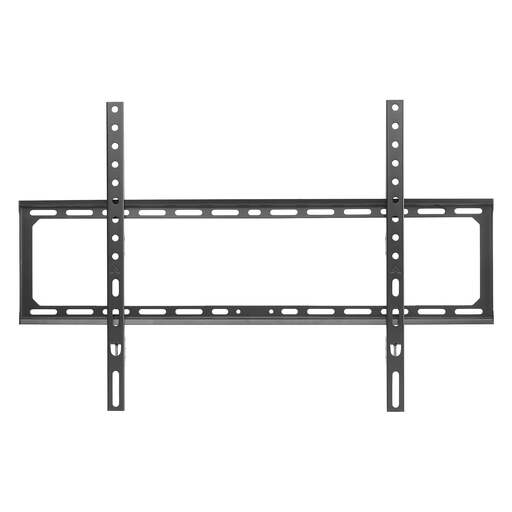
Why this product suits this profile: This fixed TV wall mount is suitable for users looking for a simple, space-saving installation without swivel or tilt functionality.
The specifications state a range of 32 to 90 Zoll, a load capacity of up to 45 kg, VESA up to 600 × 400 mm and approximately 22 mm wall clearance. These values can be compared directly with your TV before purchase.
Solid steel construction; minimal distance from the wall; supports VESA measurements up to 600 × 400 mm.
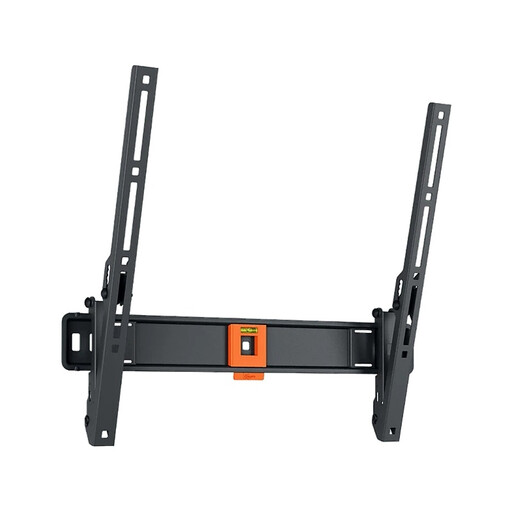
Why this product suits this profile: This tilting TV mount is designed for households with 32- to 65-Zoll televisions that need a slim installation and controlled tilt adjustment.
The design is not defined by screen size alone: VESA 100 × 100 to 400 × 400 mm and a maximum load of 35 kg are clearly specified. The mount tilts downwards by up to 15°.
Reinforced steel; ClickLoc safety catch according to the product specifications; tilting, wall-hugging design for high-mounted screens.
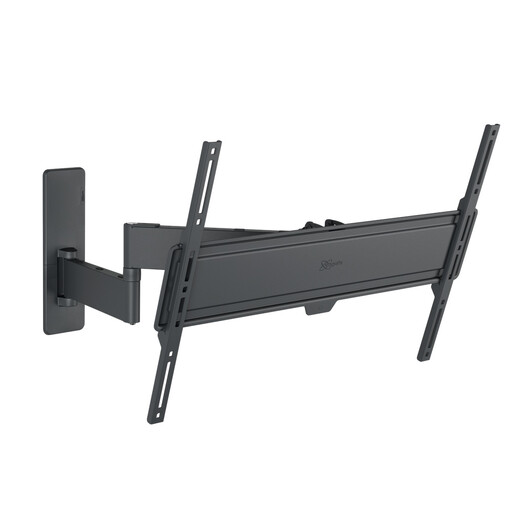
Why this product suits this profile: This extendable and swivel mount is suitable for large televisions where multiple seating positions or flexible positioning is required.
The product specifications state 40 to 100 Zoll, VESA 100 × 100 to 600 × 400 mm, a load capacity of up to 55 kg and 6 to 66 cm wall clearance. This makes the space required for movement clear.
Up to 180° swivel range; up to 15° tilt; integrated cable management according to the product description.
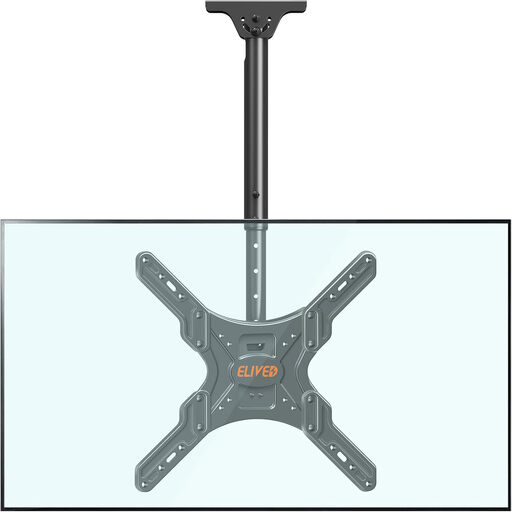
Why this product suits this profile: This ceiling TV mount is suitable for retail spaces, gyms, hospitality venues or rooms with limited wall space.
The mount is expressly not designed to be fixed to plasterboard alone. Suitable load-bearing ceiling structures, six height settings, VESA 100 × 100 to 400 × 400 mm and up to 45 kg are specified.
360° swivel range; height adjustment from 516,5 to 766,5 mm; cable management through the hollow column.
We have put together a complete, regularly updated list of products that fully meet these strict selection criteria and the safety regulations applicable in the EU.
Before installation, decide on the position, viewing height and cable routing. With a slim mount, HDMI, power and aerial connections need sufficient space. Angled plugs or spacers may be required.
With swivel models, check the maximum extension. Furniture, doors, windows and speakers must not obstruct the range of movement. The wall plate must be level. For large televisions, installation by two people or with the help of a qualified installer is recommended.
The supplied screws must not be replaced with other fixings without checking first. The key consideration is whether they are suitable for the wall material and load. After hanging the television, check the locking mechanism before letting go of the screen.
Compare the screen size, TV weight and VESA measurement with the mount’s specifications. The wall must also be suitable for supporting the total load. A model for 32 to 90 Zoll is therefore not automatically compatible with every television in this size range.
This depends on the viewing distance, room layout and your personal viewing height. The centre of the screen is often positioned approximately at seated eye level. If the television is mounted higher up, a tilting TV wall mount can help adjust the viewing angle. Heavy mounts should not be installed above beds or sofas because of the potential risk of injury.
It is not possible to give a reliable general service life. This depends on the material, load, wall fixing and use. With swivel or extendable models, the joints, screws and locking mechanisms should be checked regularly. If you notice visible deformation, a loose fit or damaged parts, stop using the mount.