
Lieferung heute & morgen

Qualitätsgarantie

Willkommens-Angebote freischalten: KOSTENLOSE Lieferung | Bis zu 80 % RABATT | Kostenlose 30-Tage-JoyPlus-Testphase
App herunterladen
A TV wall mount can free up space, improve your viewing position in a home cinema and keep cables neatly organised around the screen. However, choosing one is not simply a matter of screen size. If you only look for wording such as “universal” or “up to 100 inches”, you can easily overlook important technical limitations.
Three common buying misconceptions are particularly important:
The VESA size describes the horizontal and vertical distance between the mounting holes on the back of the television, for example 200 × 200 mm or 600 × 400 mm. This measurement must fall within the range supported by the mount.
A VESA wall mount with a range of 100 × 100 to 400 × 400 mm will not automatically fit a television with VESA 600 × 400 mm. Therefore, check:
A universal TV mount is therefore only suitable if the screen size, VESA pattern and mounting hardware match.
The stated load capacity refers to the maximum supported weight of the television. A TV wall mount up to 75 kg is not suitable for every wall. Concrete and solid brick walls offer different mounting options from plasterboard, hollow brick or a timber construction.
With sturdy timber walls, the mounting screws must be positioned centrally in load-bearing studs. With lightweight partition walls, reinforcement or suitable professional installation may be required. The wall plugs supplied are not automatically suitable for every wall material. Only use fixings approved for the type of wall in question.
Large televisions and swivel models create additional leverage when the arm is extended. The wall mounting must therefore withstand not only the weight but also the dynamic load generated when swivelling.
Also pay attention to the stated wall distance. Models measuring 15 to 25 mm look particularly slim, while adjustable mounts can require considerably more space depending on how far they are extended.
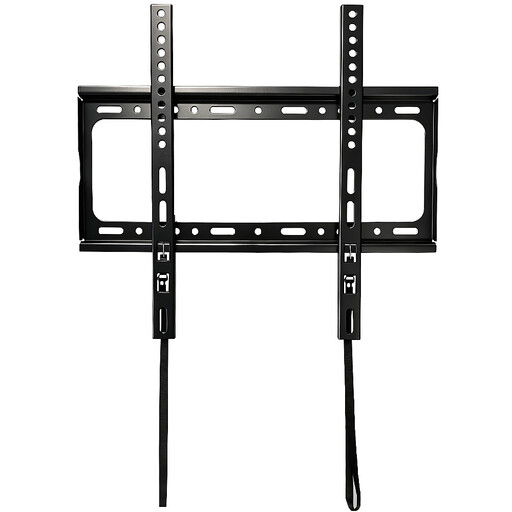
Why this product suits the profile: The fixed mount supports televisions from 32 to 65 inches and weighing up to 45 kg. It is designed for concrete, brick and sturdy timber studs, making it suitable for users with a fixed seating position.
The clearly stated limits of 32–65 inches, 45 kg and VESA up to 400 × 400 mm make it easier to check compatibility.
Fixed design, space-saving construction and stated support for three common wall types.
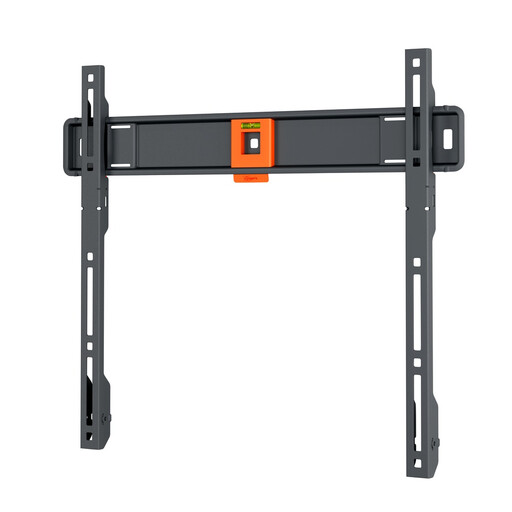
Why this product suits the profile: This model is designed for 32–77 inches, up to 50 kg and VESA 100 × 100 to 400 × 400 mm. The product specifications list an integrated spirit level and ClickLoc safety system.
The fixed construction avoids unnecessary movement when the television will remain permanently facing forwards.
Support for up to 50 kg, a VESA range up to 400 × 400 mm and an integrated alignment aid.
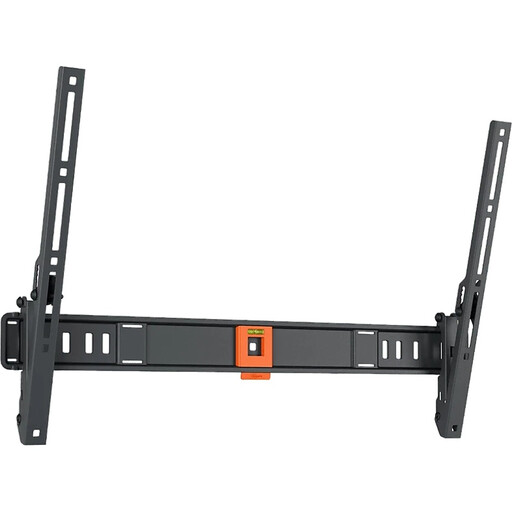
Why this product suits the profile: The tilting TV mount is designed for 40–100 inches and up to 75 kg. It supports VESA 100 × 100 to 600 × 400 mm and tilts downwards by up to 15°.
The tilt function is clearly specified, avoiding the need for an improvised solution when screens are mounted high up.
Large VESA range, load capacity of up to 75 kg and downward tilt of up to 15°.
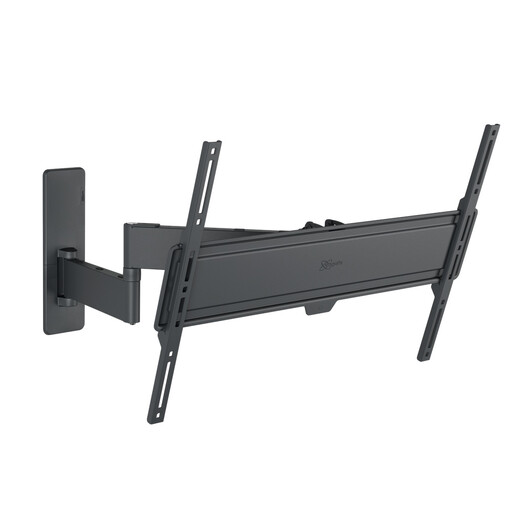
Why this product suits the profile: According to the product specifications, this full-motion TV mount is designed for 40–100 inches, up to 55 kg, VESA 100 × 100 to 600 × 400 mm, swivel of up to 180° and tilt of up to 15°.
The swivel range, tilt range, load capacity and maximum distance from the wall are clearly stated, so they can be checked against the room.
Swivel of up to 180°, integrated cable management and a wall distance of 6 to 66 cm according to the product specifications.
Measure the desired screen height and check the route of power and signal cables before drilling. The wall plate must be level; an integrated spirit level can help, but it is no substitute for careful checking.
For heavy televisions, installation by two people is advisable. Do not lift the screen onto the mount on your own. After installation, check all screws and connections. Adjustable models require particular attention because swivelling creates additional forces on the wall and fixings.
Only use suitable screws and wall plugs. Installation on bare plasterboard, a weakened wall or a non-load-bearing structure is not recommended without suitable reinforcement. Do not attach any additional objects to the mount.
We have put together a complete, regularly updated list of products that fully meet these strict selection criteria and the safety regulations applicable in the EU.
The key factors are screen size, weight and VESA size. Compare these three values with the mount’s technical specifications. A description such as “32 to 75 inches” is not enough on its own if the VESA pattern or load capacity does not match.
Eye level when seated is a practical starting point. The centre of the screen should be roughly at eye level. If the television is mounted higher up, a tilting TV mount can adjust the viewing angle. The drilling position, viewing distance and furniture height should all be considered together before installation.
Its service life depends on the materials, wall fixings, load and regular inspections. Steel or reinforced-steel mounts are designed for the load capacity stated in the product specifications. Check the mounting points at regular intervals and do not move a swivel arm beyond its intended range.